Everglades National Park is teemed with diverse wildlife, animals that thrive on land, in the sky, water, and swamp. But alligators are the kings and queens of Everglades, otherwise known as Gator Park.
Last updated: March 18, 2026
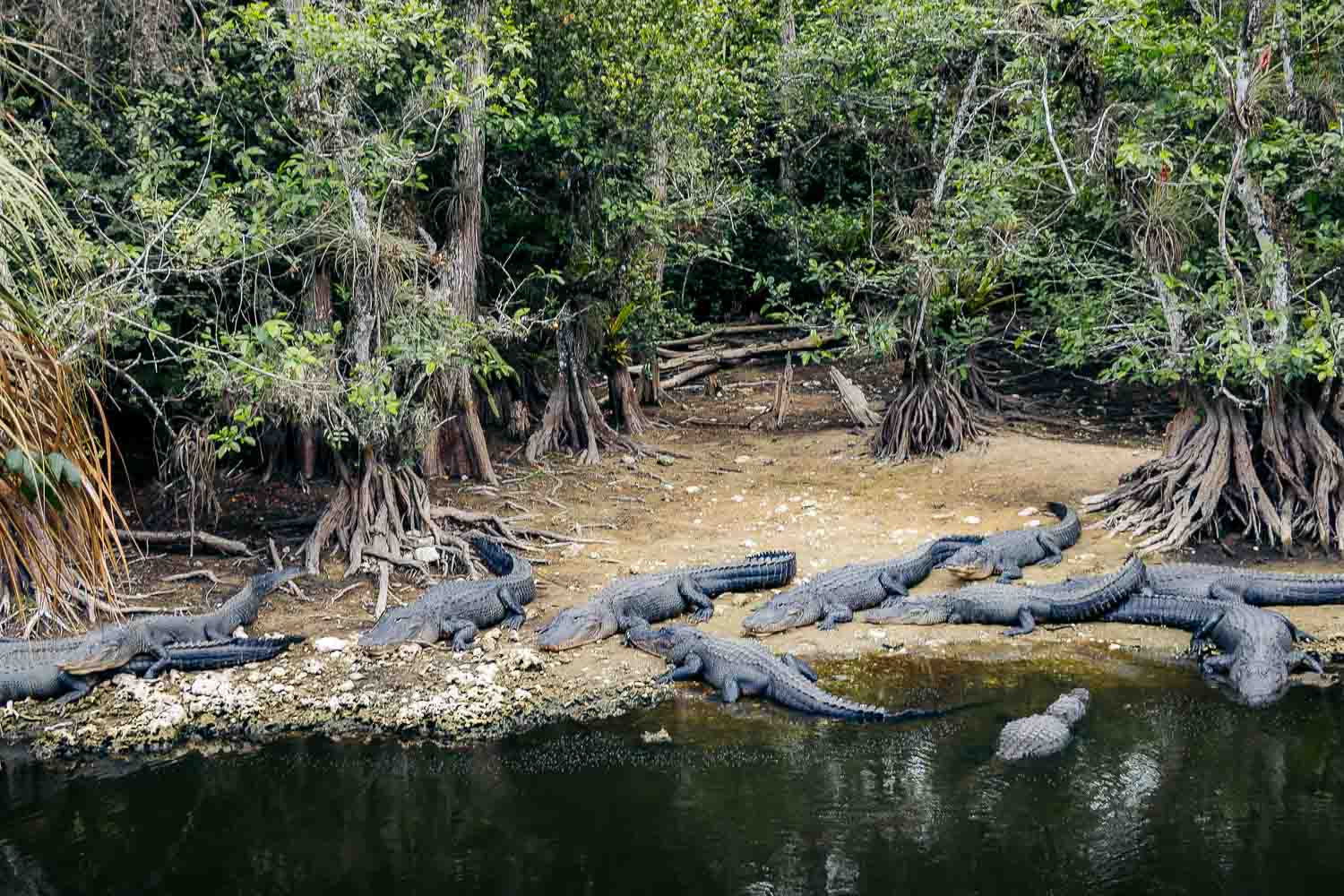
Where to See and Photograph Alligators in Everglades National Park
Wildlife is elusive. Wild animals are never too keen to get attention. They are never too pleased to be in the spotlight, even if it lasts only a few minutes and involves no more than a person or two observing them. They hide in the deepest parts of the forest, swim to the darkest layers of the ocean, disguise themselves in the thickest bushes, and soar so high that the naked eye can’t detect them.
All wild animals do it. Except for probably alligators. And not just any alligators, but ever-present, ever-abundant alligators in Everglades National Park.
The most popular wild creatures in Everglades National Park, nicknamed Gator Park, alligators behave in a drastically different way. For once, you don’t need to patiently wait for hours on end to snap a picture of the wild dwellers of South Florida.
Alligators, the dominating creatures, can be seen and photographed almost everywhere in Everglades National Park. American crocodiles, the second most abundant large reptiles, are more secreted.
As an intruder in the alligators’ wild kingdom, in Everglades National Park, you are the one who needs to take a sidewalk, watch your steps, and, if photographing, do so without any disturbances and from a safe distance, for your own protection first of all.
Other Wildlife and Different Terrains
Although Everglades National Park is the third largest park in the continental USA, a large part of it is covered with swamps and untrodden forests. American Alligators, American crocodiles, venomous snakes, and Florida Panthers dwell in this region. The park strives to protect their home in the most unspoiled manner. Thus, the areas for visitors to explore safely are limited. Yet even here alligators roam freely.
In other words, you can expect to see and photograph alligators in every section of Everglades National Park. If you want to be absolutely sure of the locations where you can view these large reptiles in their natural habitat, the following are the places you don’t want to miss.
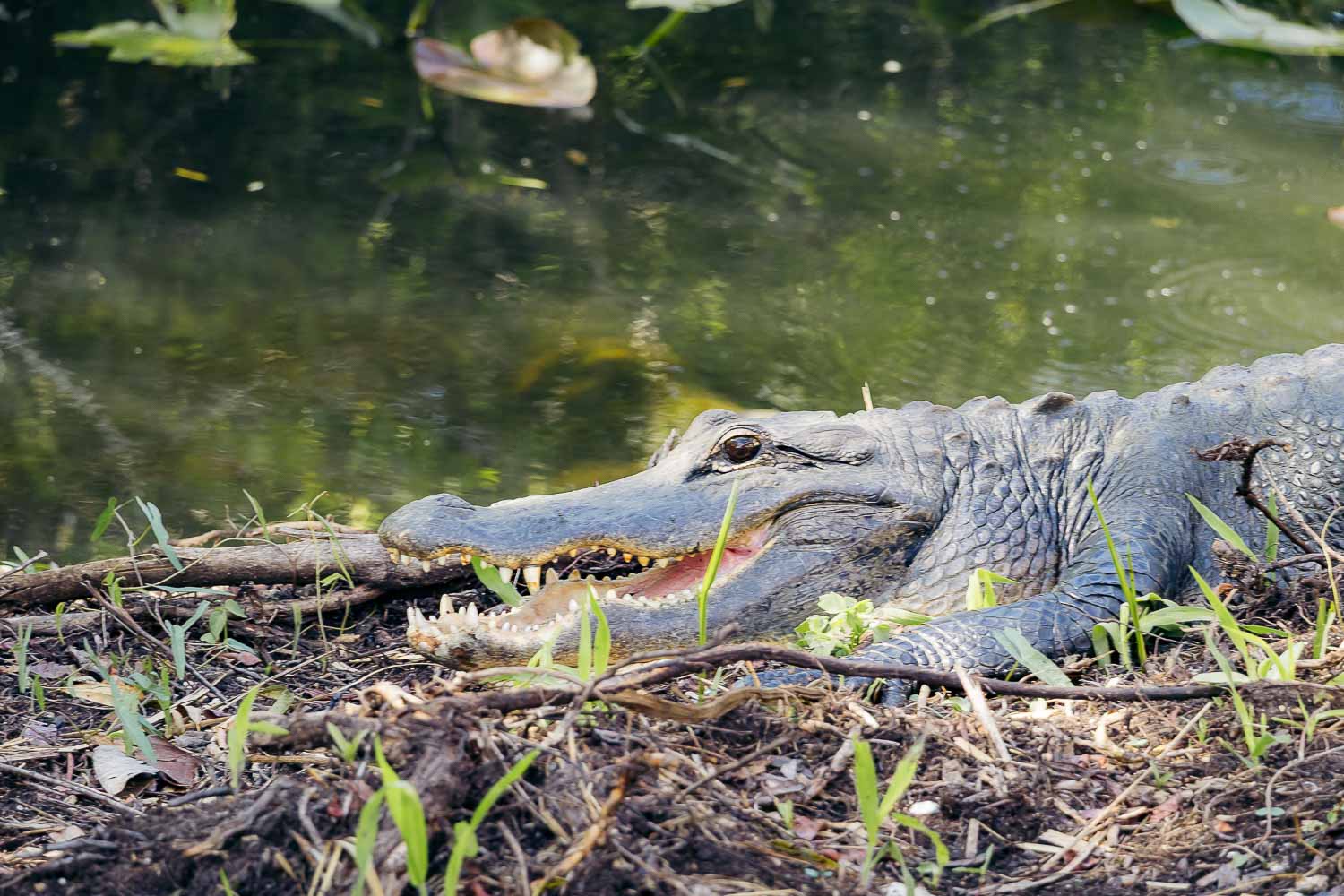
THE BEST PLACES TO SEE AND PHOTOGRAPH ALLIGATORS IN EVERGLADES
1. Shark Valley
The heart of Everglades National Park, Shark Valley is one of the best places to see, photograph, and observe alligators, from a safe distance of course. In fact, if you are short on time and need to choose only one place where you can steal a glance at American alligators in their natural habitat, you can be confident that Shark Valley will deliver that and more without fail.
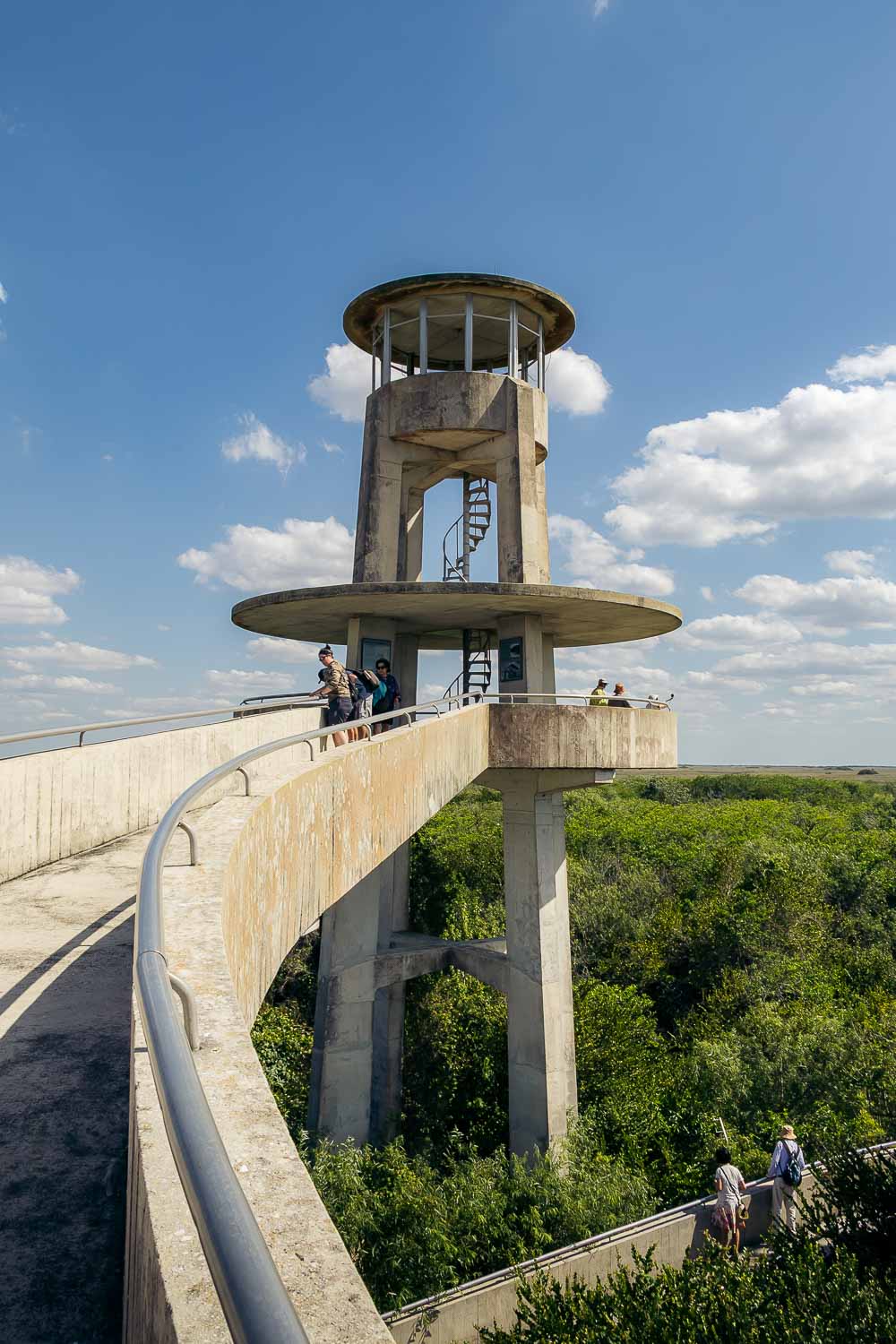
There are a few different ways on how you can go around Shark Valley. Hiking along a couple of raised boardwalks or as far as you can walk along the 15-mile Shark Valley Road a.k.a the Shark Valley Tram Trail is one of them.
Alternatively, you can rent a bike at the Visitor Center and cover the entire route toward the Shark Valley Observation Tower on two wheels.
The fastest and most educational way is to join a Shark Valley Tram tour. The excursion lasts 2 hours and offers plenty of opportunities to watch and photograph alligators snuggled along one of Everglades’s most iconic roads.
TIP: Be mindful of your surroundings and never approach alligators. Moreover, always steer clear of baby gators. Their fearsome mama is most certainly somewhere nearby, even if you don’t see her. You definitely don’t want to experience all her might and count all her teeth when she charges at you.
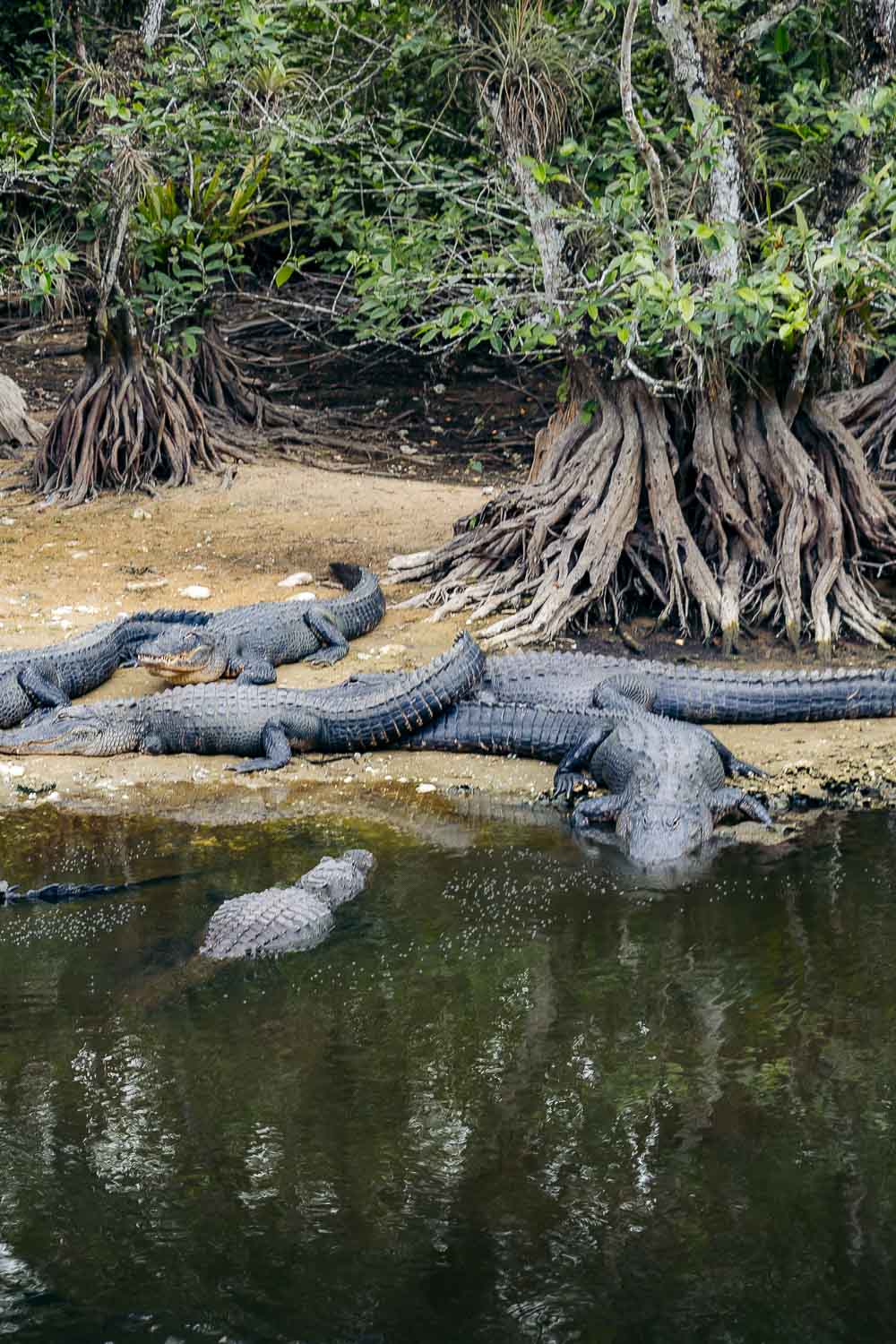
Photography TIP: Use a telephoto lens if you strive for that close-up shot. From my experience, however, even a smaller zoom lens works just fine. When we visited Everglades National Park in April, alligators were toasting under the sun in the swamps right near the road. Some even dared to climb out on the tram trail. According to our guide, alligators are quite neat creatures. They get out of their “cozy” lowlands and crawl onto the paved trail to defecate.
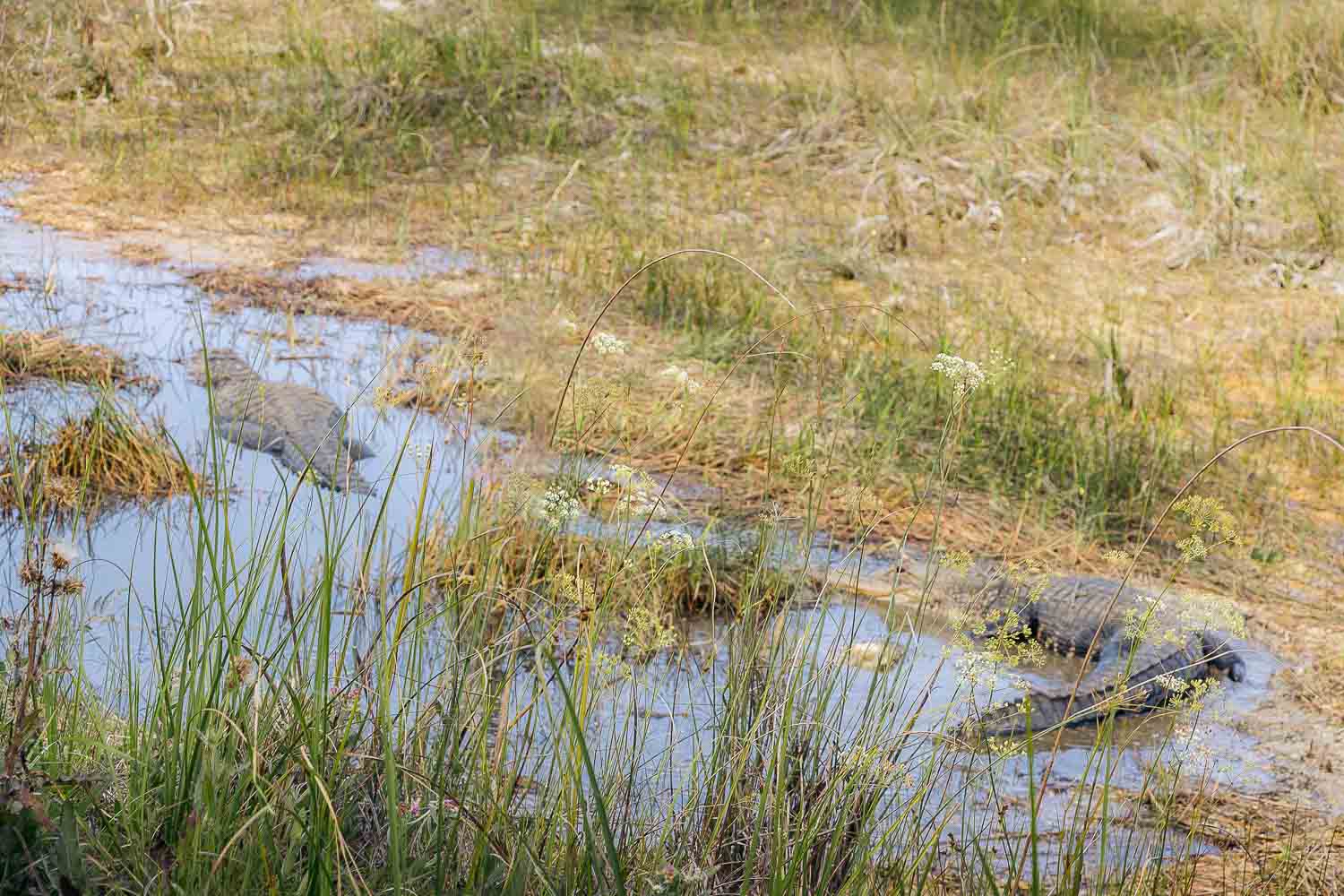
2. Anhinga Trail
One of a few scenic trails that starts behind the Royal Palm Visitor Center, the Anhinga Trail is every wildlife lover’s dream come true. The raised boardwalk path cuts through the wetlands and swamps swarmed with reptiles, fish, and wading birds. Whether you prefer to photograph American alligators, turtles, or tropical birds, make sure to stop by this wildlife-abundant section of Everglades National Park.
Short and easy, the Anhinga Trail corresponds with its visitor’s speed and needs. You can take as much or as little time as you want. Either way you won’t have a chance to miss to observe or fail to photograph an alligator “party” (more like the aftermath of it) in Everglades National Park.
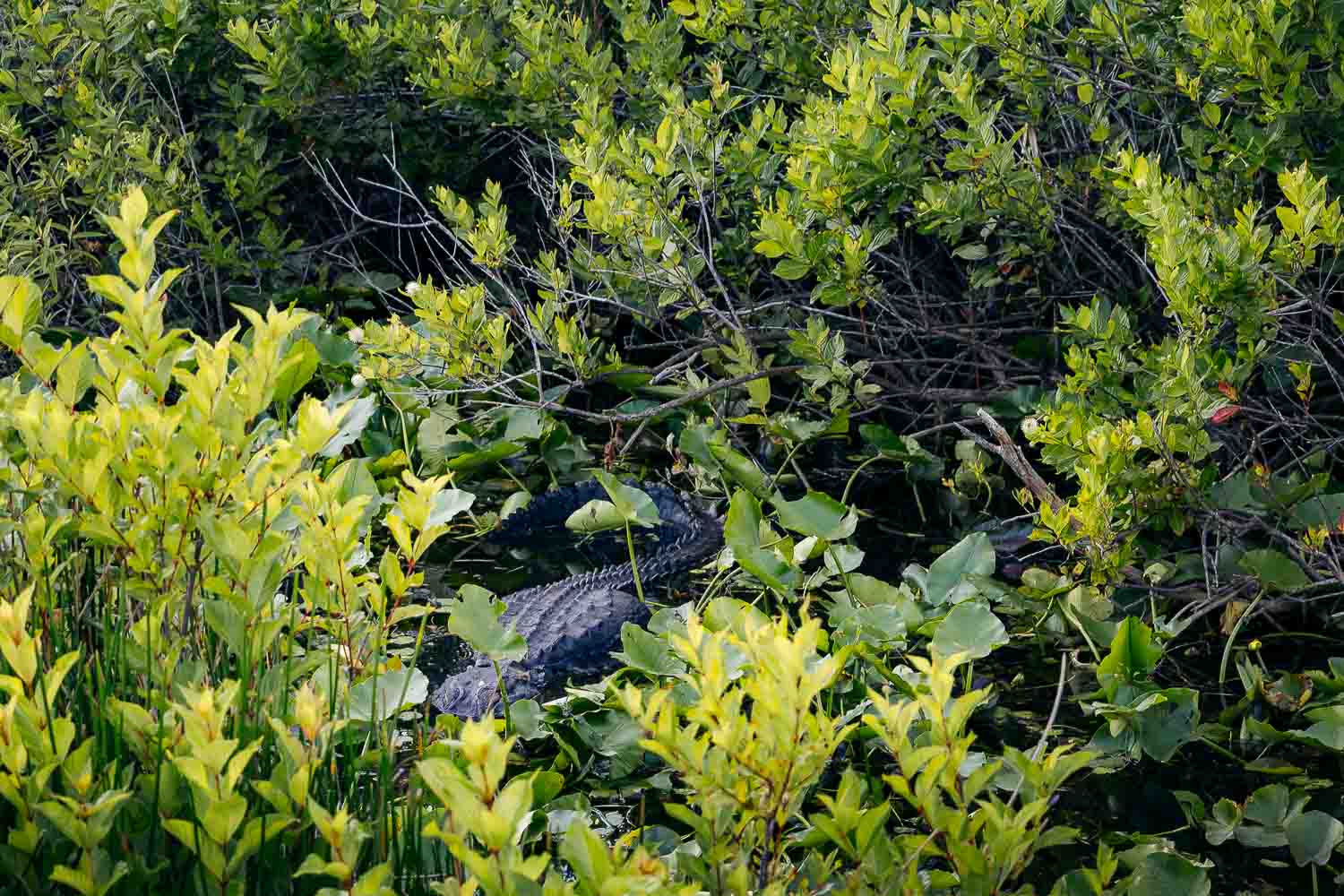
3. Long Loop Scenic Drive in Big Cypress National Preserve
Big Cypress National Park with the largest congregation of wild American alligators we’ve seen in South Florida is one of the closest neighbors of Everglades National Park. The border between them is rather undefined, at least for a visitor. So if you have time, definitely make this slow detour. (The road is unpaved. Driving along it gets slow.)
Once you make it onto the Long Loop Scenic Drive, you don’t need to wander far from the road. Nor will you want to do it. American alligators, some of the most reliable species of wildlife to see in the Everglades area, dawdle everywhere. You will see some right next to the road. Others may still be attending a “beach party” along the slough that runs parallel to the scenic drive.
You might not see the alligators at first. Look closely. They are here. Many times you would pull over to watch birds fishing in the shaded tunnels created by the dense tree canopy, just to spot a few large replies lying camouflaged right in the midst of all this birdy activity.
TIP: If you struggle with finding alligators outside of Everglades National Park, take clues from other drivers. Cars (although not as many as in the national park) normally congregate in the spots teemed with alligators or wading birds.
4. Flamingo Marina
The southern section of Everglades National Park is another favorite place to photograph tropical wildlife, including alligators. To say more, the Flamingo Marina is the cherry on the pie for those who look for the most elusive animals in the park. Aside from ever-present alligators, the place entices crocodiles, snakes, and manatees.
Unlike in other sections of Everglades, our experience in Flamingo wasn’t one for the books. We saw one juvenile crocodile snuggling right at the bottom of a pier. A rattlesnake, disguised among the withered brownish leaves, gave us a scare. And despite the assurance of the couple that had just seen a manatee coming out for the air right by the dock, our search and patience didn’t yield any results.
Round-snouted reptiles with dozens of teeth?.. No, we didn’t see any alligators in this part of Everglades. We should’ve probably expected it as we didn’t take any boat tours here to venture deeper inside the peculiar wilderness of the park. Or our misfortune might have just been caused by bad timing and a failure to plan a more immersive excursion.
5. Everglades City
If you go on an airboat ride across the wetlands of Everglades National Park from Everglades City, linger a little bit longer at Wooten’s animal sanctuary after the trip.
The place offers a more curated alligator encounter in Everglades where the short-legged beasts live on the other side of a heavy metal fence. The number of the wild reptiles here is impressive and will certainly work for staggering alligator photography.
Furthermore, you can not only photograph, but also get a chance to hold baby gators during a live alligator show.
TIP: For those who skip the western section of Everglades National Park, you can get similar alligator holding experience at the Everglades Alligator Farm in Homestead.
Read Next
- WILDLIFE IN ROCKY MOUNTAINS: Where to Photograph Wildlife in Rocky Mountain NP
- GLACIER NATIONAL PARK: 5 Best Places to See and Photograph Wildlife in Glacier Park
- CALIFORNIA COAST: The Best Places to See Marine Wildlife in California
