If I can name a few places that I’ve been putting on the back burner for years, then the Pismo Beach Monarch Butterfly Grove in Central California would be at the very top of the list.
Last updated: March 6, 2026
Pismo Beach Butterfly Grove: A Monarch Butterfly Sanctuary California
You, too, know about a wildlife paradise that exists right in your own backyard. Maybe not exactly right around the corner in our case. The Pismo Beach Monarch Butterfly Grove is approximately a 3-hour drive northwest of LA, after all. But it’s a beautiful place that a few months a year hosts a large colony of brightly-colored migrating insects. A place we’d been thinking about visiting, but missing the butterfly viewing window year after year.
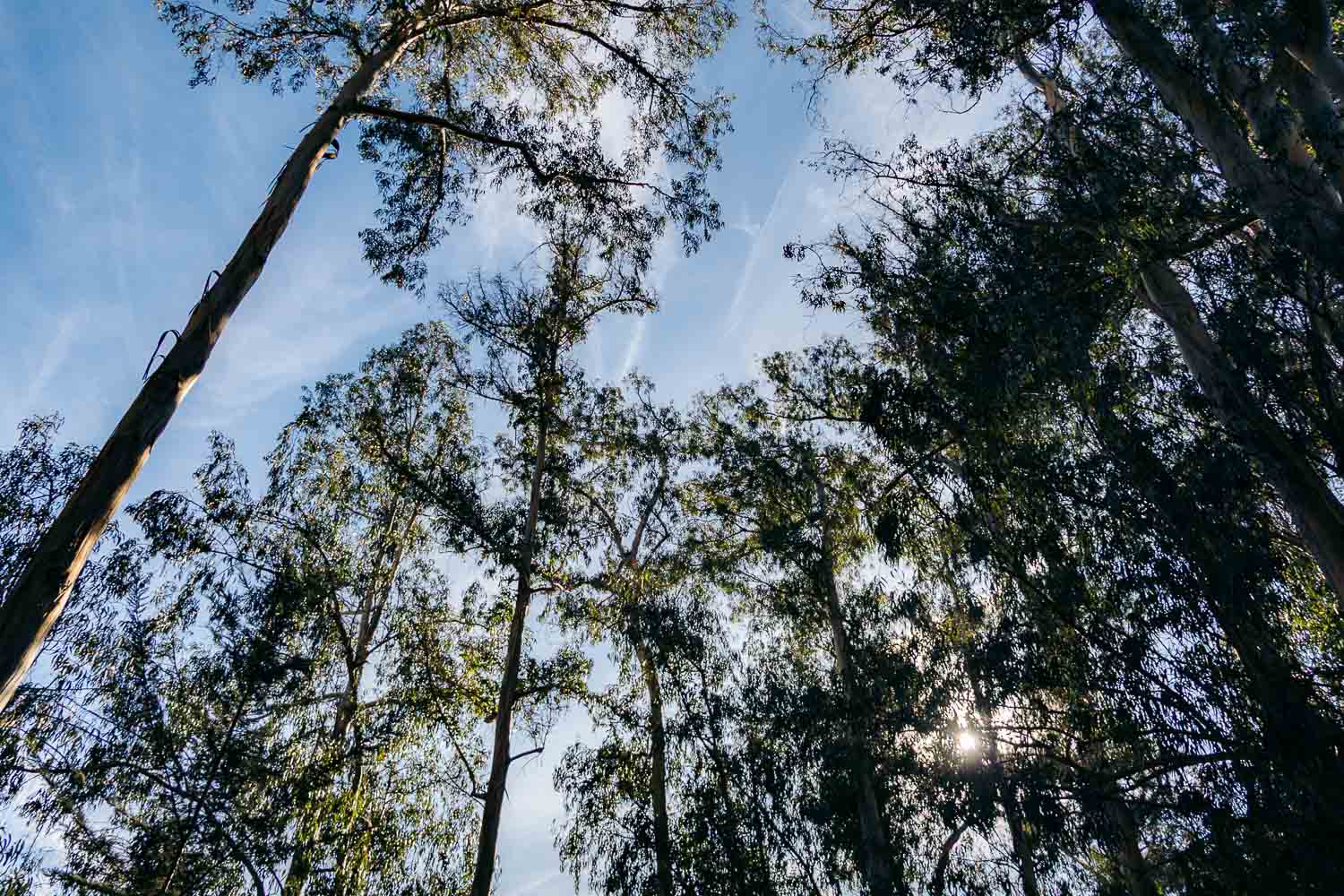
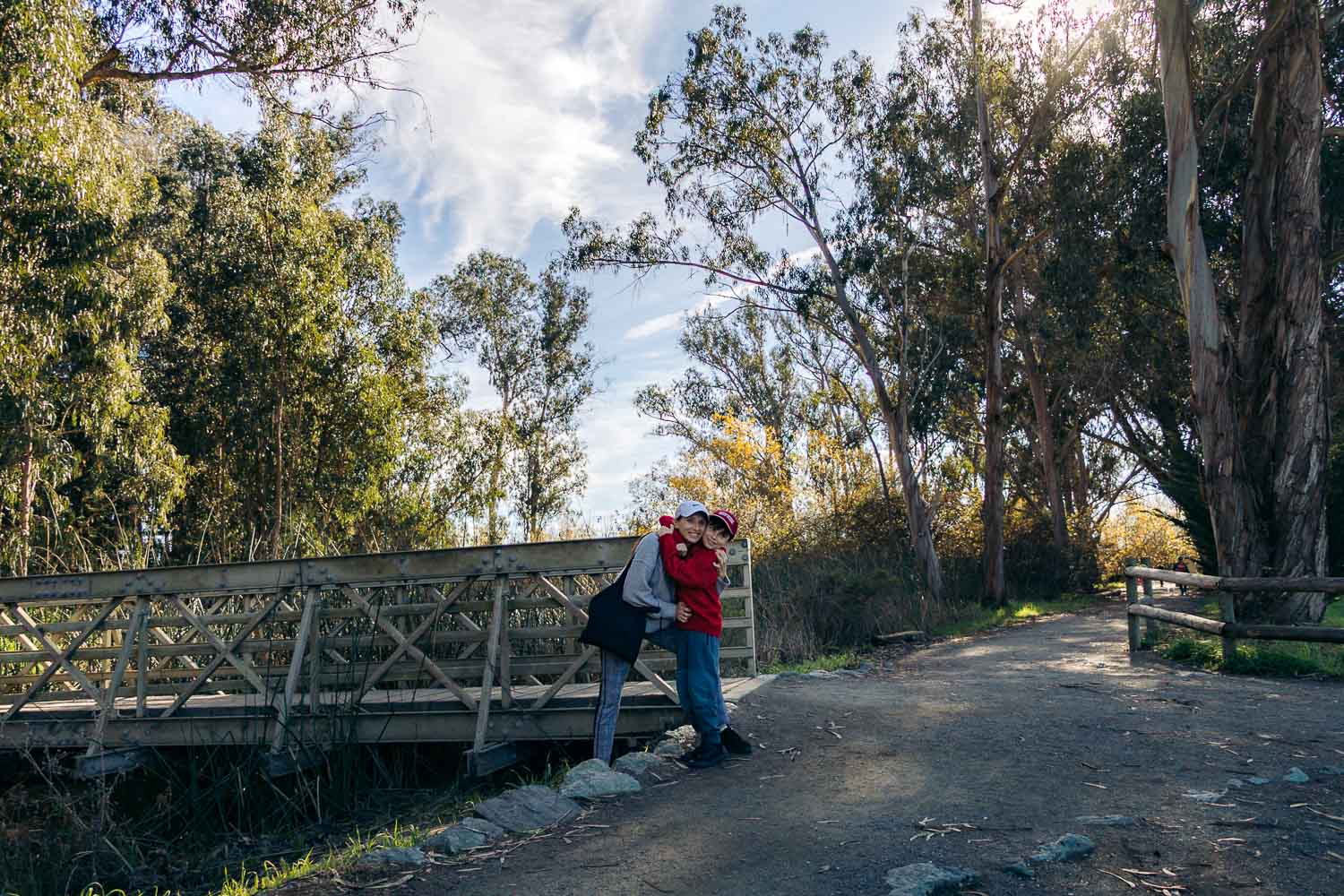
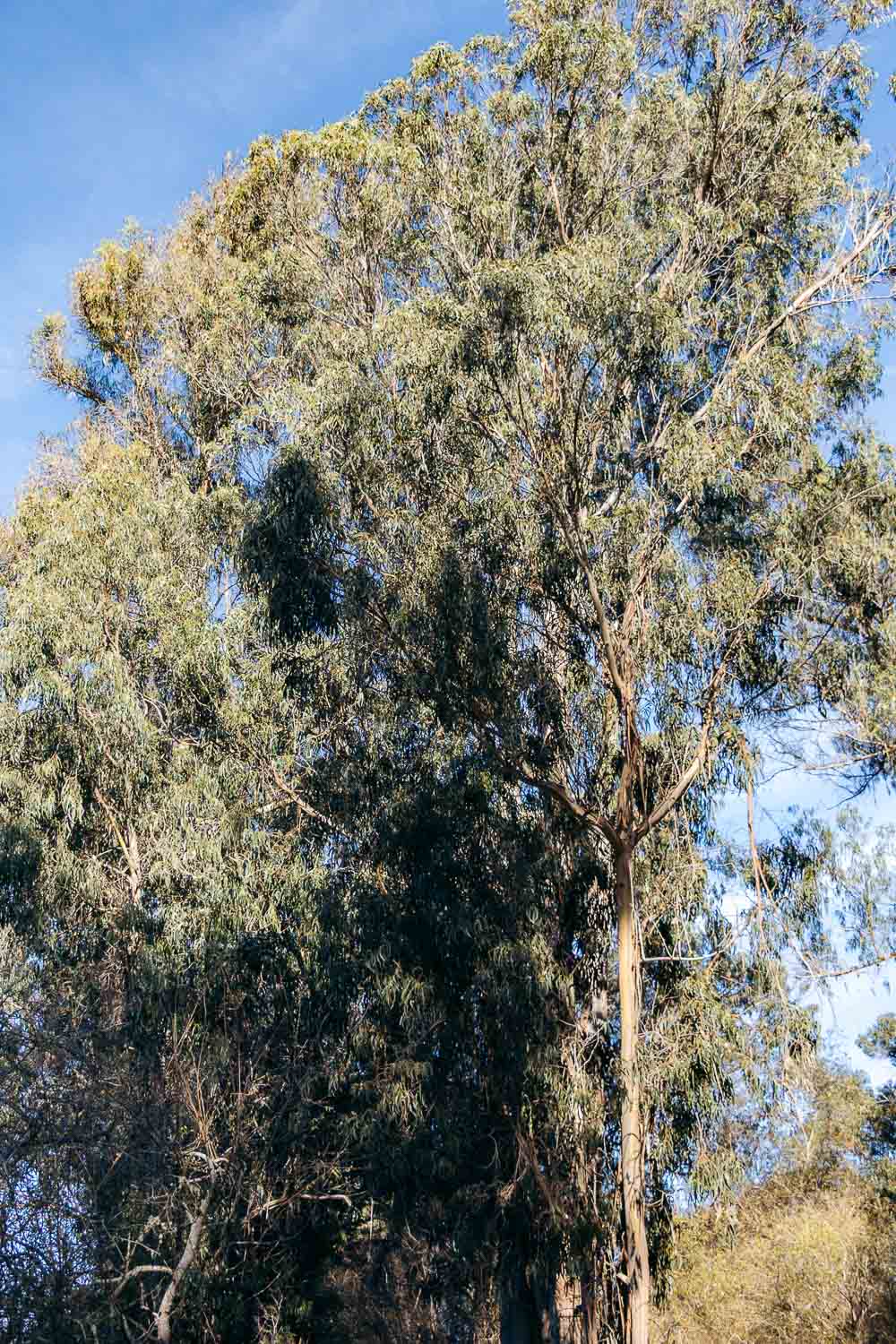
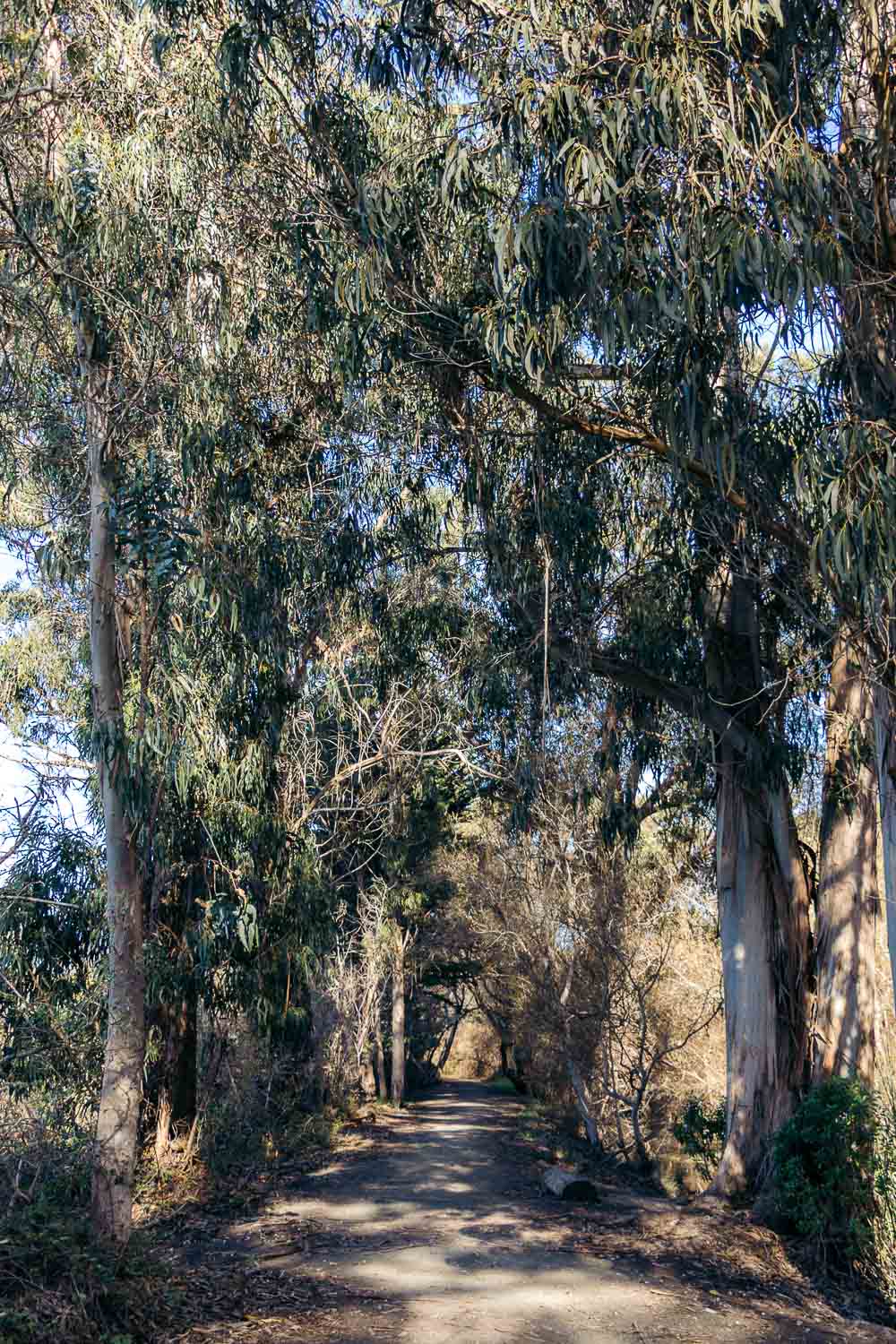
We finally made it to the Pismo Beach Monarch Butterfly Grove this year. One of more than 200 overwintering sites in coastal California, the grove is a small plot of land plastered with lofty eucalyptus trees and crisscrossed with several hard-packed walking trails.
We didn’t expect a lot from the Pismo Beach Monarch Butterfly Grove. Closely monitoring the site’s official website for the number of butterflies wintering in Pismo Beach year after year, it was easy to notice the rapid decline in the numbers of the once huge colony.
Just a few years ago, more than 10,000 monarch butterflies would arrive in Pismo Beach at the end of October. Today this number is just a mere fraction of what it used to be. Less than a thousand monarch butterflies winter in Pismo Beach.
Migrating Monarch Butterflies
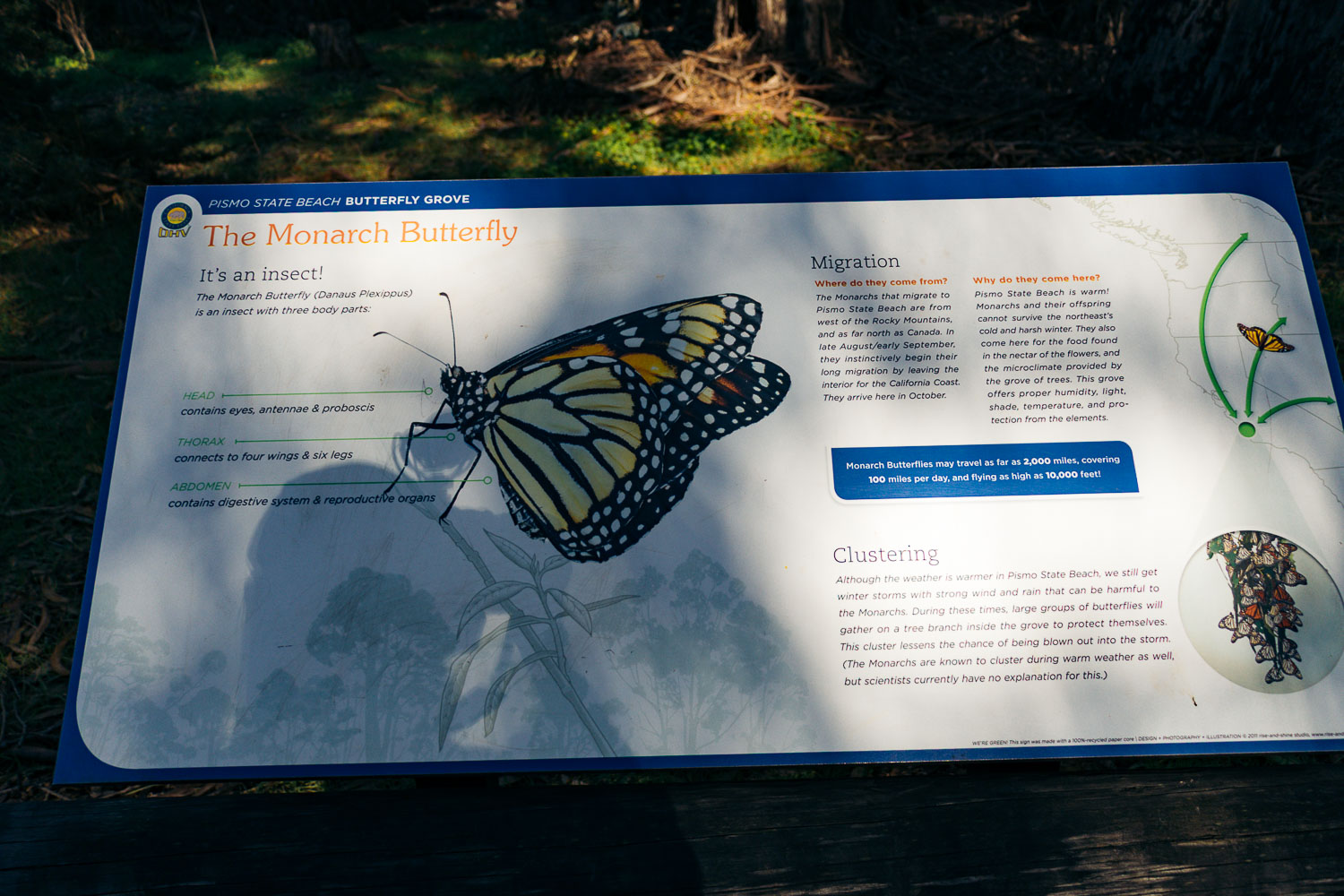
Monarch butterflies are rather complicated creatures. Certainly more complicated than they appear to be. The butterflies that come to the Pismo Beach Grove have never been here before. Moreover, they can easily be the fourth generation of the butterflies that wintered at California’s Central Coast last year.
The vibrant insects have a short lifespan. Spring and summer generations live from 2 to 6 weeks. The migration generation as the one that reaches the Pismo Beach Monarch Butterfly Grove can survive up to 8 months.
How Do Butterflies Find Their Way to the Pismo Beach Grove?
The antennas of monarch butterflies fulfill far more practical duties than just adding finishing touches to the glamorous “look” of the insects. Sensors in the antennas provide information about the time of day. Combined with the butterflies’ eyes that detect the sun’s position, they serve as insects’ internal navigational system.
But long distances along with the change of the weather take their toll on the tiny creatures. By the time the monarch butterflies reach overwintering sites along the California coast, they are in the state of reproductive diapause. The butterflies cling to the leaves and branches of the trees to shelter themselves from the elements and predators. The majority of the insects move only then the sunlight warms them up.
Why Do Fewer Butterflies Travel to the Pismo Beach Grove?
Monarch butterflies migrate to the warmer, overwintering sites from the north. Some may travel nearly 2,000 miles, flying all the way from Canada. Monarch butterflies west of the Rocky Mountains come to coastal California. Those that fly from the areas east of the Rockies usually aim for overwintering sites in central Mexico and along the Gulf Coast.
Sadly, the development of land on or near the overwintering sites and the reduction of milkweed, a primary food source of monarchs, have devastating consequences. Fewer and fewer butterflies arrive at the Pismo Beach Grove in late fall. The current number is a whopping 90% drop from a few decades ago.
READ MORE: Butterflies Galore at Key West Butterfly & Nature Conservatory

Our Visit
As I mentioned earlier, we didn’t expect to observe many insects at the Pismo Beach Monarch Butterfly Grove. Yet even with our low expectations, it was sad to see an almost empty grove that had once abounded with monarch butterflies.
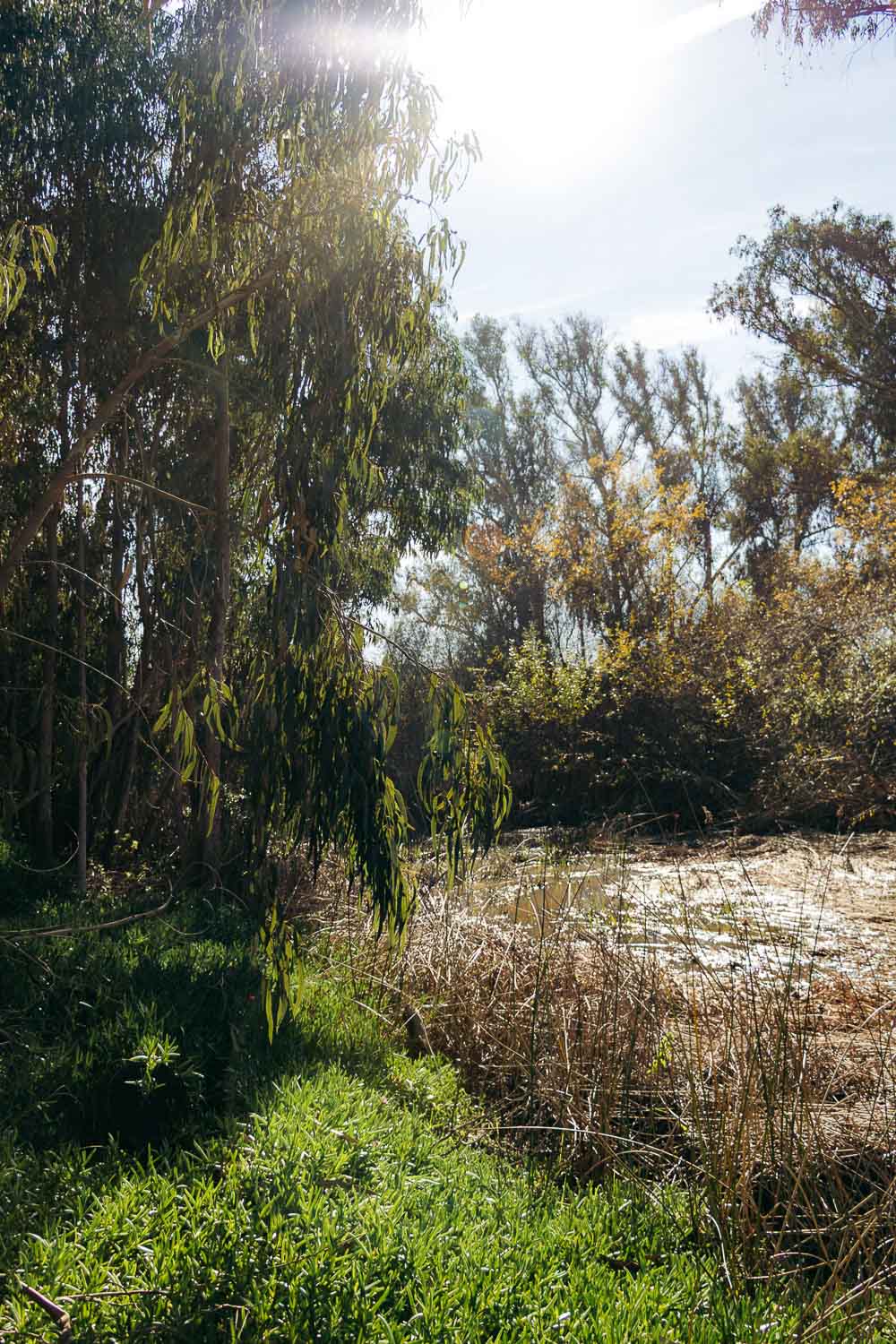
Only a few orange-winged insects flew between the crows of the tall eucalyptus in the spots lit up by sunshine. The rest of the grove, shaded from the sun, was nice to walk through, but offered even fewer butterfly watching opportunities for the naked eye.
You needed binoculars to spot butterflies’ movements up in the tree canopy. We didn’t have it. Several stationary binoculars at the grove also offered only a limited field of view. The vibrant flying insects were somewhere up there, no doubt about it. The occasional shoutouts and finger pointings of visitors with binoculars were as good of a proof as you can get. But you couldn’t really see the butterflies with the naked eyes.
When Is the Best Time to Watch Monarch Butterflies?
Monarch butterflies start arriving at the Pismo Beach Grove as early as late October. They stay here all through February. The peak time to watch the butterflies are December and January.
Is the Pismo State Beach Monarch Butterfly Grove Worth a Visit?
It’s the question of priorities. If you are looking forward to seeing a butterfly sanctuary where vibrant insects are countless and the trees are obscured behind their orange wings with back veins then the Pismo State Beach Monarch Butterfly Grove is no longer that place. Monarch butterflies have been bypassing it for years now on their journey to new overwintering destinations.
If you long to take a short walk among the towering eucalyptus, then the grove is just what you need. Pick an early morning or late afternoon hours for a more serene experience.
How to Visit Pismo Beach Monarch Butterfly Grove
- Address: 400 S Dolliver St, Pismo Beach, CA 93449
- Butterfly season: Late October through February
- Hours: Dawn to dusk
- Admission: Free


Read Next
- WHALE WATCHING: Winter Whale Watching off Ventura. Yes, It’s Absolutely Worth It!
- WILD OTTERS: Sea Otters in Morro Bay: Where, When, and How
