No place challenged our determination and the willingness to get to our final destination like the Castner Glacier Ice Cave Trail in late April, which in Alaska is the very end of the winter season.
Last updated: July 11, 2026
How to Hike the Castner Glacier Ice Cave Trail at the End of the Winter Season (Late April)
The Castner Glacier Ice Cave Trail wasn’t an unheard of place to me before we even pulled over to the side of Alaska Route 4 (AK-4) on the last full day on our Anchorage-Denali-Fairbanks road trip. I had had my eyes on the hike a few months ago when we first traveled to Fairbanks. Back then at the very start of the winter season, walking the frozen creek bed or along its bank to an ice cave raised way too many concerns.
Would the creek be frozen over? Would we make it back to the city before the darkness sucks out the last daylight?
The beginning of winter (October – November) might have looked almost identical to the very end of the season in terms of the snow, wind, and cold. But days were significantly shorter.
With the Castner Glacier Ice Cave trailhead being located approximately 2.5 hours away from Fairbanks, we feared that we might not be able to get back to the city before the pitch-black Alaskan darkness descended. This is exactly the situation I try to avoid when driving (I was a driver during that trip) in a new place.
At the end of April, which is considered the very trail of the winter season in Alaska, the days were much longer. The sun didn’t set down until almost 10 pm. This gave us leverage and finally a much-anticipated opportunity to hike the entire Castner Glacier Ice Cave Trail.
But with one issue out of the way, we had a new matter to worry about.
Would the Castner Glacier Ice Cave still stay strong and retain its charming frozen shape at the end of April, the very tail of the winter season in Alaska?
Getting to Trailhead
The Castner Glacier Ice Cave trailhead is an unmarked spot along Alaska Route 4. The closest city, Delta Junction, sits roughly 50 miles north of it. The city also serves as a turning point. Here you get off Alaska Route 2 that you’ve stayed on for the past 1 hour 30 minutes after leaving Fairbanks and veer to the right to continue on AK-4.
Drive for approximately 50 more minutes until you reach the Castner Creek bridge. Cross over and park on the right-hand side. You will find a rather spacious designated pull-off area here.
The drive from Fairbanks to the Castner Glacier Ice Cave Trail is approximately 2.5 hours (144 miles).
Note: In Alaska, it’s more common to call the route that you’ve just taken the Richardson Highway. The 368-mile road stretches between Valdez and Fairbanks. Technically and not lastly because of its length, the highway is split into two routes. The northern part spans roughly 96 miles from Fairbanks to Delta Junction. It’s known as Alaska Route 2. Alaska Route 4 is the southern section of the Richardson Highway that runs from Delta Junction to Valdez. If you use Google Maps or GPS tracker in your car, you’ll be more likely to see AR-2 and AR-4 on your screen.
The Castner Glacier Ice Cave Trail starts at Milepost 218 on the Richardson Highway.
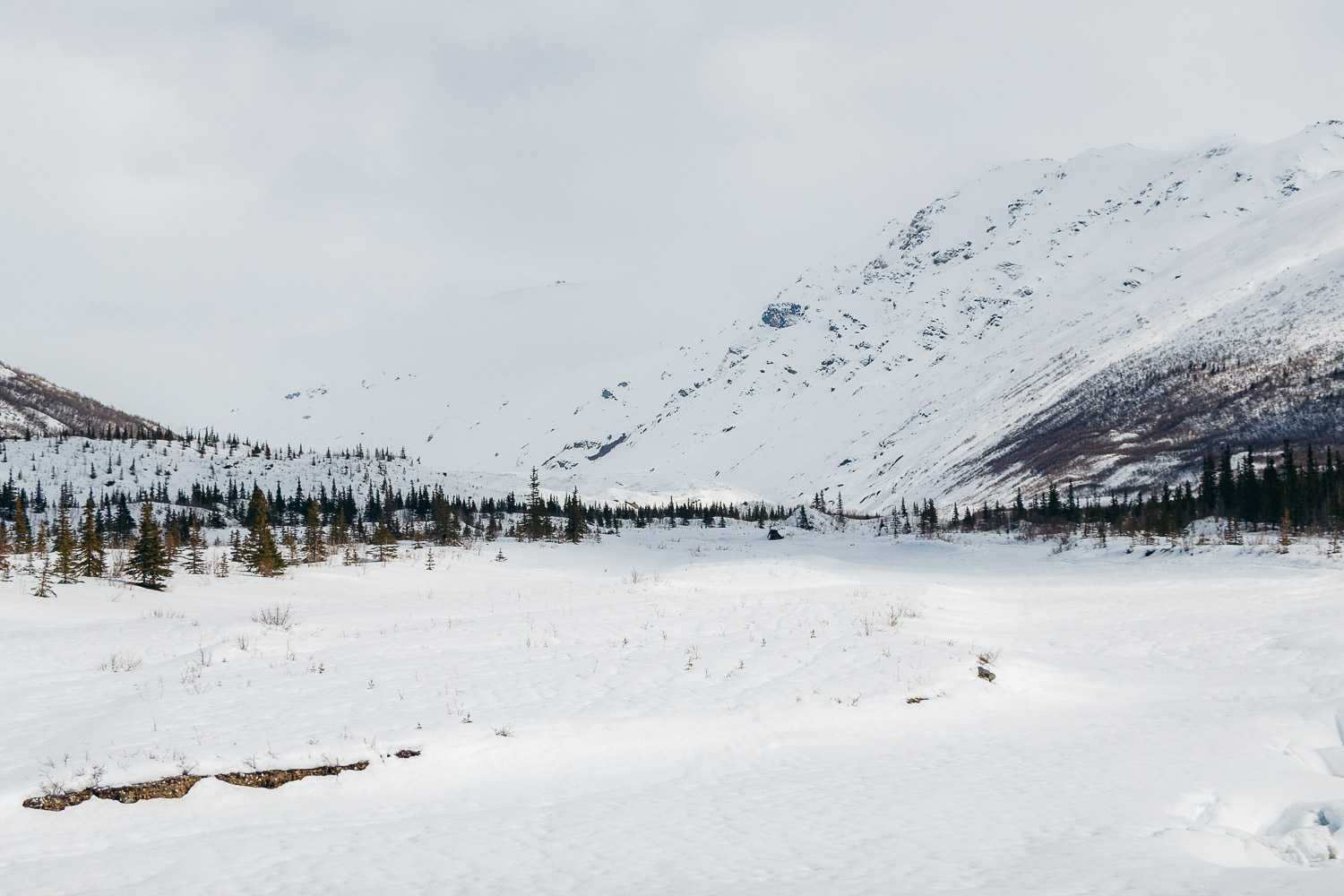
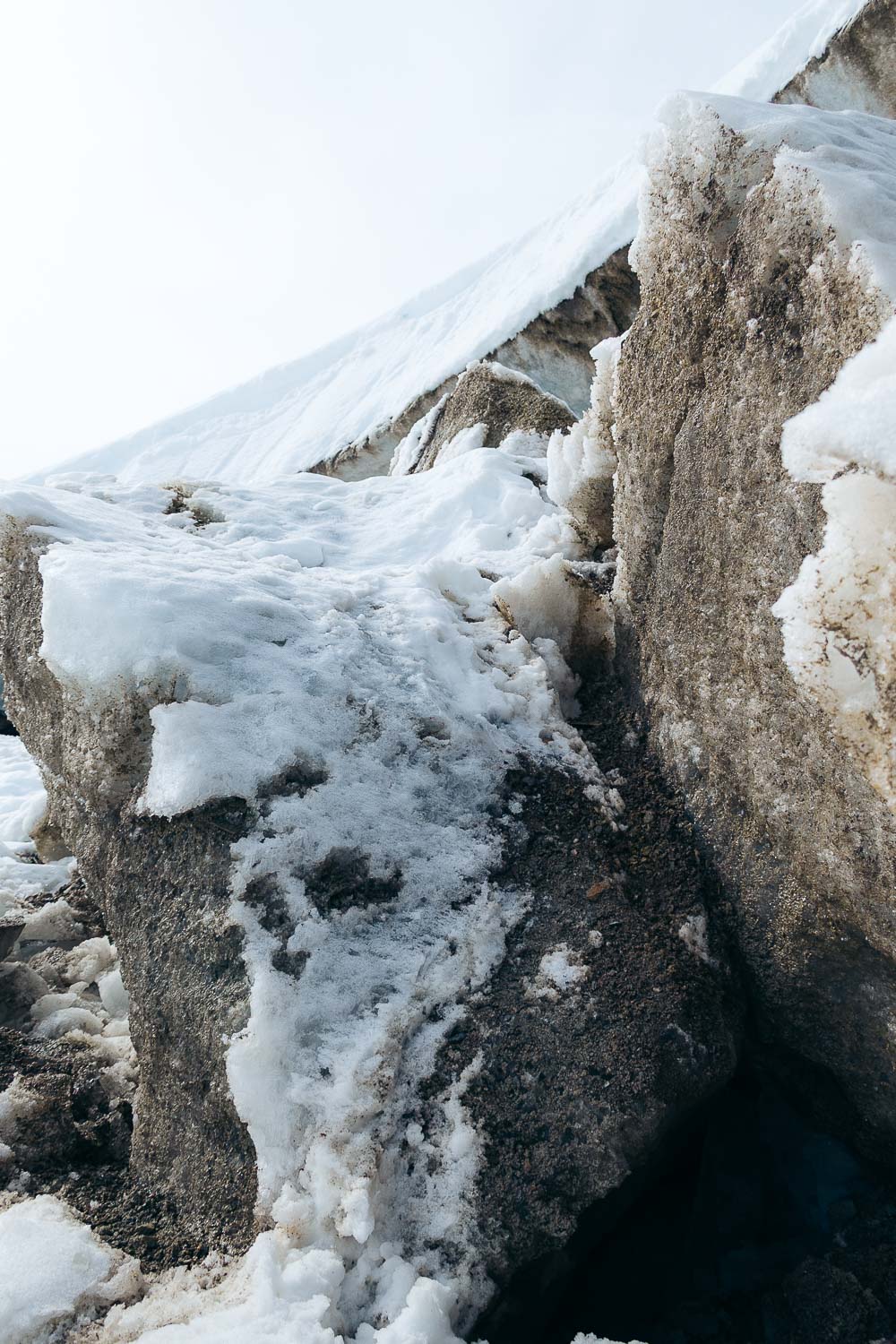
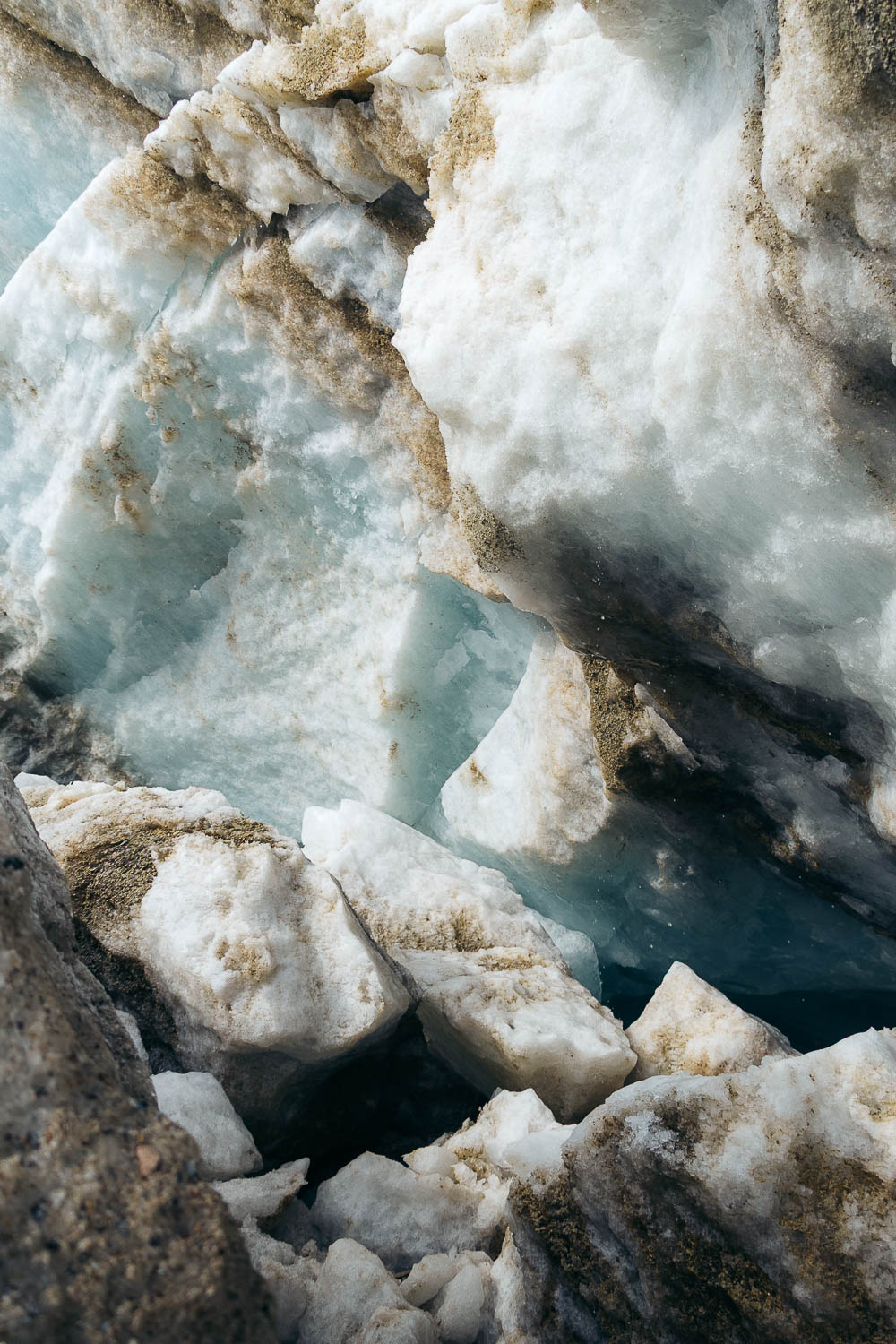
Castner Glacier Ice Cave Trail
The peculiarity of the Castner Glacier Ice Cave Trail lies in a slight shift of the actual hiking route depending on the season.
Winter Trail: In winter, when Castner Creek is frozen over and the deep snow blankets its banks, the trail cuts right through the creek. You still want to keep closer to the south side and follow a packed trail to avoid deep snow and potential areas of open water.
SummerTrail: In summer, when the water in the creek gurgles and can be quite swift at times, the north side of the creek (the far side of the bridge you just crossed) plays a role of the temporary host of the Castner Glacier Ice Cave Trail.
The Castner Glacier Ice Cave Trail is 2.6 miles, out and back. (Some sources say it’s 2.5 miles.)
- Distance: 2.6 miles, round trip
- Elevation: No noticeable change in elevation
- Difficulty: Moderate (due to wind in the summer and deep snow in winter)
- Time: 1.5 – 3 hours (depending on the condition of the trail, rather than the pace of a hiker)
READ MORE: Thunder Bird Falls Trail: An Easy Hike near Anchorage
Hiking the Castner Glacier Ice Cave Trail at the End of the Winter Season (April)
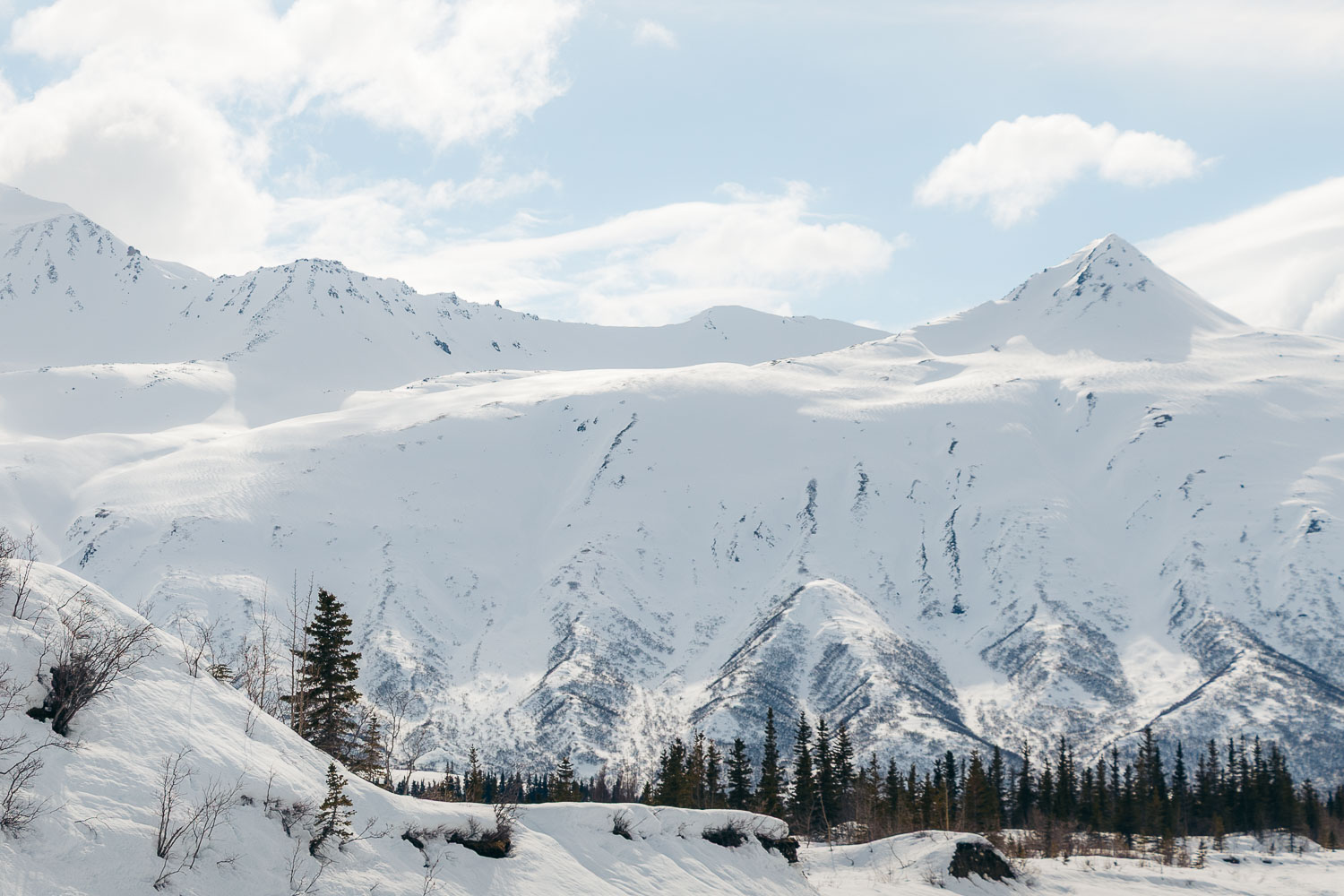
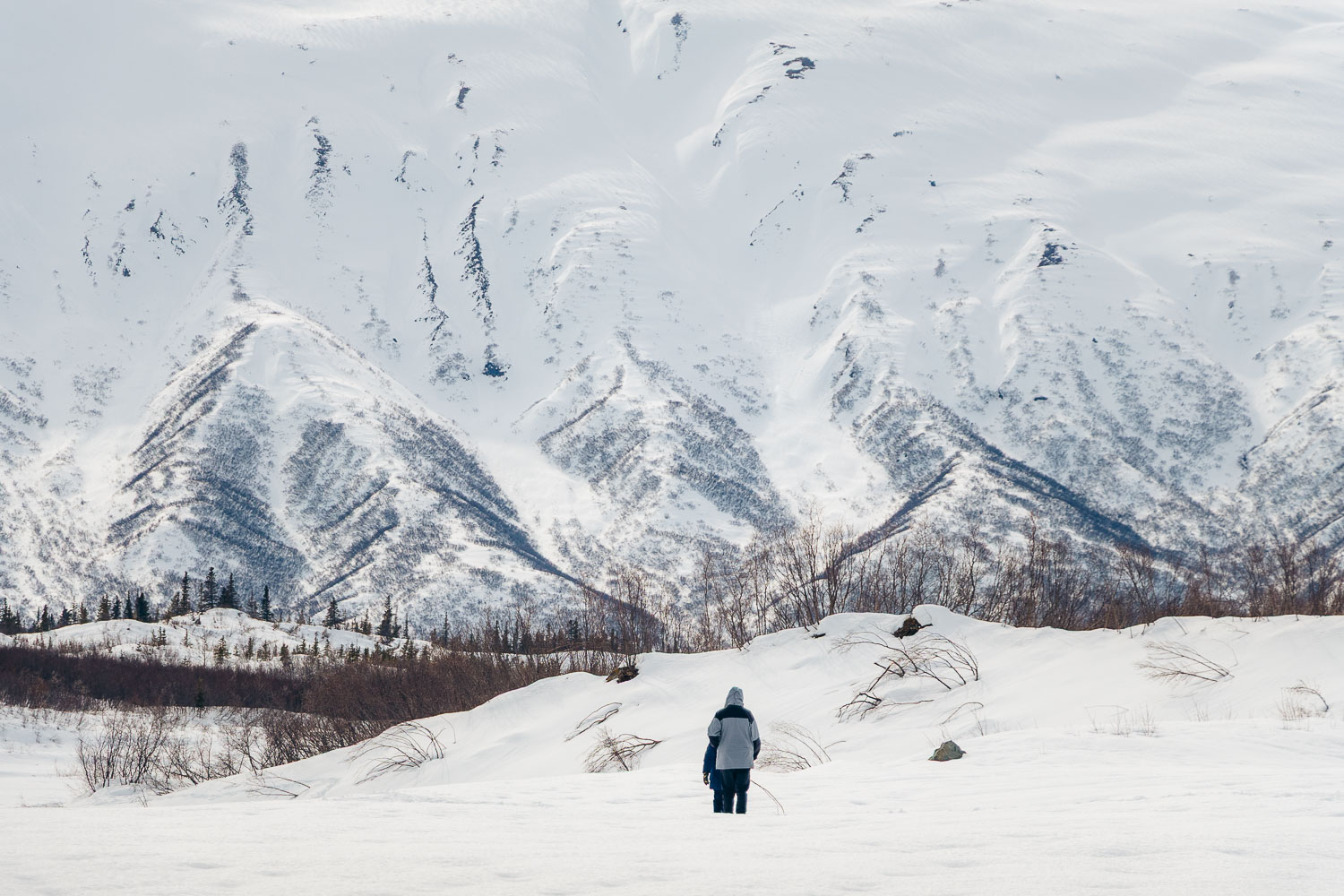
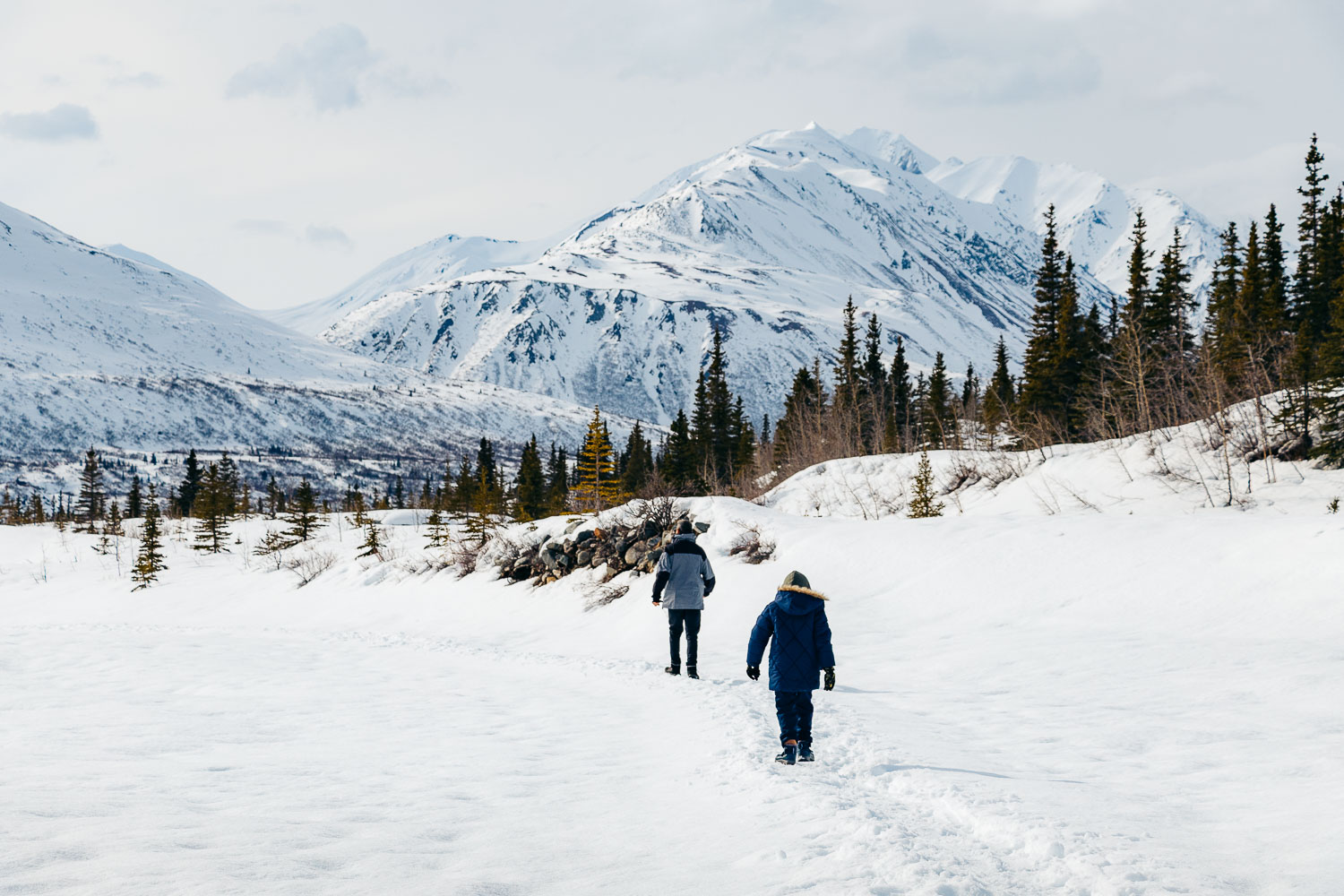
At the end of April when Fairbanks, much warmer now, was showing the undeniable signs of the upcoming spring, the Castner Glacier Ice Cave Trail still looked like a dreamy winter wonderland. Mountains surrounding Castner Creek still stood with their tops and sides decked out in festive white coats.
The river itself, frozen and snowed over, showed no sign of giving in to the warmer season. In its winter fashion, the Castner Glacier Ice Cave Trail still cut directly through the middle of the creek and ran into the vast white wilderness ahead.
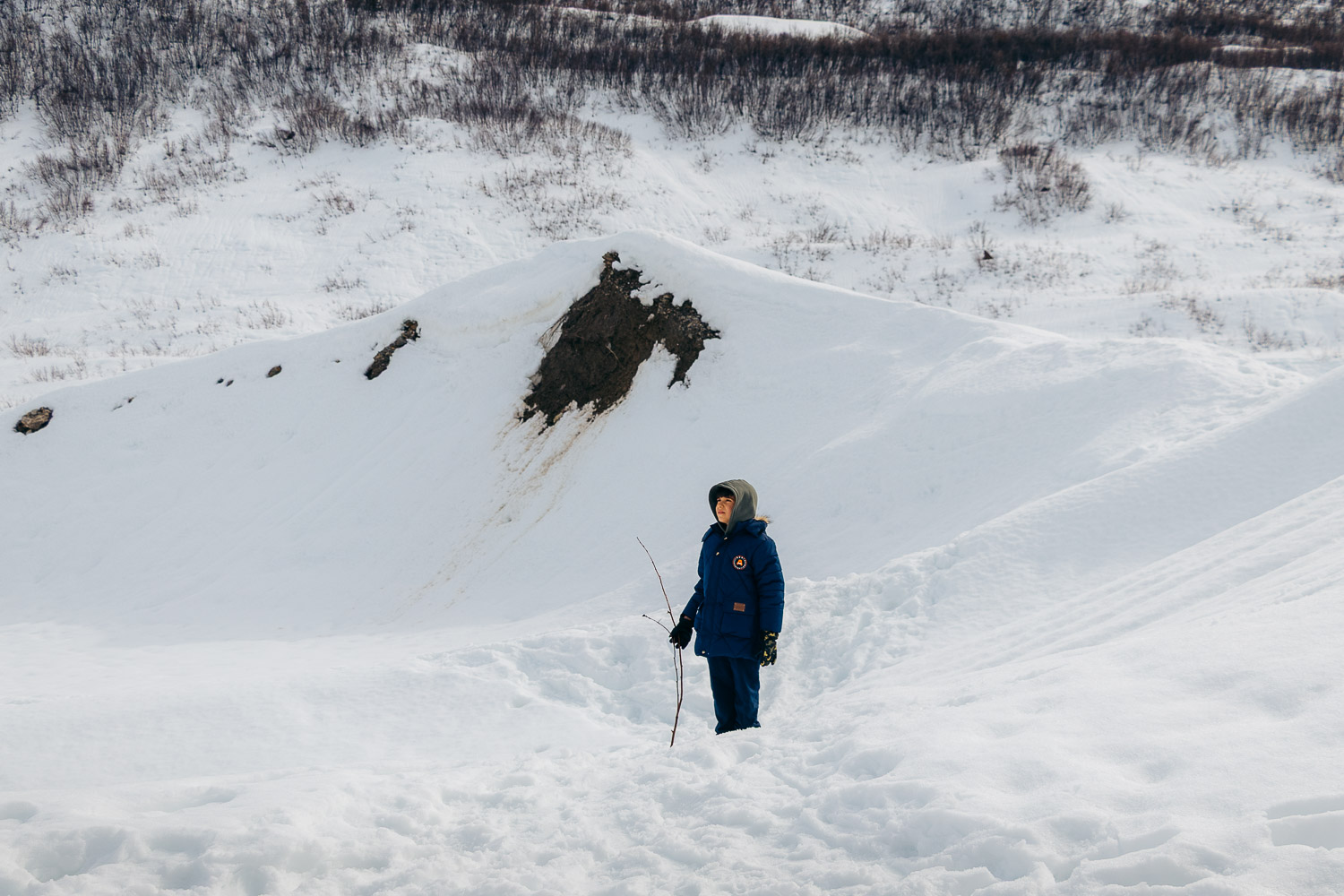
The snow along the banks of the river was deep. In some places it could easily reach up to your waist. To get to the glacier ice cave, we had to closely follow a broken-out trail.
We did just that and hiked along the Castner Glacier Ice Cave Trail fairly easily for the first 600 feet or so. Then the trail, still clearly marked, but lacking fresh footsteps, got less packed. Our legs started getting sucked in the snow more often, first up to our knees, then, as we moved farther, higher.
Our Mistake: We didn’t realize it at first. But soon the reality was undeniable. We followed the wrong fork at a trail “junction”. The side trail that we had missed was a very narrow path that looked like somebody just shortcut through the deep snow to get to another broken-out trail a few feet away.
We persevered along the first very unstable and challenging trail for roughly 100 feet until we reached another unfussy trail that sprinted to the left and led us to a sturdy, broken-out path. Hiking after that point was a fast, easy, and enjoyable feat.
TIP: As you hike to the Caster Glacier Ice Cave, look back frequently. The mountains behind, coated in white, make this hike the most beautiful adventure you’ve probably had.
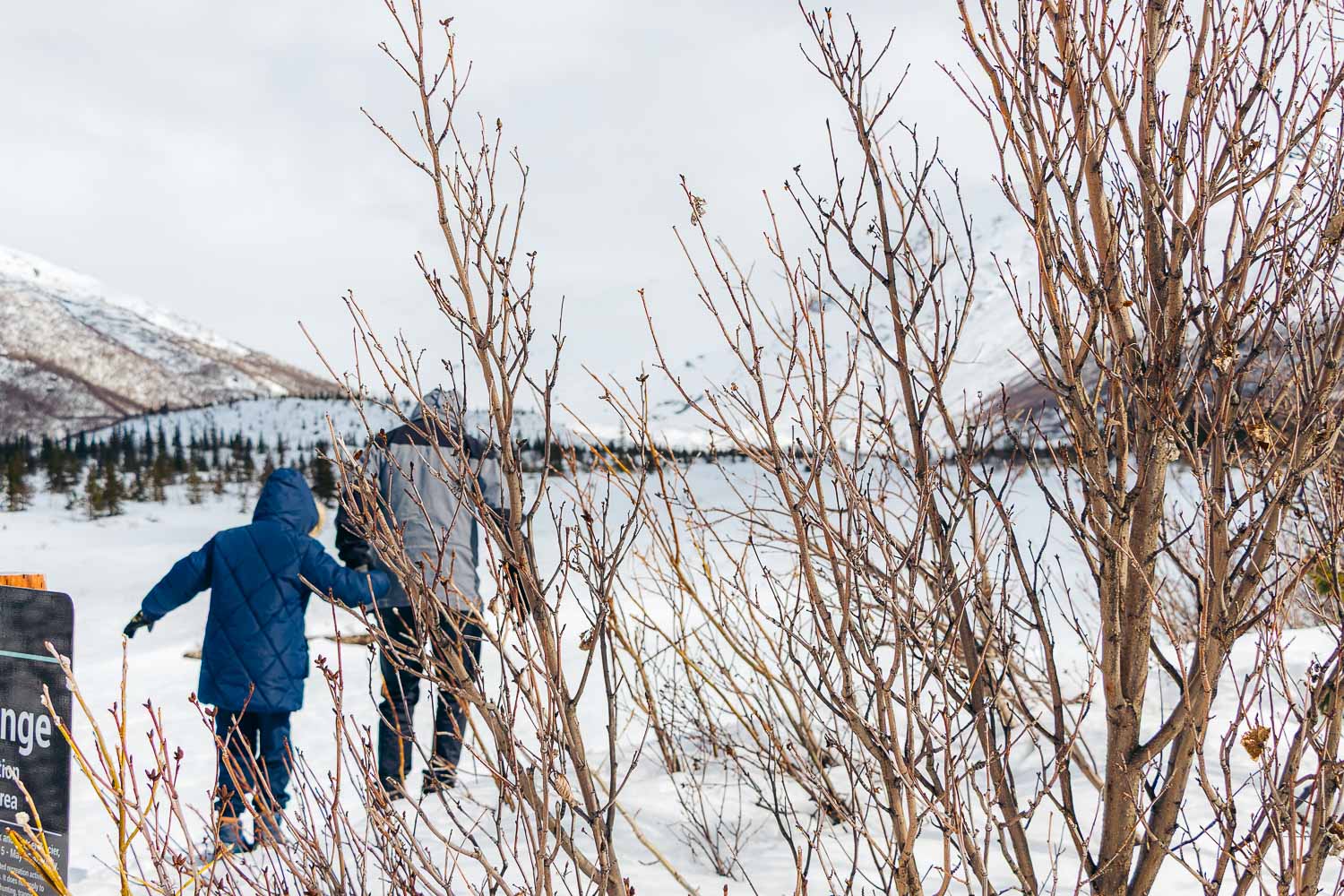
At the Ice Cave
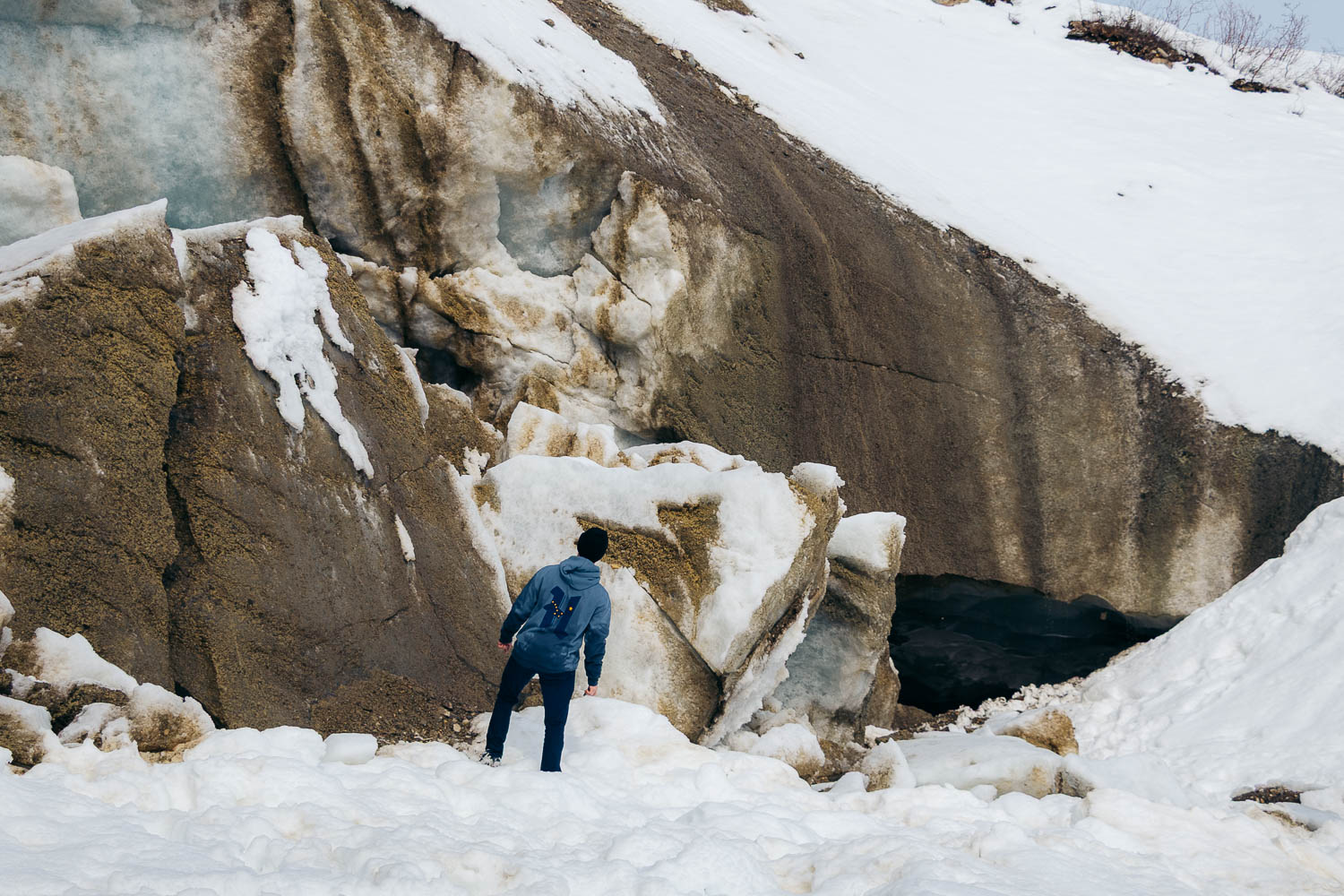
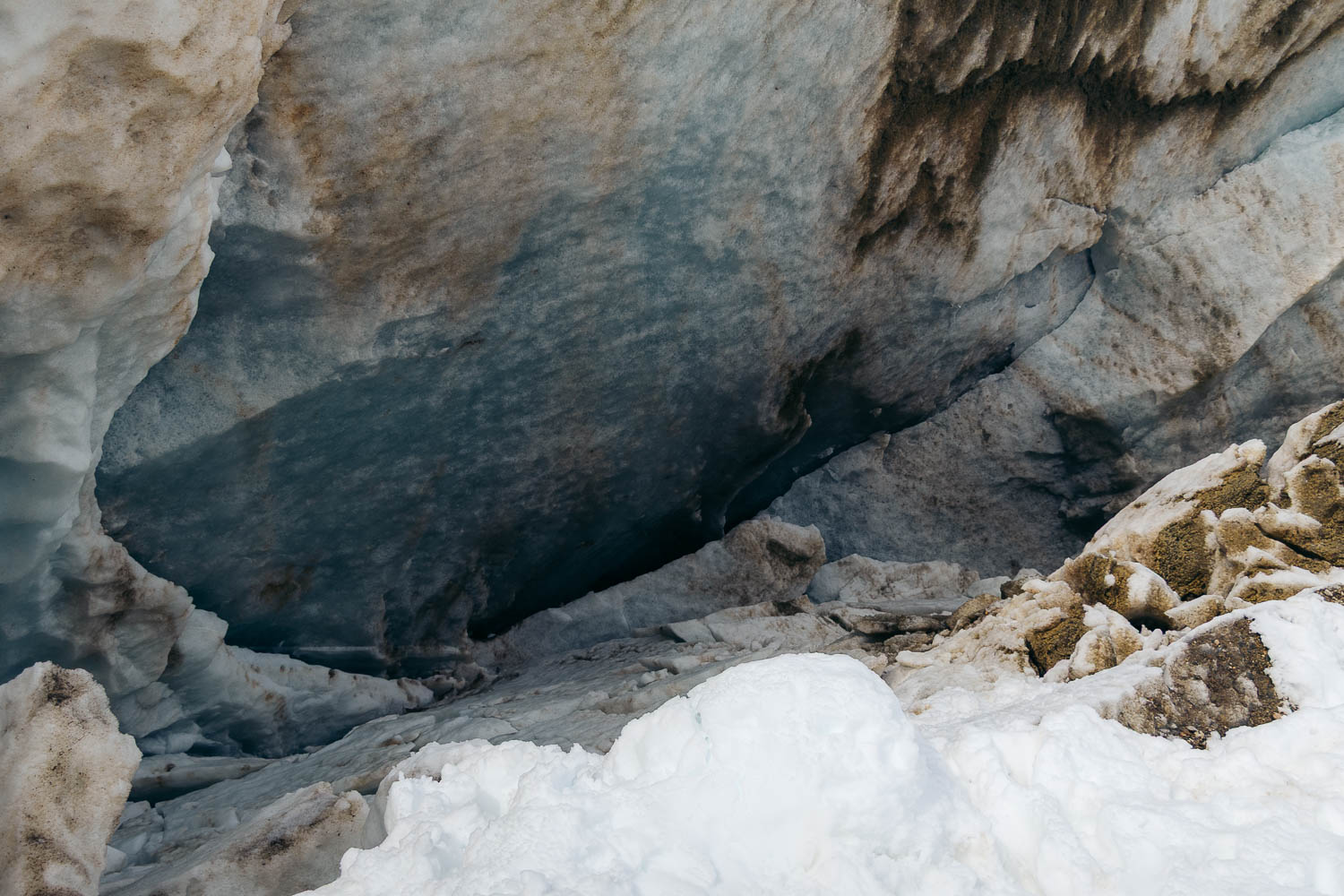
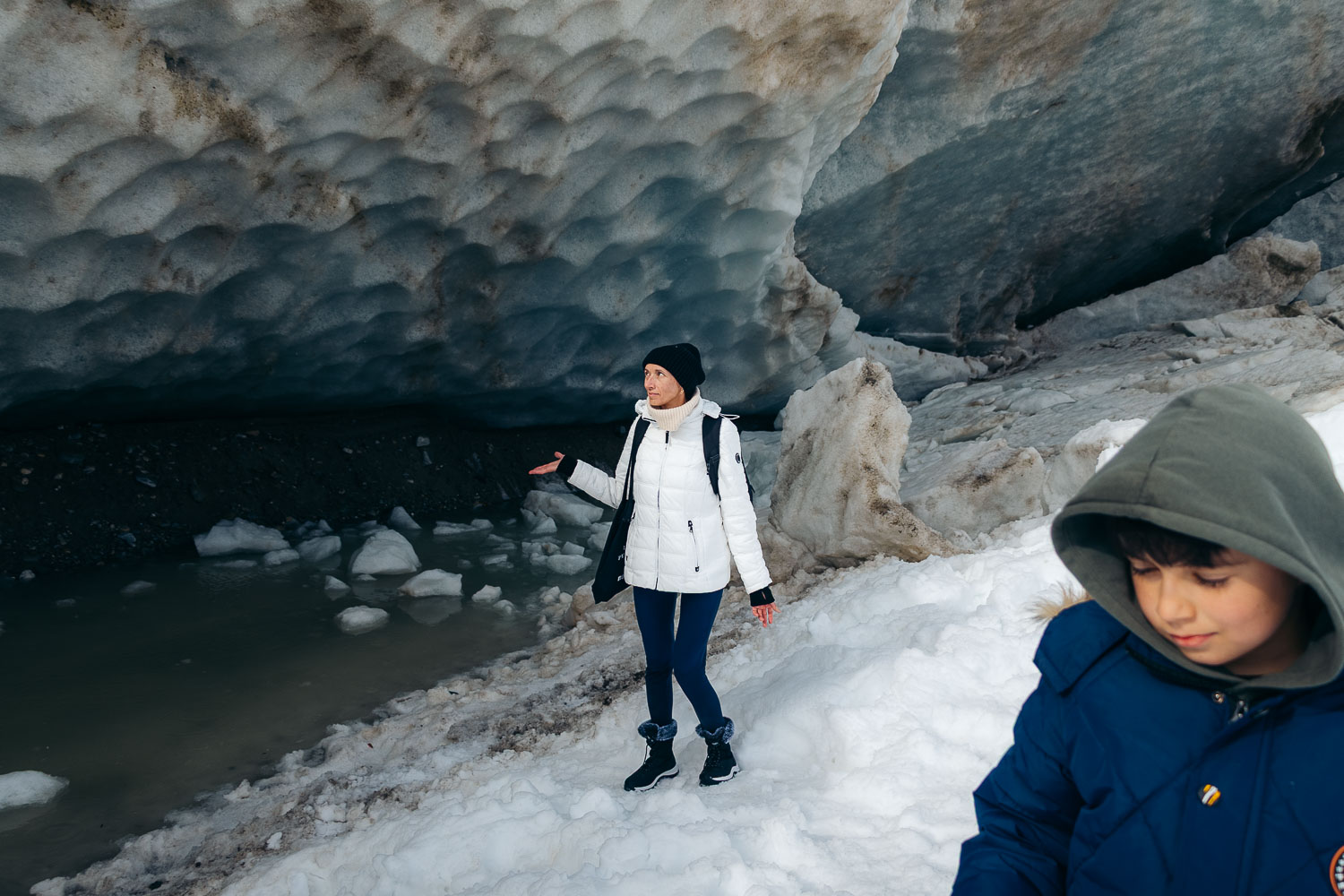
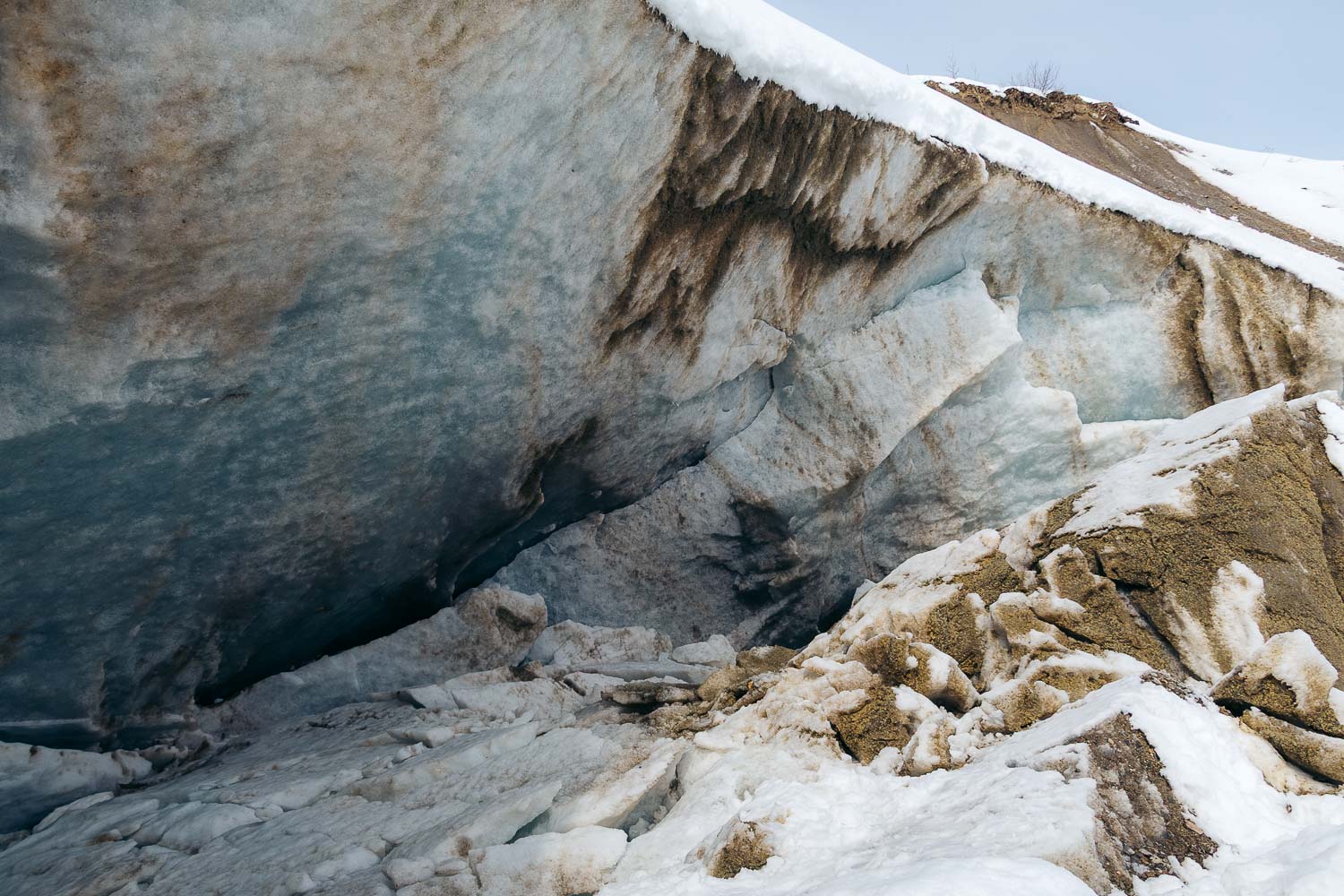
While April still held onto the abundant snow and thick icy cover on the creek, the weather was getting warmer. Too warm for the ice cave to stay intact. The front side of the cavern had already collapsed. Water was dripping from the remaining part of the icy ceiling. Occasionally, pebbles and rocks dropped from the roof. A large puddle manifested right at the entrance to the cave.
Walking deeper into the dark cavern didn’t feel entirely safe.
We spent some time at the cave, emptying our shoes off snow, taking pictures, and just admiring the resplendent views all around us before heading back to the car. This time, we knew exactly which trail to take, the sturdiest and most packed. As expected, our hike out didn’t take nearly as long as the hike to the cave. We were back in the car in no more than 20 minutes.
At the end of April, the glacier ice cave wasn’t the most epic. But the trail itself was absolutely stunning. It was easily one of the most beautiful hikes we’ve done.
READ MORE: How to Visit Denali National Park in April (Winter Guide)