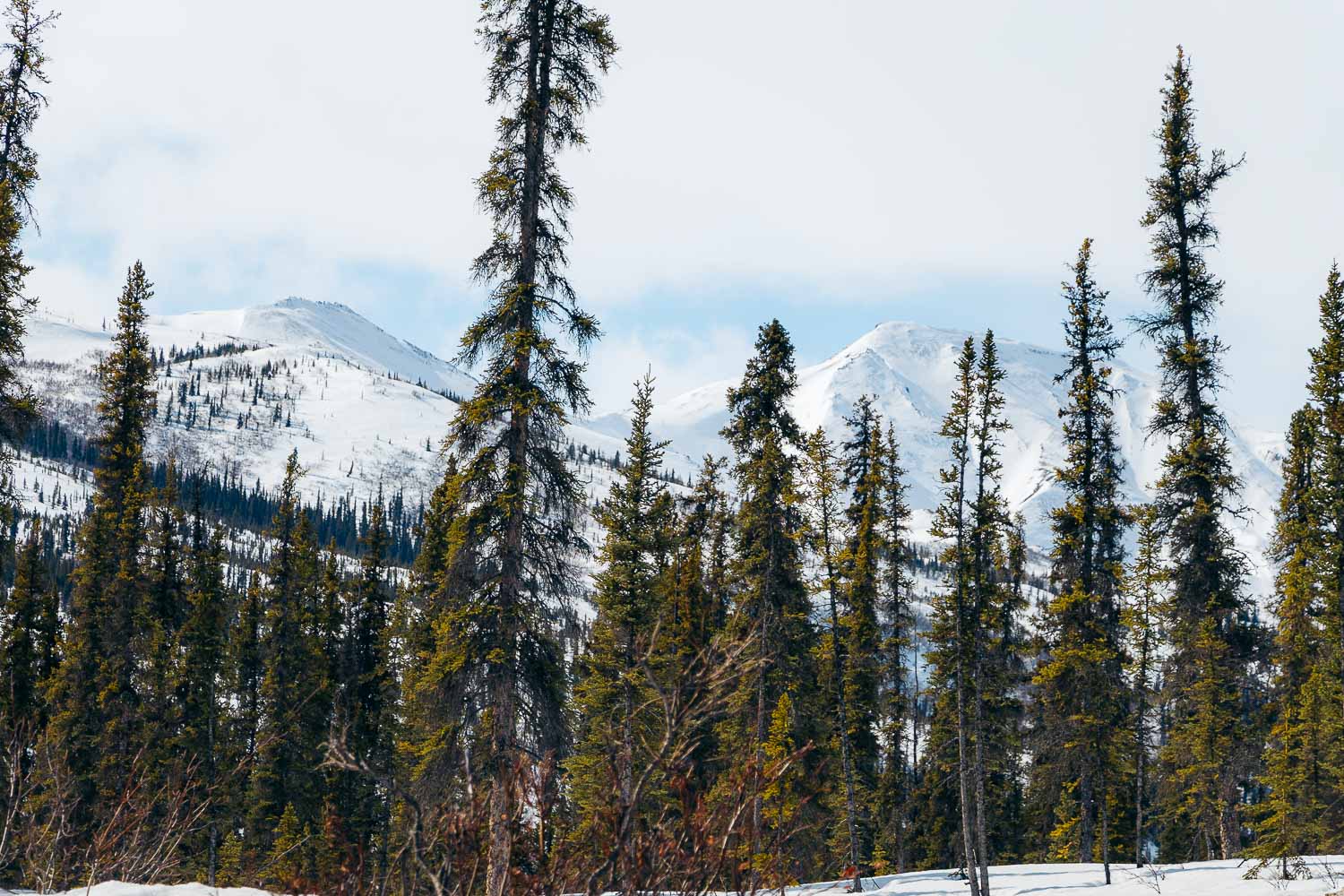
A highly anticipated part of our Anchorage-Fairbanks road trip, Denali National Park still looked like a winter wonderland at the end of April.
Last updated: July 13, 2026
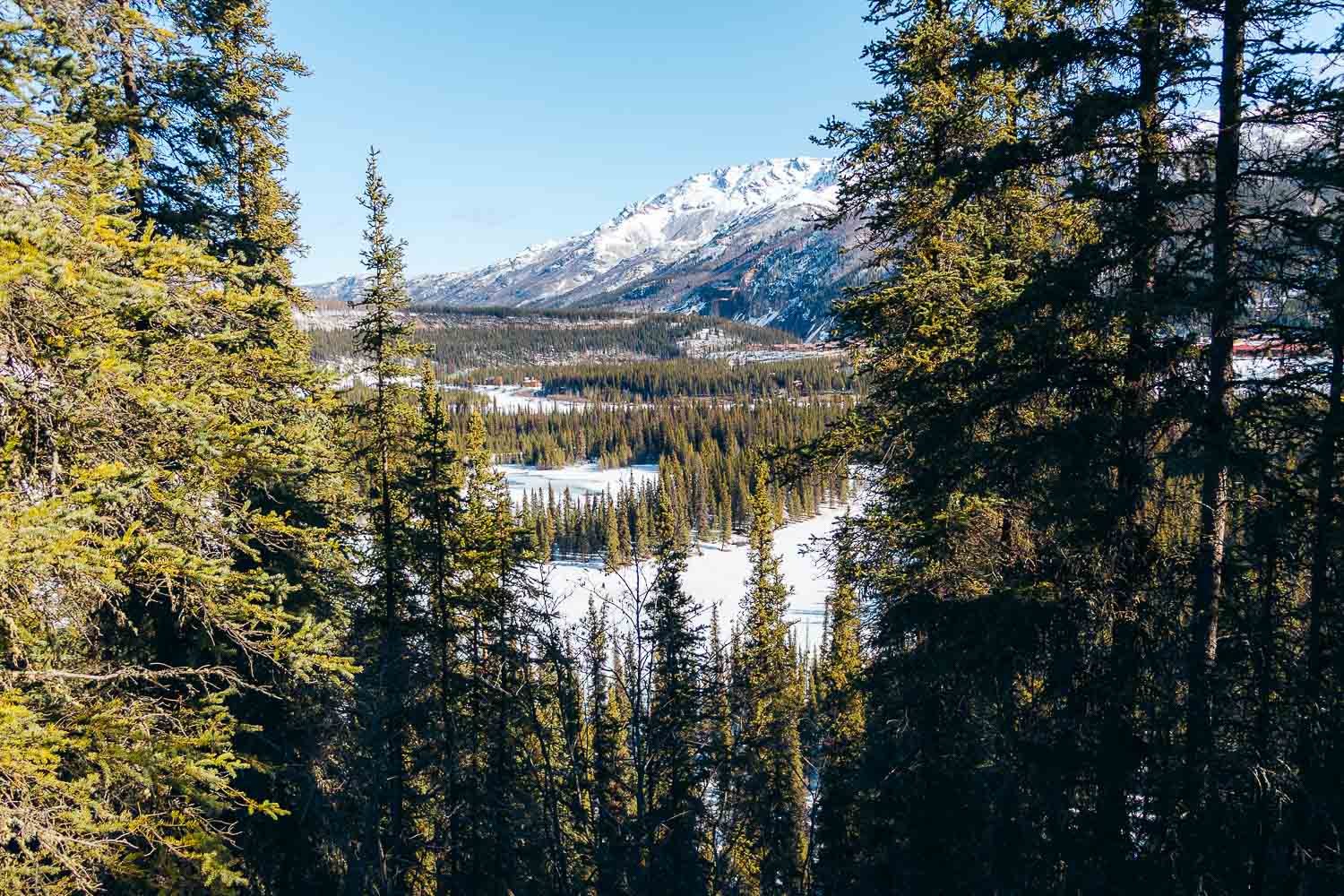
Welcome to Denali
One of the largest national parks in the U.S. and the third-largest in Alaska, Denali National Park is the epitome of the Alaskan wilderness.
A place where black and brown bears along with more than 200 other distinct species roam freely. An iconic region where mountains rise high, snow reaches up to your knee (much higher at higher elevation), northern lights dance in the clear night sky in winter, and the sun shines bright at midnight in summer.
Denali National Park is not just a destination. It’s a place full of natural wonders. An area that has witnessed all sorts of births and rebirths. A region that shaped and reshaped many outdoor adventurers’ trajectories, worldviews, and stories. A place we’ve wanted to visit for as long as I can remember.
Visiting Denali National Park in April
The dream came true during our recent trip to Alaska. In late April when the Last Frontier was slowly transitioning from the long and harsh winter to a short and much-awaited spring-summer period, Denali National Park was at the end of its winter season. The snow was still piled up everywhere but the first 13 miles of the Denali Park Road and short connector roads that led to the Denali Visitor Center and the Denali Sled Dog Kennels.
All in all, Denali National Park still felt and looked like a mesmerizing winter wonderland. The park, however, was at the very end of its winter season. You could still squeeze in a few skiing and snowshoeing escapades, but not for long.
Hiking adventures could also be possible. But as during the entire winter season, the majority of Denali’s trails were still challenging to trudge along even during the last days of April. After all, how far could you hike in the knee-deep snow if a trail hadn’t been broken in and remained at least fairly trodden?
That’s what we were getting into while visiting Denali National Park in late April, the very last few days of the month, to be precise.
Things to Know before Visiting Denali National Park in April
In April, Denali National Park still offers limited access. The park has only one road, the Denali Park Road. The 92-mile road is the only way to get deeper into the wilderness of Denali. Only the first 15 miles of the road are paved.
Given the amount of snow Alaska gets during the winter season, the rest of the park road is still closed and may still be unplowed.
The entire Denali Park Road is open for further exploration during the summer season (late May through early September) and only for authorized buses. No private vehicles are allowed past Mile 15, a place called Savage River.
April is a transitional period when the winter still lingers in Denali, but the temperatures rise. Private vehicles can now drive up to Mile 13 (Mountain Vista).
Note: The Denali Park Road is closed past Mile 3 after the first major snowfall. It reopens to Mile 13 roughly in the middle of February.
THINGS TO DO IN DENALI NATIONAL PARK IN APRIL
1. Take a Denali Flightseeing Tour
The most panoramic views of Denali National Park in April come from the air. This is where you can enjoy the best vistas and grasp the full scope of how big and insanely beautiful the park is.
A Denali flightseeing tour lasts from 1 to 2 hours and may or may not include a glacier landing. The latter is at mercy of Alaska weather and whether you are up for an adventure of your lifetime. You have an option to include or opt out of a glacier landing while booking your tour.
Season: While April is still considered the winter season in Denali National Park (although the very tail of it), air tours are limited. You can find only one or two tour operations that offer specialized Denali winter tours.
Where: Denali flightseeing are normally offered from Talkeetna, Anchorage, and Healy, a gateway to Denali National Park.
Time: In April with no buses in operation yet and plenty of snow around, it’s not uncommon to see all easy-to-reach sites in half a day. If you take an air tour of Denali, which we opted out of but many people claim it to be the highlight of their visit to Denali National Park, plan to spend at least a day in the area.
The duration of the tour, preparation time (check in 30-40 minutes before the tour starts), and the time you need to get to and from Denali, all add up to demand a longer Denali extension.
2. Hike Horseshoe Lake Trail
Hiking in Denali National Park in April is still challenging due to the abundant snow. Shorter and several longer trails, however, may be trodden enough to suggest a successful hiking exception.
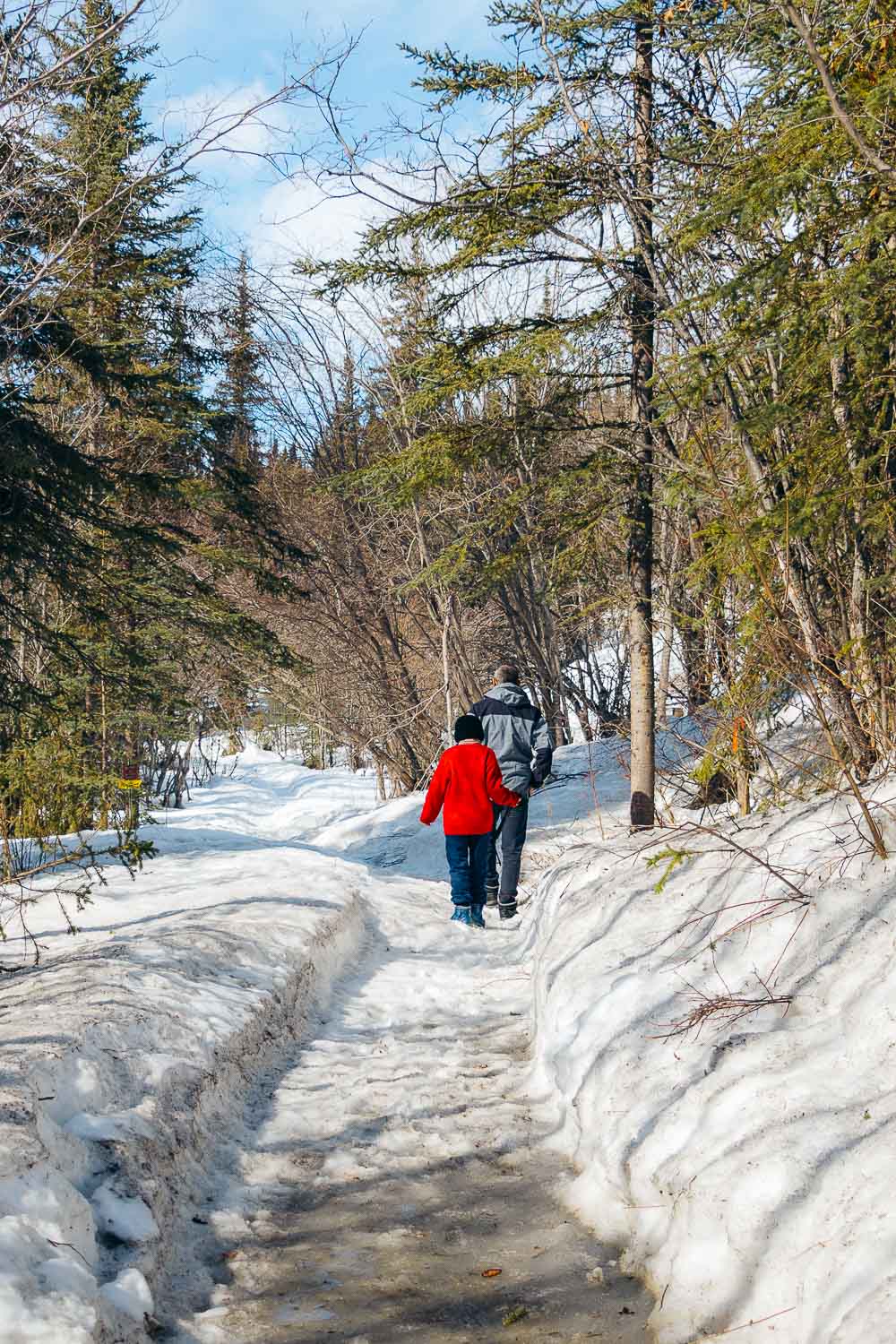
The only hike we attempted to do in Denali National Park at the end of April was the Horseshoe Lake hike. The trail starts at Mile 1, near a railroad crossing. It stretches for 1 mile (2-mile loop), runs along the bank of the Nenana River, and takes you to the scenic lake. On the way back, spend a few minutes viewing a beaver dam. You may even be able to catch a glimpse of the “architects” of the project themselves.
- Distance: 2 miles
- Difficulty: Moderate
- Elevation: 250 feet
- Time: 40-60 minutes
- Trailhead: Near railroad crossing
Here are a few more hikes you may want to do in Denali National Park in April.
- McKinley Station Trail: 1.6 miles, moderate
- Roadside Hiking Trail: 1.8 miles, moderate
- Rock Creek Trail: 2.4 miles, strenuous
- Mount Healy Overlook Trail: 2.7 miles, strenuous
- Winter Loop: 3.3 miles, moderate
- Triple Lakes Trail: 9.5 miles, strenuous
3. Visit Denali Winter Visitor Center
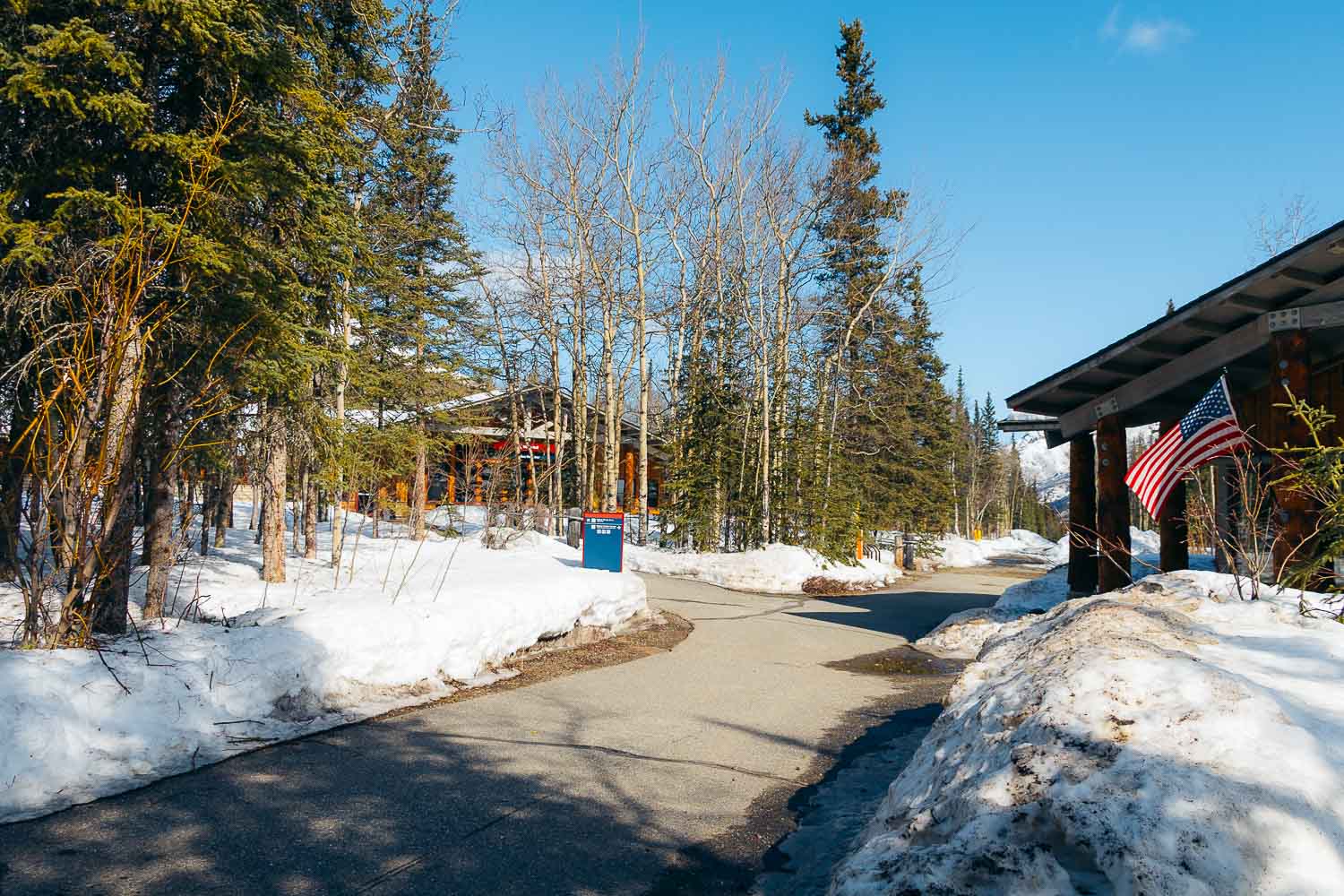
The Winter Visitor Center is located at Mile 1.4, in the Murie Science and Learning Center. Nestled next to it is the Indoor Picnic Area where you can warm up and eat your own food.
TIP: The park doesn’t have any places where you can buy food or snacks. So, bring your own energy replenishment.
The Winter Visitor Center is open from 9:30 a.m to 5:00 p.m. (The hours may vary.) If it’s your first time in Denali, it’s the place you want to step in.
We all know about basic services and amenities visitor centers offer, such as bathrooms, small gift shops, and information desks. I hadn’t given these establishments all the credits they really deserve. But it changed in Denali National Park. We learned so much about the park, wildlife, and how the outside world affects the life inside the park.
Dylan’s inquiry about an animal skeleton positioned inside the Visitor Center led to a conversation about wolves and other wild animals that reside in Denali National Park.
Interestingly enough, the wolf population in Denali is small, varying by a few dozens from year to year. The wild animals thrive in the wilderness. Yet while facing extreme natural challenges such as harsh Denali winters, a staggering number of wolves don’t survive to adulthood.
READ MORE: Visit the Alaska Wildlife Conservation Center. Yes, It’s Worth It
4. Meet Locals Rangers at the Denali Sled Dog Kennels
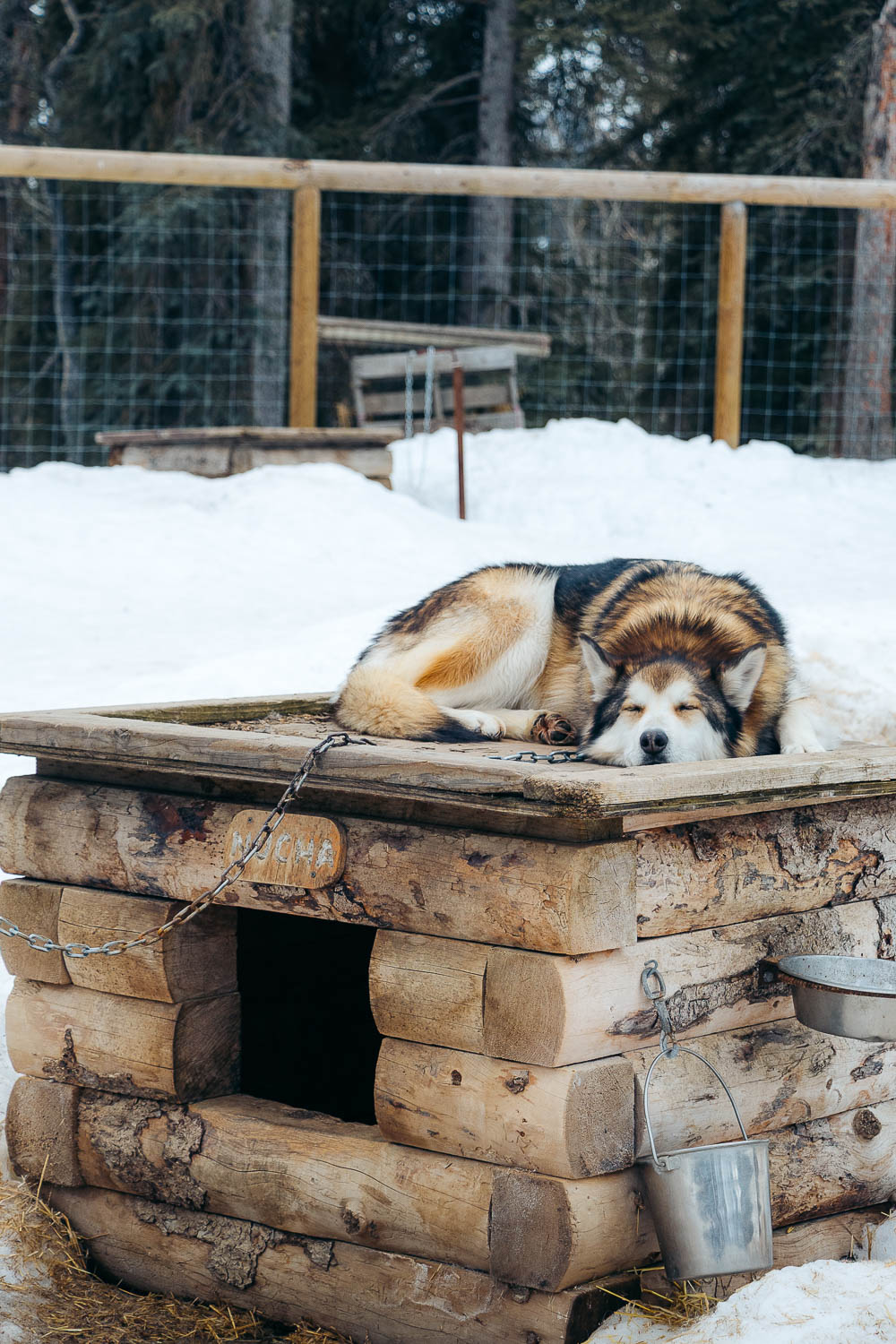
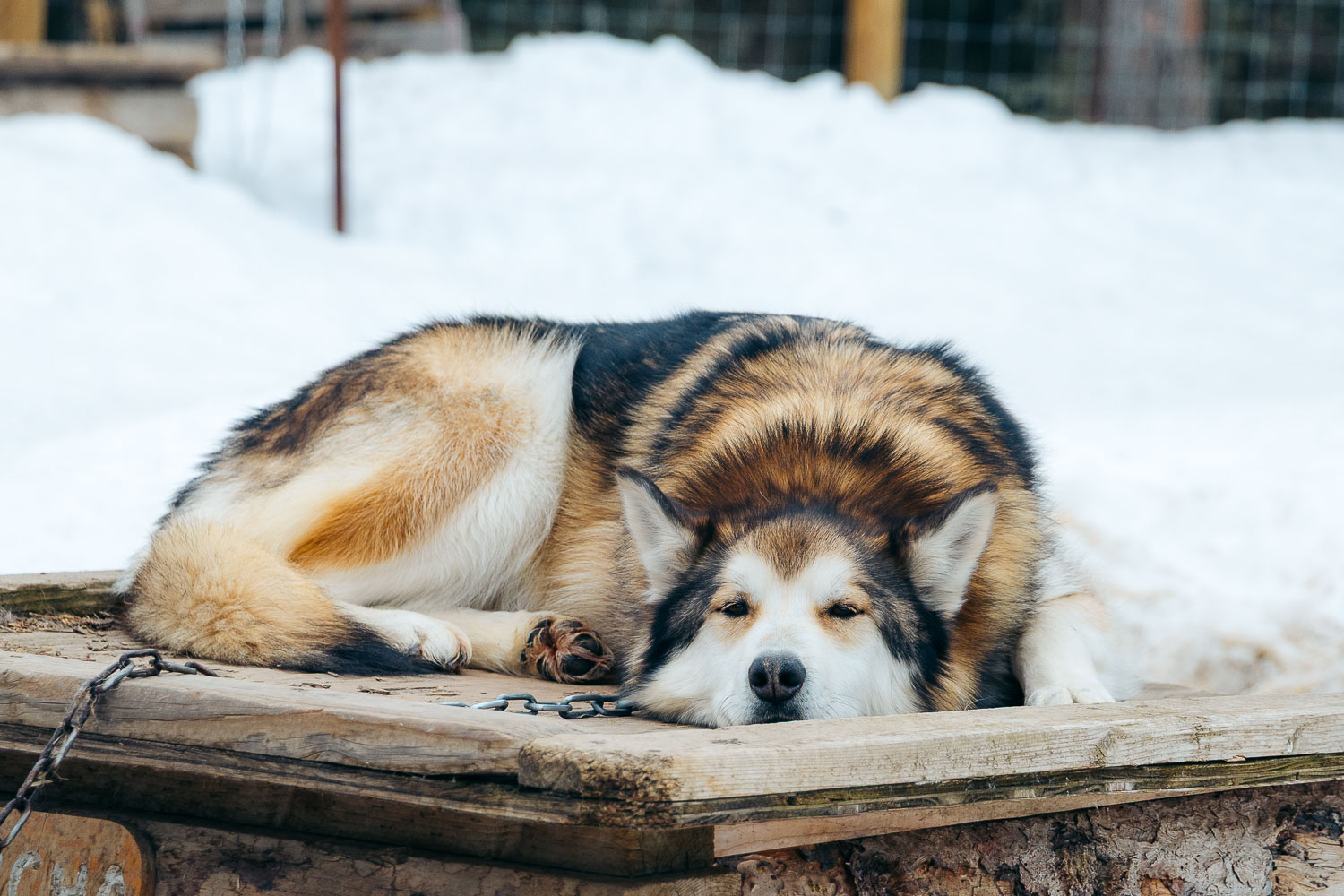
We had another informative conversation about the life and animals in the park at the Denali Sled Dog Kennels. The animals in question this time were the park’s fluffiest four-legged rangers.
The Denali Sled Dog Kennels is one of the oldest working sled dog kennels in the country. The first superintendent, Harry Karstens, purchased the first seven dogs to patrol the newly established park more than 100 years ago. Sled dogs have been an integral part of the Denali’s ranger team ever since.
How to Visit: The site is located at Mile 3. In April, the Denali Sled Dog Kennels welcomes visitors only on Saturdays and Sundays. Normally, the kennels are open from 1:00 p.m. to 4:00 p.m. Check the exact time at the Winter Visitor Center before driving farther into Denali National Park.
The dogs at the Denali Sled Dog Kennels are park patrolling rangers. During the visiting hours, you are likely to see some of them, while the rest of the team may be patrolling the park.
TIP: These dogs are not for dog sledding tours. If you are interested in dog mushing, which may still be possible at the beginning of April, look for mushing kennels just outside the park.
5. Skijor with Your Dog
Alternatively, you can bring your own dogs and skijor through the snow-covered grounds of Denali National Park. Wide enough and occasionally groomed, the Roadside Bike Trail and loops within Riley Creek Compound are some of the best places for skijoring.
If this fun activity is on your Denali National Park bucket list, make sure to visit the area in early April. Skijoring in Denali is allowed from October to mid-April.
6. Enjoy the Mountain Views
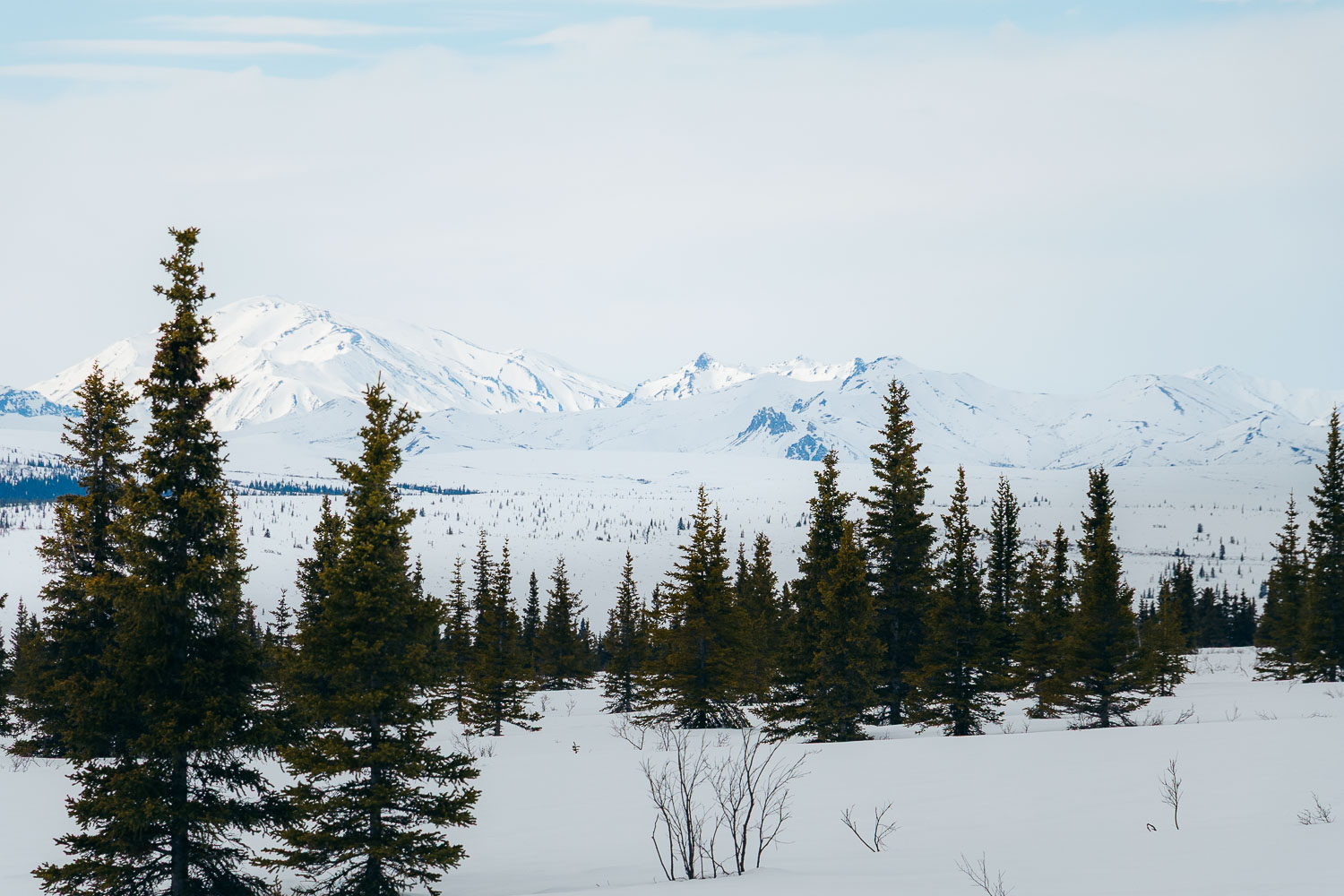
The farther you drive along the Denali Park Road, the better the views get. The mountains rise a short distance away from both sides of the road. The summits look taller and more formidable with every passing mile.
The best views open up from Mile 9 where you can catch the first glimpse of Denali. At 20,310 feet, it’s the highest mountain in North America.
Note: The National Park Service website may refer to the summit as Mount McKinley. Denali and Mount McKenley are two names for the exactly same peak. The summit was named Mount McKinley by a gold prospector in honor of the U.S. president. The name Denali, which in the Koyukon Athabaskan language means “the great one”, has been used by Alaska Natives for thousands of years.
7. Encounter Winter Wildlife
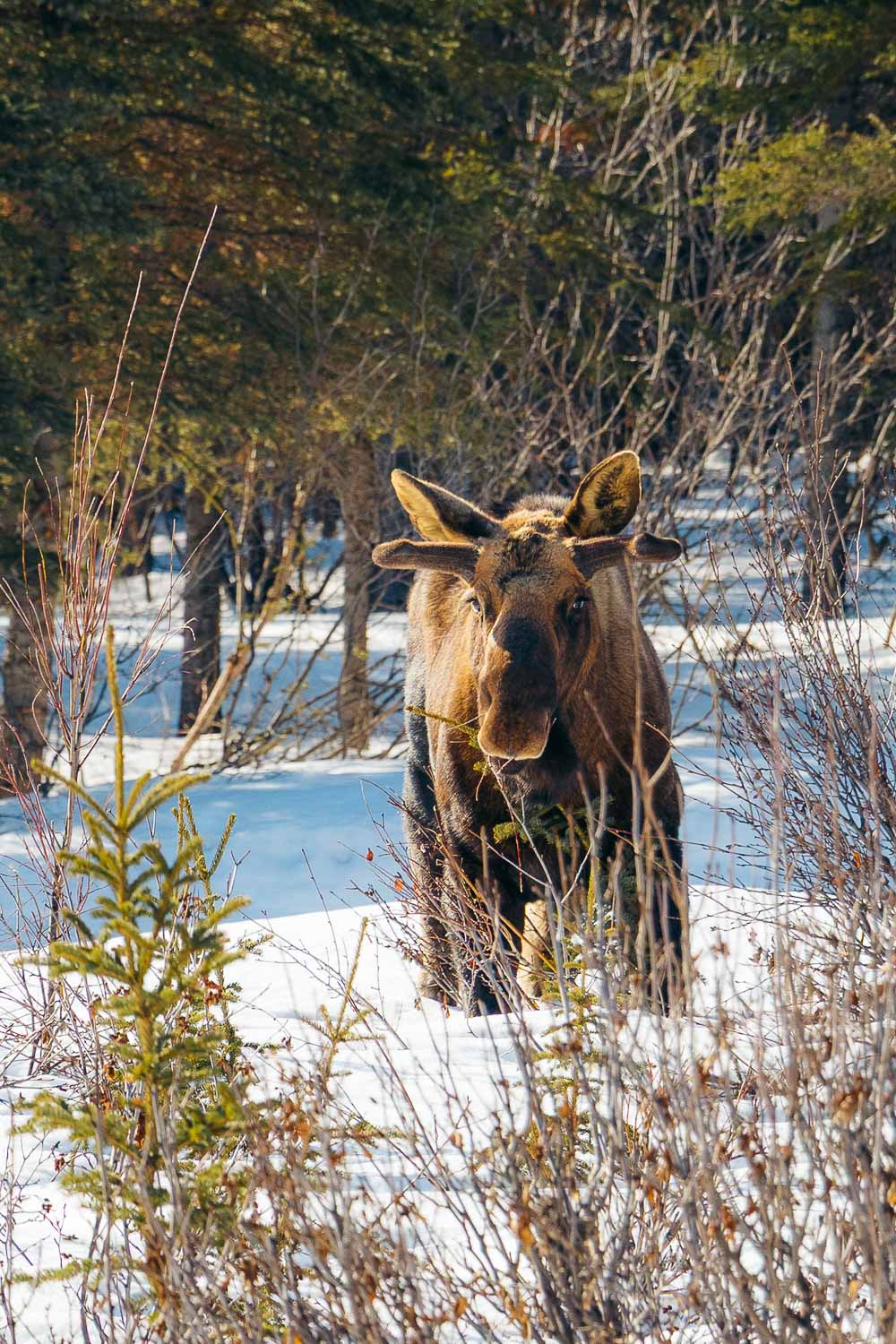
Moose was grazing on shrubs right at the entrance to Denali National Park. A show-stopper as it was, the animal paid little attention to several morning visitors who as one pulled over by the side of the road to spend a few minutes admiring this majestic creature.
The moose remained in the same area for quite some time, giving us enough time to observe its unhurried “feast” and snap a few pictures. Yet it demanded patience from photographers who – looking at the only other car parked next to ours – weren’t many.
The antlered beast kept himself hidden behind a bush. Occasionally, it would raise its head high enough to offer a quick unobstructed photo opportunity. But that was all. Being patient and letting animals accept you before they lower their guards is a virtue every wildlife photographer must master. The moose was proving this point exceptionally well.
In April, bears also become active in and around Denali National Park. Back from their long hibernation, the animals are somewhat lethargic in the early days of the months. Yet within a few weeks, when their metabolisms ramp up, they transform into aggressive and fearsome beasts as they are.
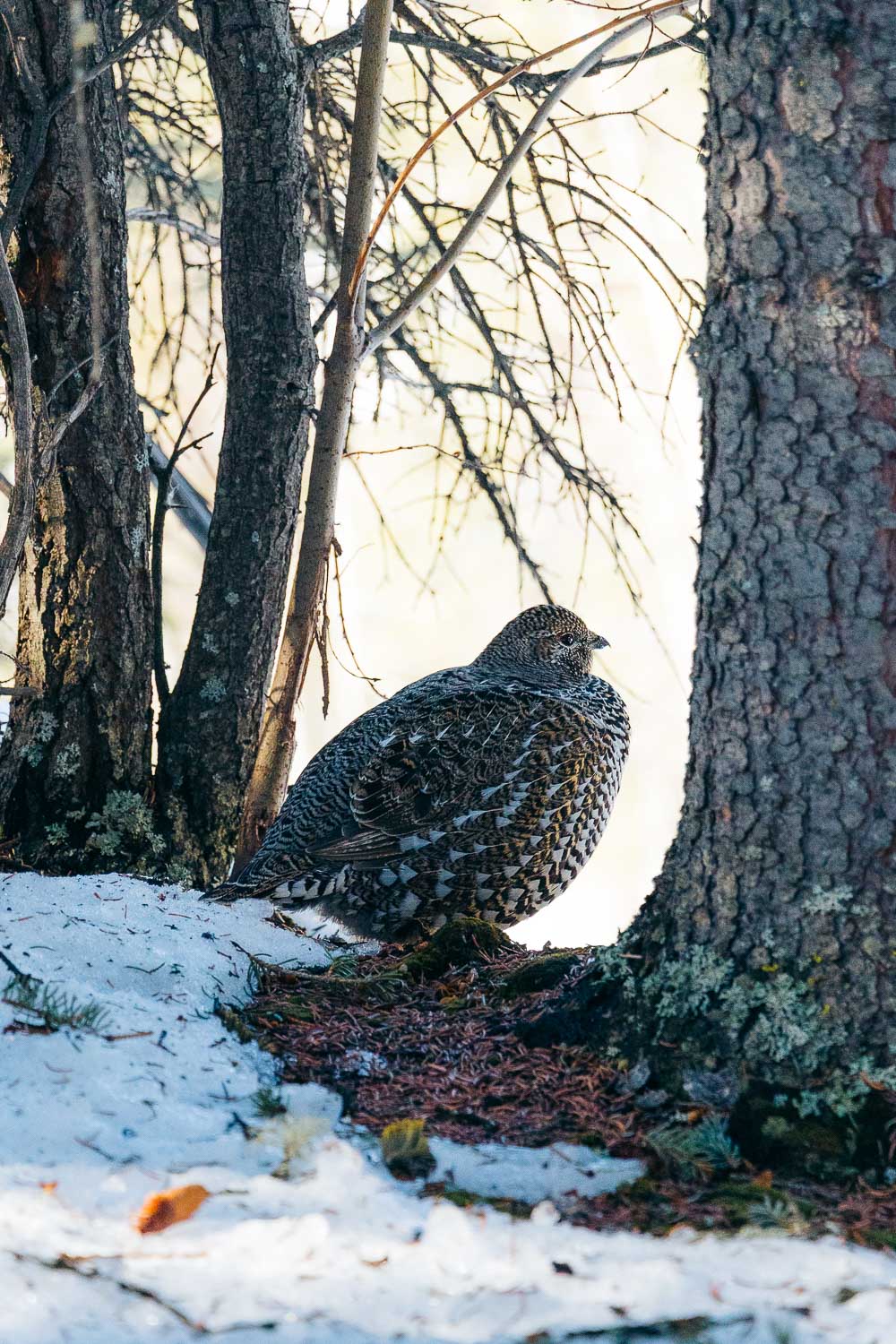
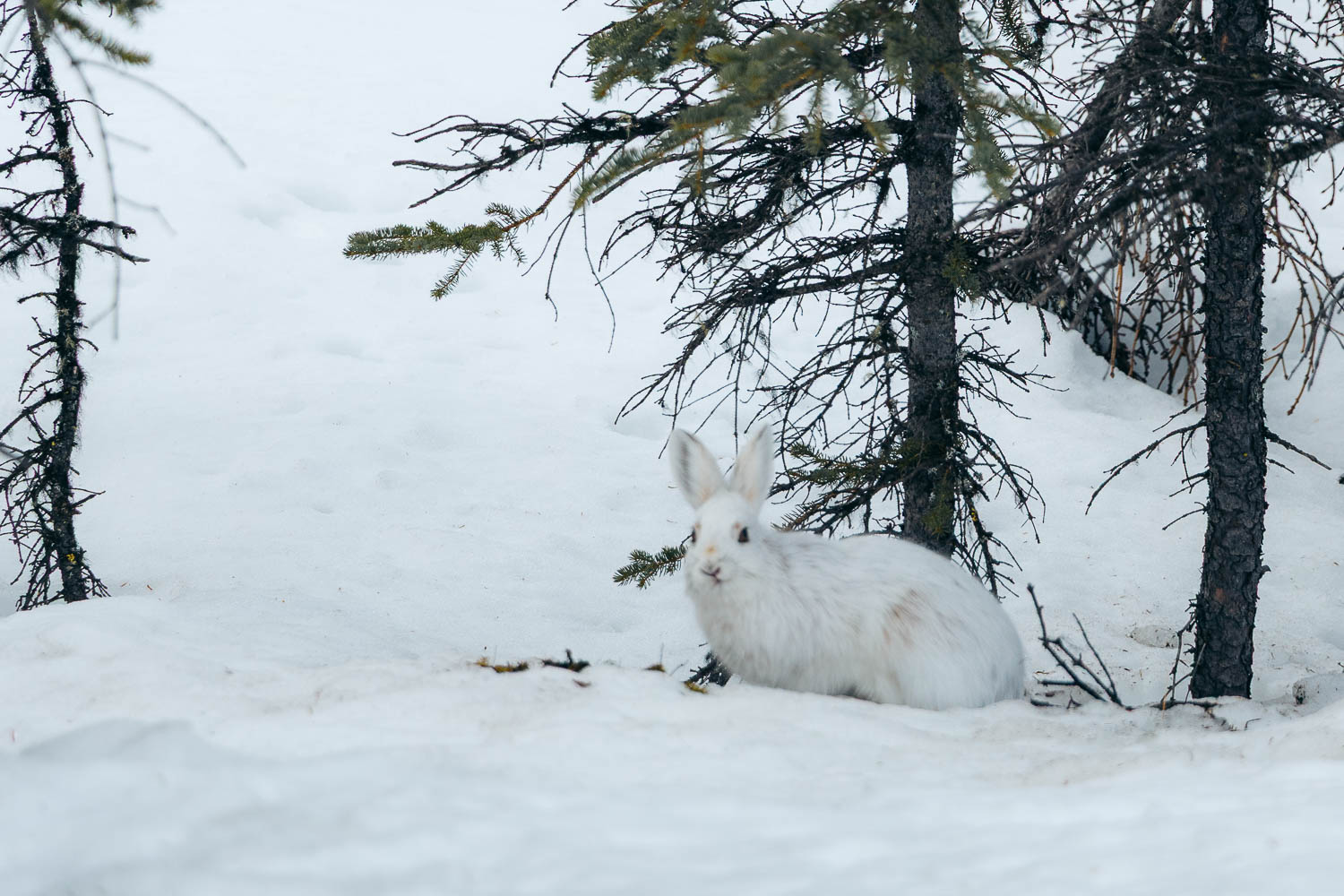
Camouflaged, hares gingerly inch through the snow under the trees. White as the snow, they may be the hardest to notice at this time of year. And since you are on the ground level now, keep looking under those trees where ptarmigan are often spotted, as still as if they have been frozen.
Seeing wildlife in Denali National Park in April is one of the most beautiful experiences that normally comes unplanned, but is always so much appreciated.
8. Aurora Viewing in Denali National Park in April
We kept our hopes up. Although officially the aurora season had ended just a few days before we visited Denali National Park (normally it lasts from late August to mid-April), our desire for seeing the elusive northern lights was still big.
We had missed the aurora borealis in Fairbanks a few months prior to this trip when the dancing northern lights were at their zenith. Seeing this natural phenomenon in Denali National Park in April would be a dream come true.
As fate would have it, no aurora borealis showed up in the sky above the Denali region at the end of April. You may be lucky to see the northern lights in the park and its surroundings at the beginning of the month. Yet it’s becoming less and less possible as the month goes on.
Safety around Animals
Safety around wild animals is one the first rules you need to learn and use while visiting Denali National Park in April. Apart from bears that get more aggressive with every passing day, the park is home to many other wild animals you don’t want to anger or disrupt.
Even a seemingly harmless caribou or Dall sheep may be dangerous if threatened. And threatened do wild animals feel if the distance between them and you decreases.
Normally, you should stay at least 300 yards (275 m) away from bears, and 25 yards (23 m) away from all other wildlife, including any dents and nests.
If you see a wild animal tenses up, changes its behavior, or starts moving toward you, you are too close. Back away immediately (in case of moose or elk) or slowly (if your opponent is a bear or lynx). Remember, you are a guest here, not otherwise around. Be respectful and give space to your hosts.
READ MORE: How to Protect Yourself from Bears in the Wild: Tips and Myths
Where to Pay Entrance Fees
Well, well, well. In April (or any other time of the year), Denali National Park has neither a ranger taking your payment at the entrance to the park nor an automated machine. That’s not something unusual. Some national parks and monuments are free to visit. But Denali is not one of them. This we knew well enough before making our way to the national park from Anchorage.
The absence of the clear paying instructions puzzled us a little bit, but didn’t really bother. We’ve been traveling with the America the Beautiful pass without fail since our trip to Grand Teton and Yellowstone National Parks several years ago.
TIP: If you are fond of national parks and visit at least a few of them a year, having this little card tucked in your wallet can save you a lot of money.
If you don’t have any yearly or seasonal passes, proceed to the Winter Visitor Center (the Murie Science and Learning Center) where you can pay your fees with a ranger or using a self-pay booth.