Due to a last-minute flight cancellation and a hasty rebooking with another airline, we found ourselves with a 12-hour layover in Kuala Lumpur.
Last updated: November 26, 2026
Layover in Kuala Lumpur, Malaysia
Exploring Kuala Lumpur during our layover on the way from Seoul to Kathmandu was tempting. Yet, our first stopover in Malaysia wasn’t particularly long, several hours.
Theoretically, it would be enough time to venture outside and explore at least one iconic landmark. In reality, after years of traveling, we knew exactly what this rushed excursion paired with jet lag and another long flight would do to our bodies, requiring at least one day of complete rest upon arrival in Kathmandu.
Yet since our trip to Nepal wasn’t as long as we would have liked, we didn’t want to waste a single hour, let alone a whole day. So, between a short layover adventure in Kuala Lumpur and an immersive cultural experience in Kathmandu, the choice was obvious.
But where there is a will, there is a way. The airline we initially were planning to fly with kept delaying our flights and then, when we already were in Malaysia ready to board our plane to Kathmandu, cancelled one of them. We had to rebook with a different airline, which left us with a 12-hour layover in Kuala Lumpur on our way back from Nepal.
Where to Stay (If You Need a Few Hours of Sleep)
Since it was just the first stopover on our long journey back home and the time allowed (our entire layover in Kuala Lumpur was close to 24 hours), we checked in to the Kepler Club KLIA T1.
This capsule hotel is located at Terminal 1 of Kuala Lumpur International Airport. It offers small rooms that you book by hours, shared bathrooms and shower rooms, and complimentary coffee, tea, and snacks.
We spent the first 5 hours of our layover in Kuala Lumpur here, catching up on a much-needed sleep.
Once refreshed and showered, we dropped off our luggage at the airport’s luggage storage (you can find them at both Terminal 1 and Terminal 2) and started our journey to the city.
How to Get to Kuala Lumpur from the Airport
KLIA Express trains that depart from Terminal 2 then stop at Terminal 1as part of their regular route are the fastest way to get to Kuala Lumpur (KL Sentral) from the airport. The train departs every 15 minutes and takes approximately 30 minutes to get to its final destination. In August 2026, adult tickets for the express train cost RM55 (approximately $12.50 USD) one way.
An alternative and more cost-effective way to get to Kuala Lumpur from the airport is to use the Sky Bus services. The bus, however, makes many stops. The entire journey takes more than an hour. This option may suit you well if you have a few days to spend in Kuala Lumpur. For a 12-hour layover, it’s by far the least favorable choice.
Taxis and rideshare cars also won’t speed up your journey from the airport to KL Sentral, a major transportation center in the heart of the city. A taxi ride normally takes 45 to 60 minutes, depending on traffic.
On the other hand, rideshare cars work exceptionally well for shorter trips within the city. Grab is a local ride-hailing app you should download and create an account before your layover in Kuala Lumpur.
How Long Should Your Layover Be to Leave Kuala Lumpur International Airport
Even though we had almost 24 hours – minus 5 hours of sleep – to spend in Kuala Lumpur, we needed to be very selective with the places we wanted to visit. Kuala Lumpur is the capital and the largest city in Malaysia. Consequently, it’s busy, bustling, and chaotic.
Having said that, the city is not particularly walkable, definitely not pedestrian-friendly like smaller old towns in Europe that you can easily explore on foot. You need a car or a ride to get around Kuala Lumpur. This costs you both time and money.
For travelers exploring Kuala Lumpur during a long layover or a single day, this means accounting for transfer times, waiting for taxis or buses, and spending a lot of time in traffic, especially during peak hours.
So, while you can venture into the city and rush through one or two landmarks (which is highly unlikely) or grab street food in Chinatown during a short stopover, I wouldn’t recommend leaving Kuala Lumpur International Airport if your layover is less than 8-10 hours.
Things to Know: On top of that, Kuala Lumpur has some of the strictest security regulations we’ve ever encountered. The airport conducts multiple screenings: a standard check right after immigration, followed by a final security screening directly at the boarding gate. Expect long lines. And no, no water is allowed past the gate even if you purchased it inside the duty-free area.
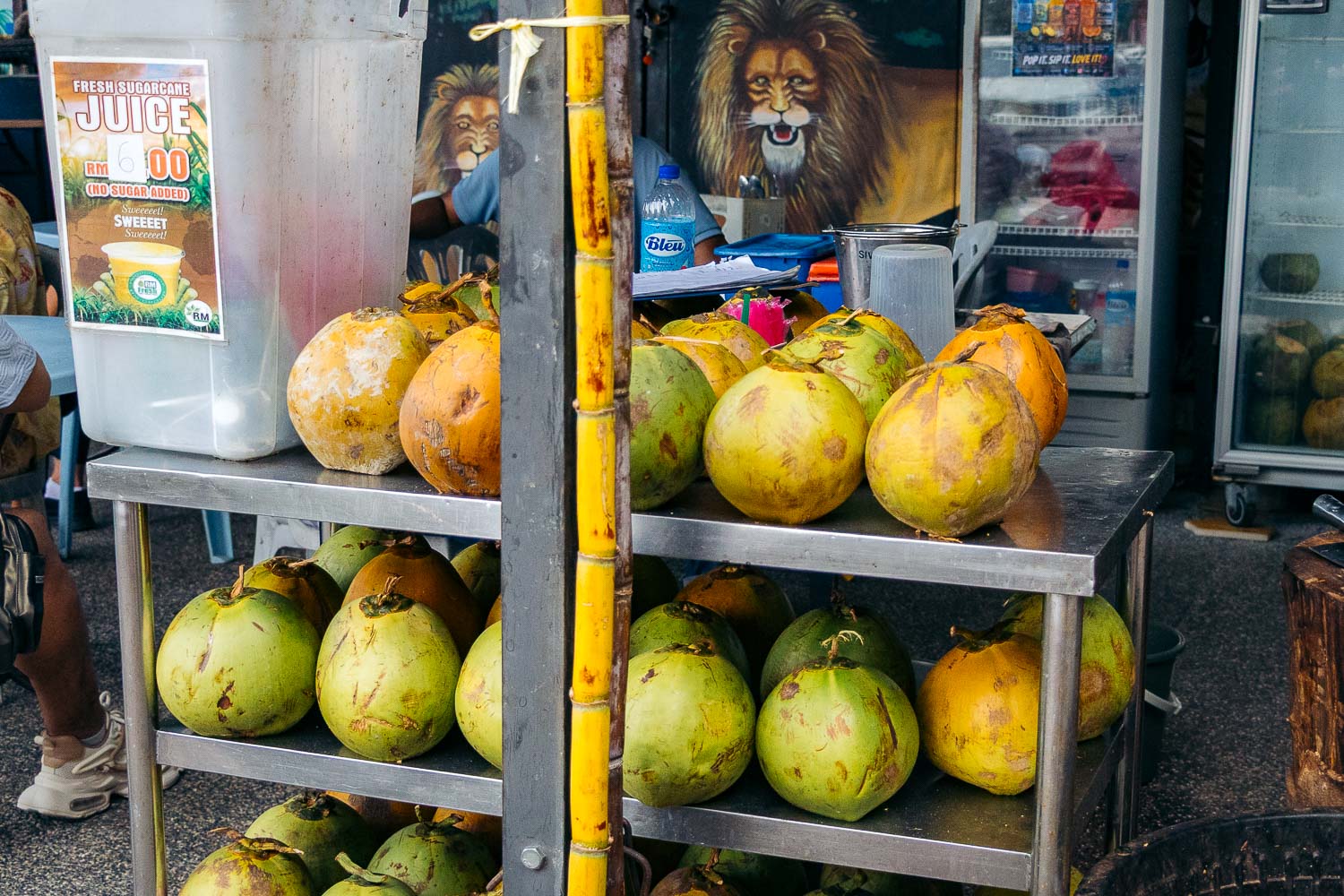
THINGS TO DO IN KUALA LUMPUR DURING A 12-HOUR LAYOVER
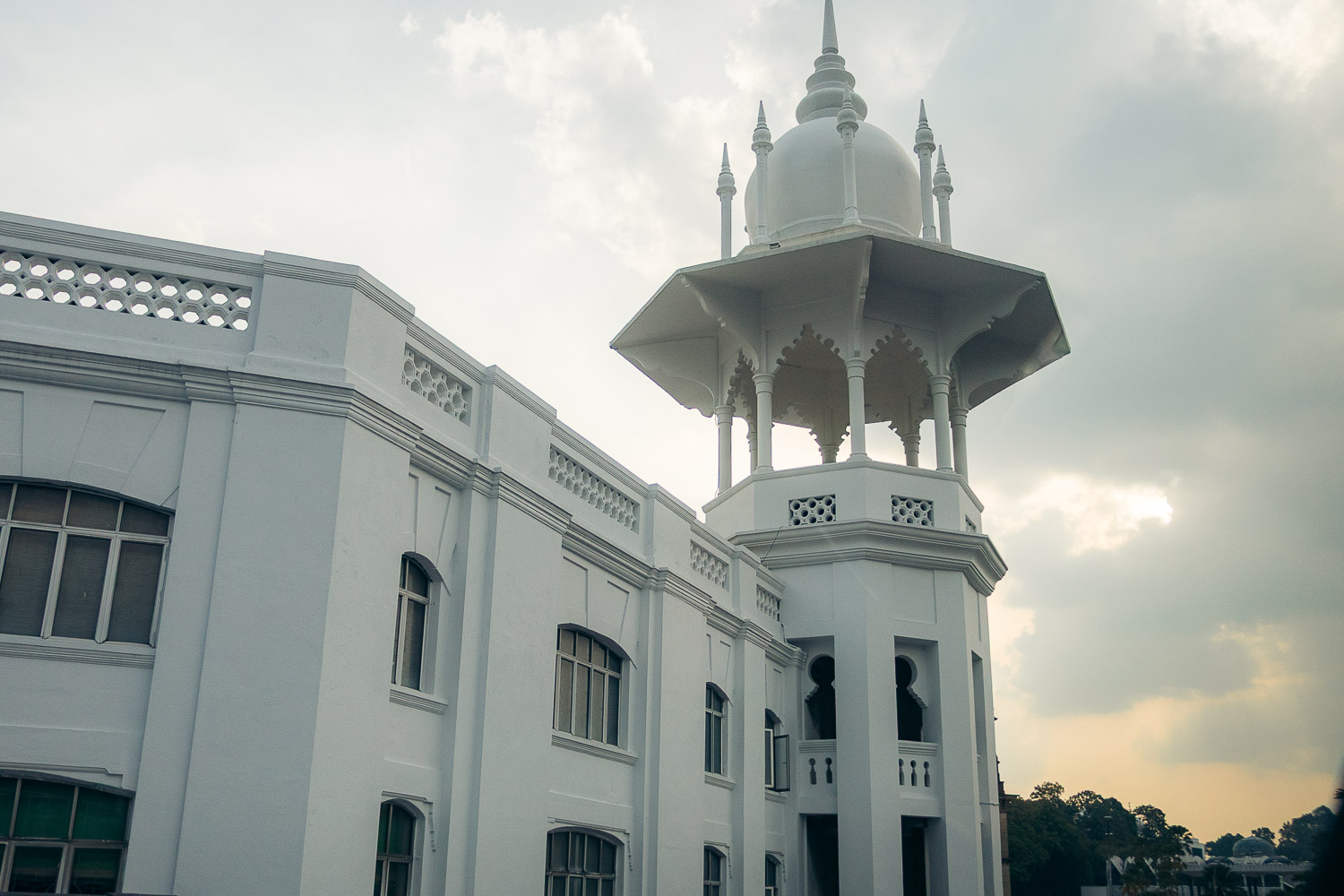
Kuala Lumpur is one of Southeast Asia’s most futuristic and dynamic cities, where a rich blend of traditions continuously shapes its architecture, culture, and culinary scene. It is a city that captivates and confuses your senses. Depending on which neighborhood you explore, you may feel as though you’ve just stepped into India, Japan, Thailand, China, or even Morocco.
It’s definitely a place that sparks your interest, keeps you on your toes, and pushes you out of your comfort zone.
Without further ado, let’s see how far you can go and how much you can do in Kuala Lumpur during your 12-hours layover.
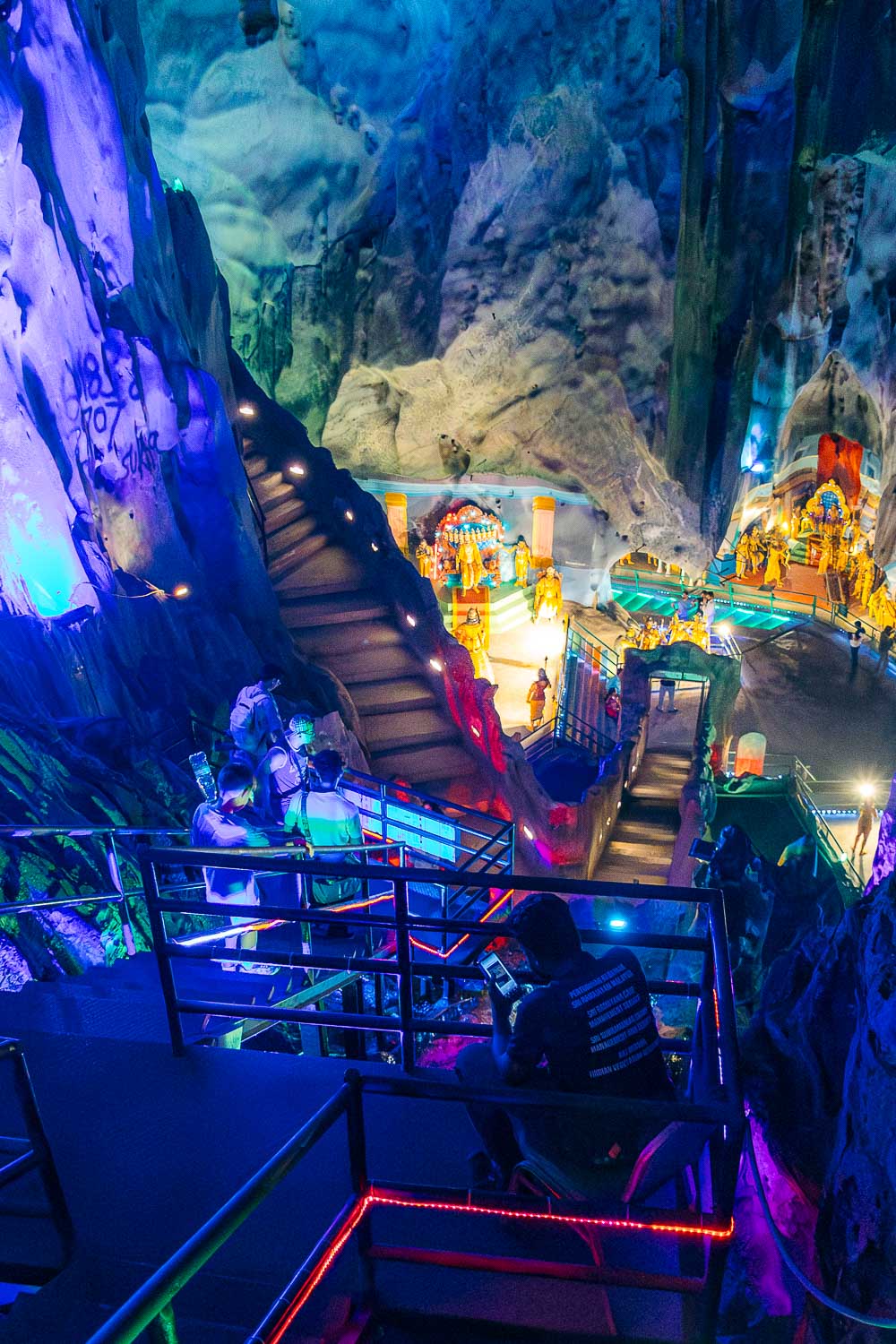
1. Batu Caves
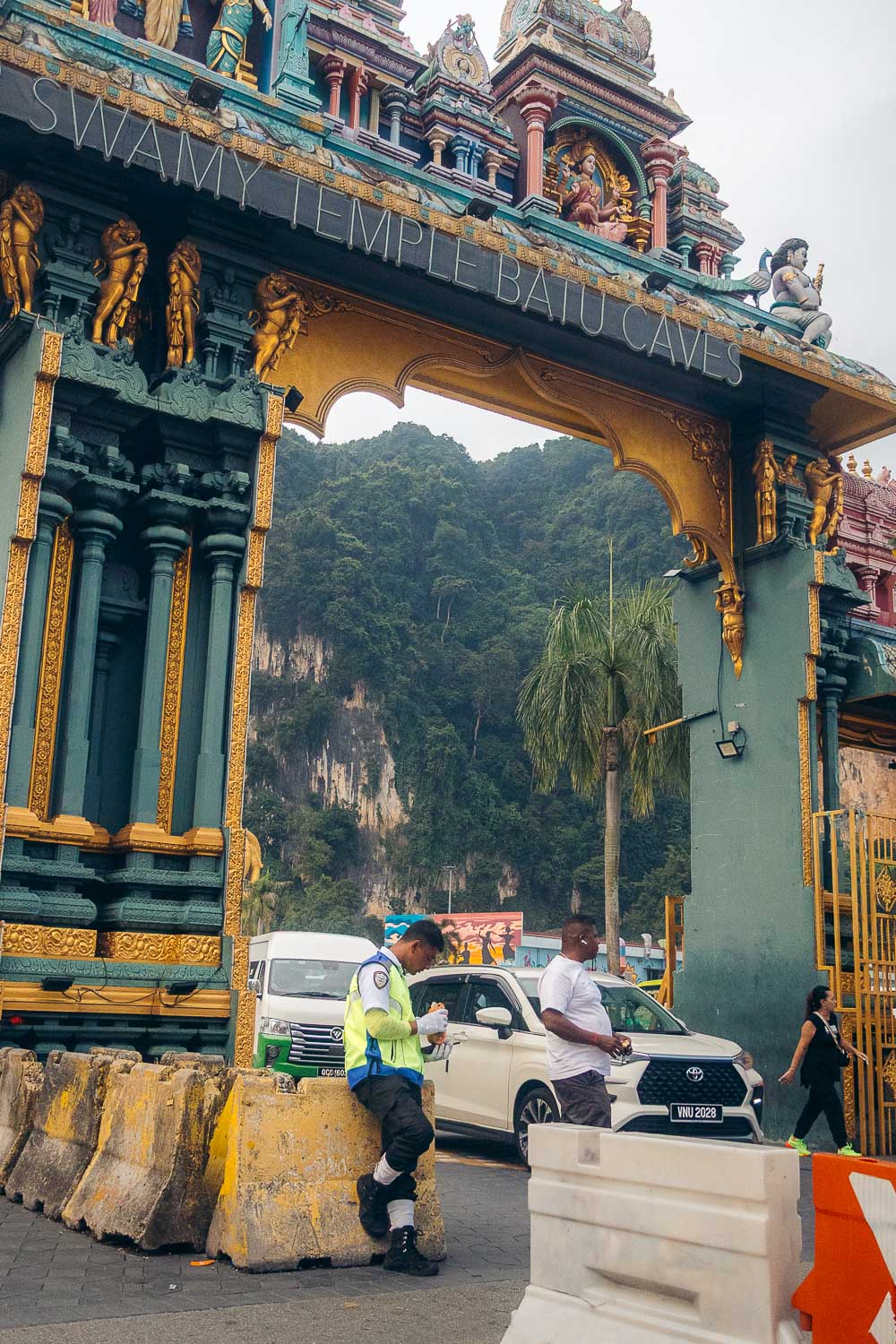
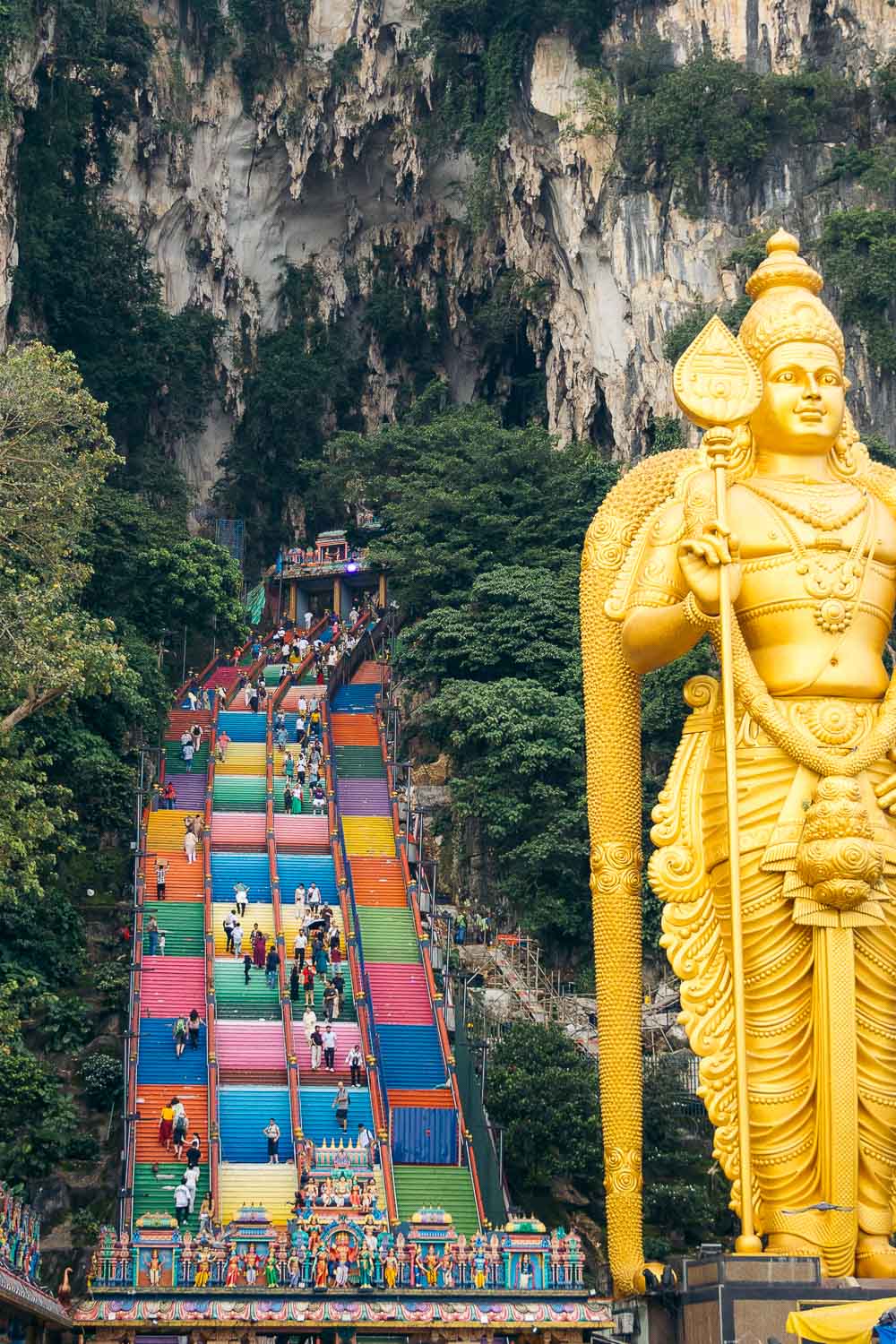
When in Kuala Lumpur, you can’t skip these. The Batu Caves!
One of the city’s most iconic sites, the massive caverns have been one of the most important pilgrimage sites for Tamil Hindus outside of India since the late 19th century.
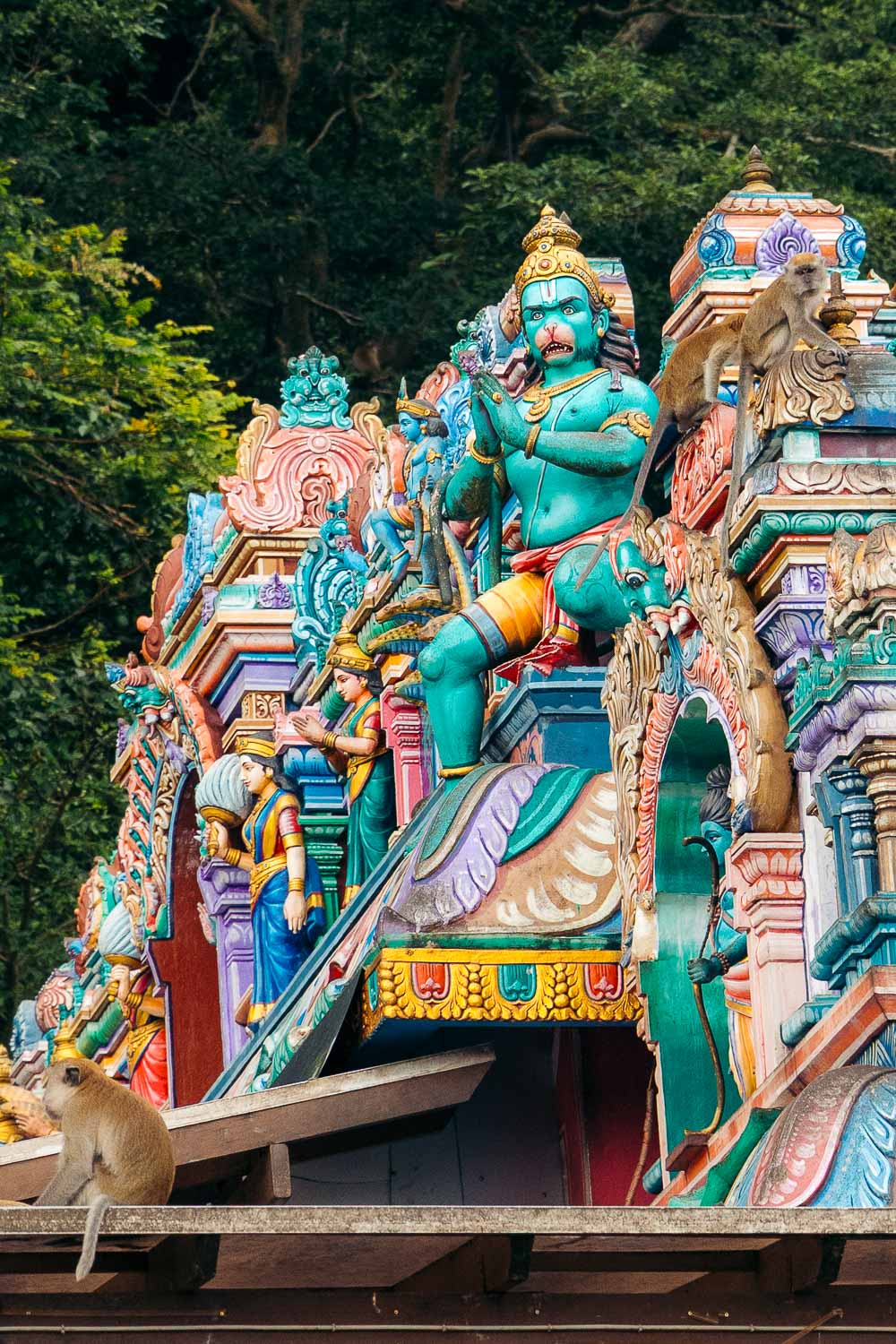
The Batu Caves complex contains three main cave chambers that house multiple smaller shrines and temples.
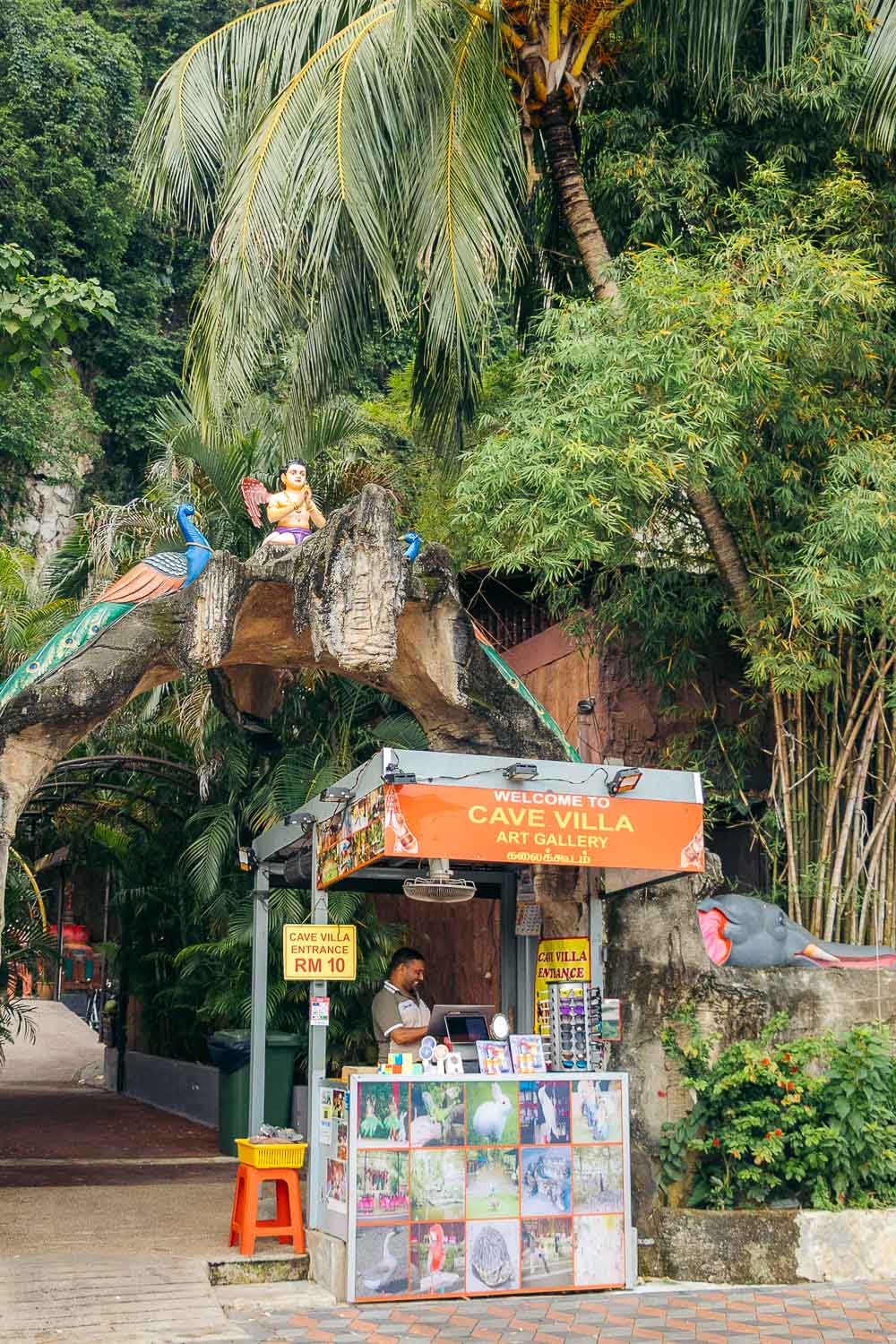
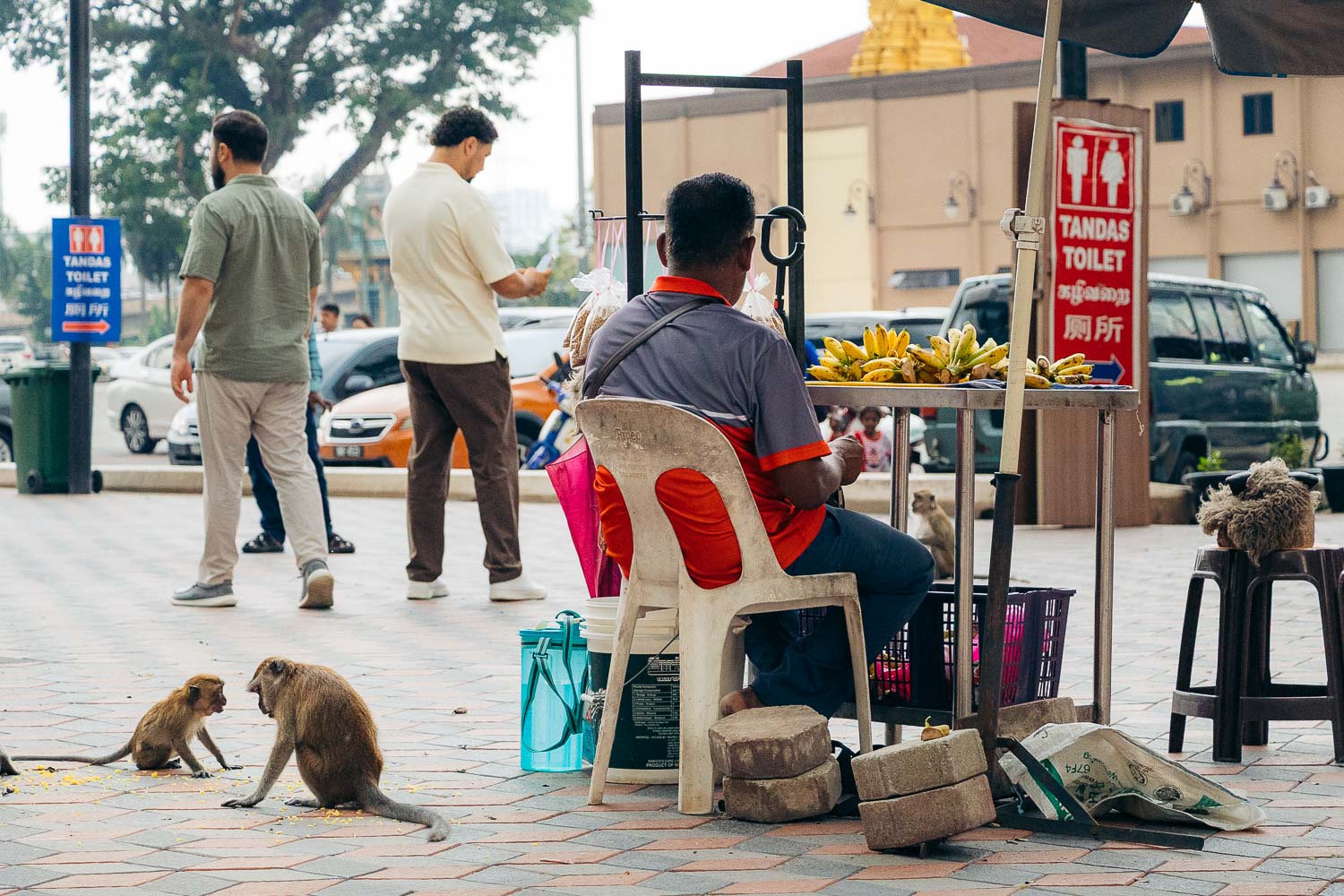
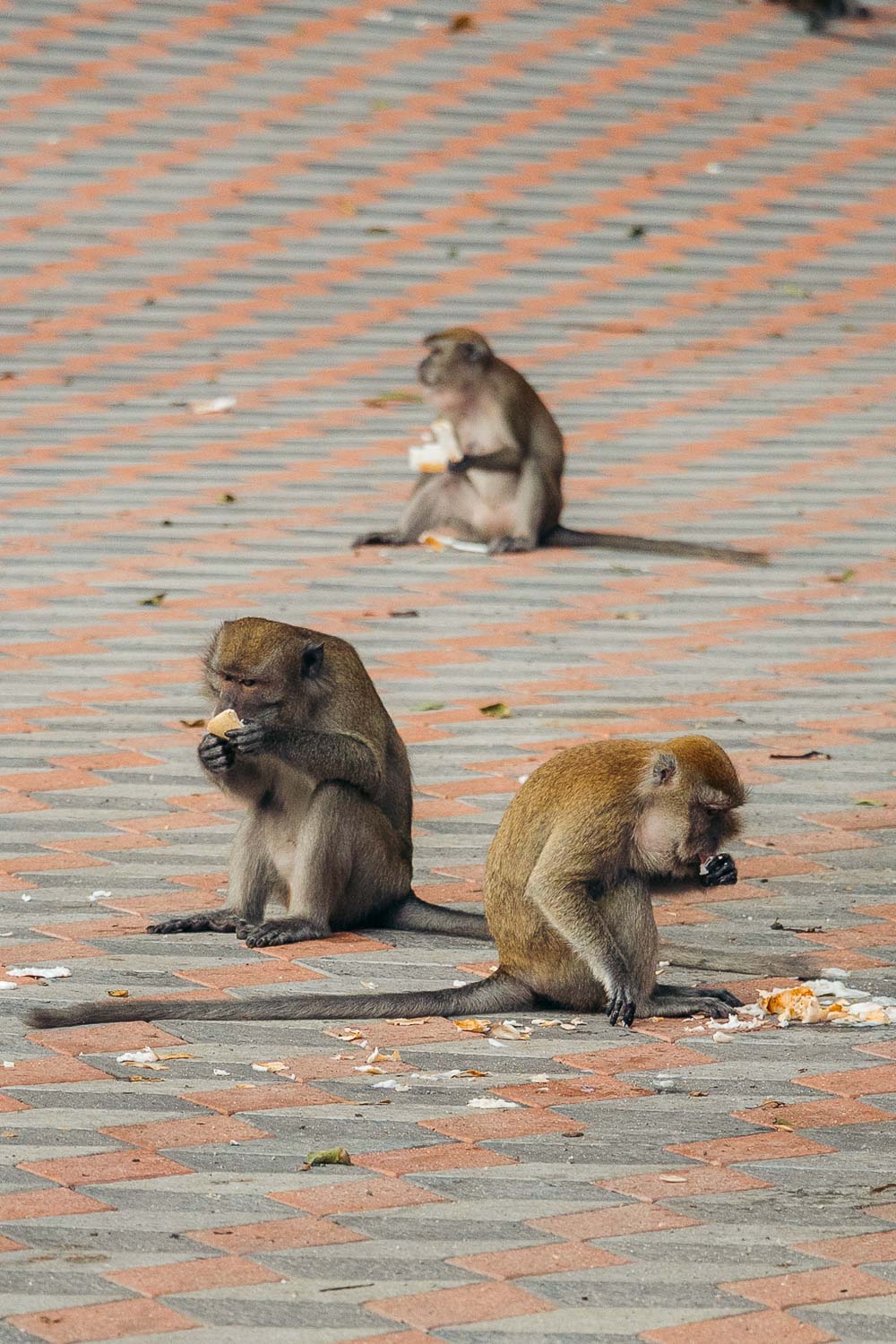
The place is also home to long-tailed macaques. The other name for these monkeys is crab-eating macaques as they are frequently seen foraging along shorelines for crabs and shellfish. If you ask me, I’d call them banana-grabbing monkeys for quite apparent reasons.
Temples or no temples, these gigantic caves will blow your mind. The Batu Caves are ancient natural limestone formations that have served different purposes over the centuries: first as a shelter for indigenous people, then as a site where Chinese immigrants mined bat guano (bat droppings), which was valued as a powerful fertilizer and an important ingredient for gunpowder.
Today, the caves are a major pilgrimage site for Hindus and a signature landmark of Kuala Lumpur, open for all visitors regardless of their religious beliefs.
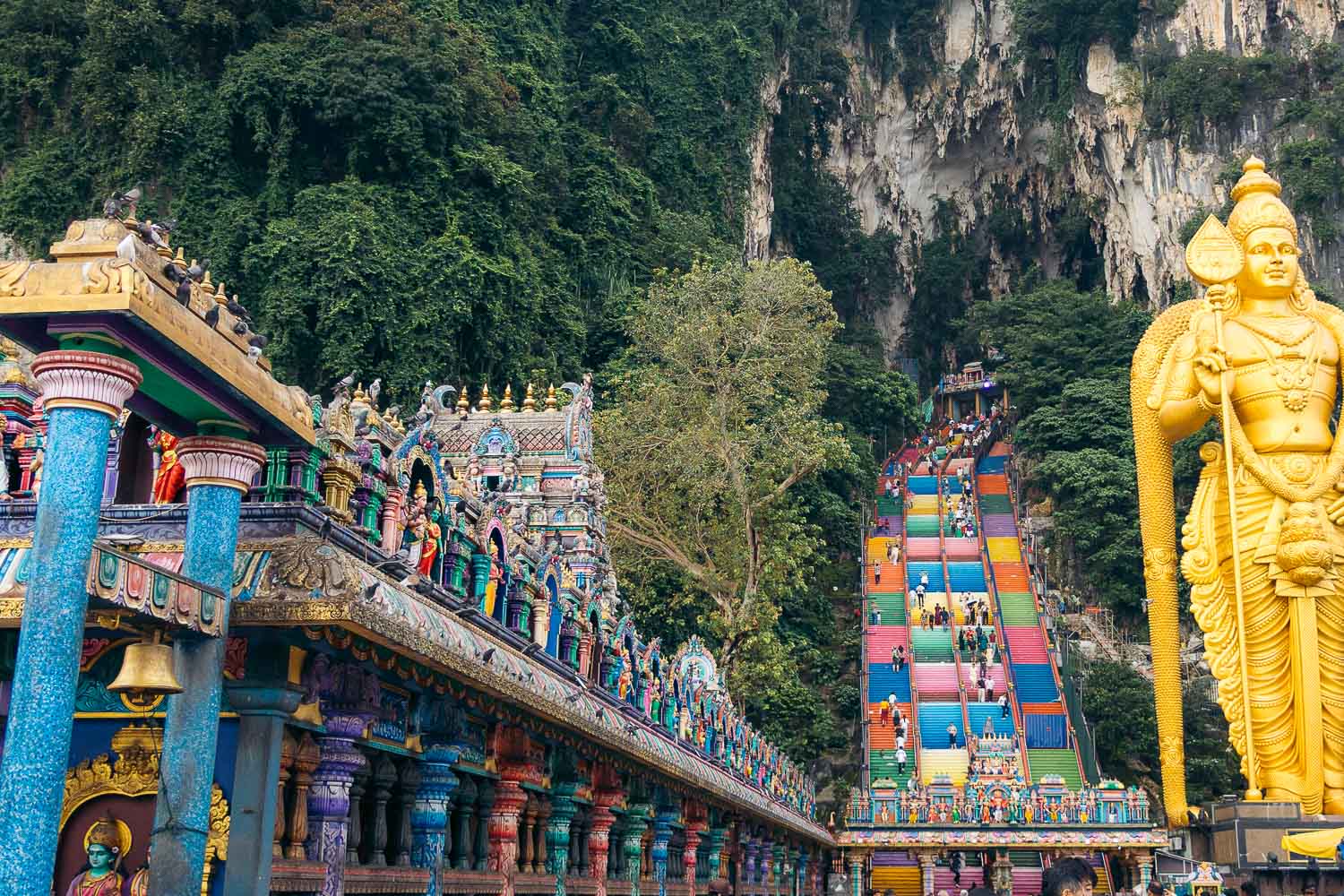
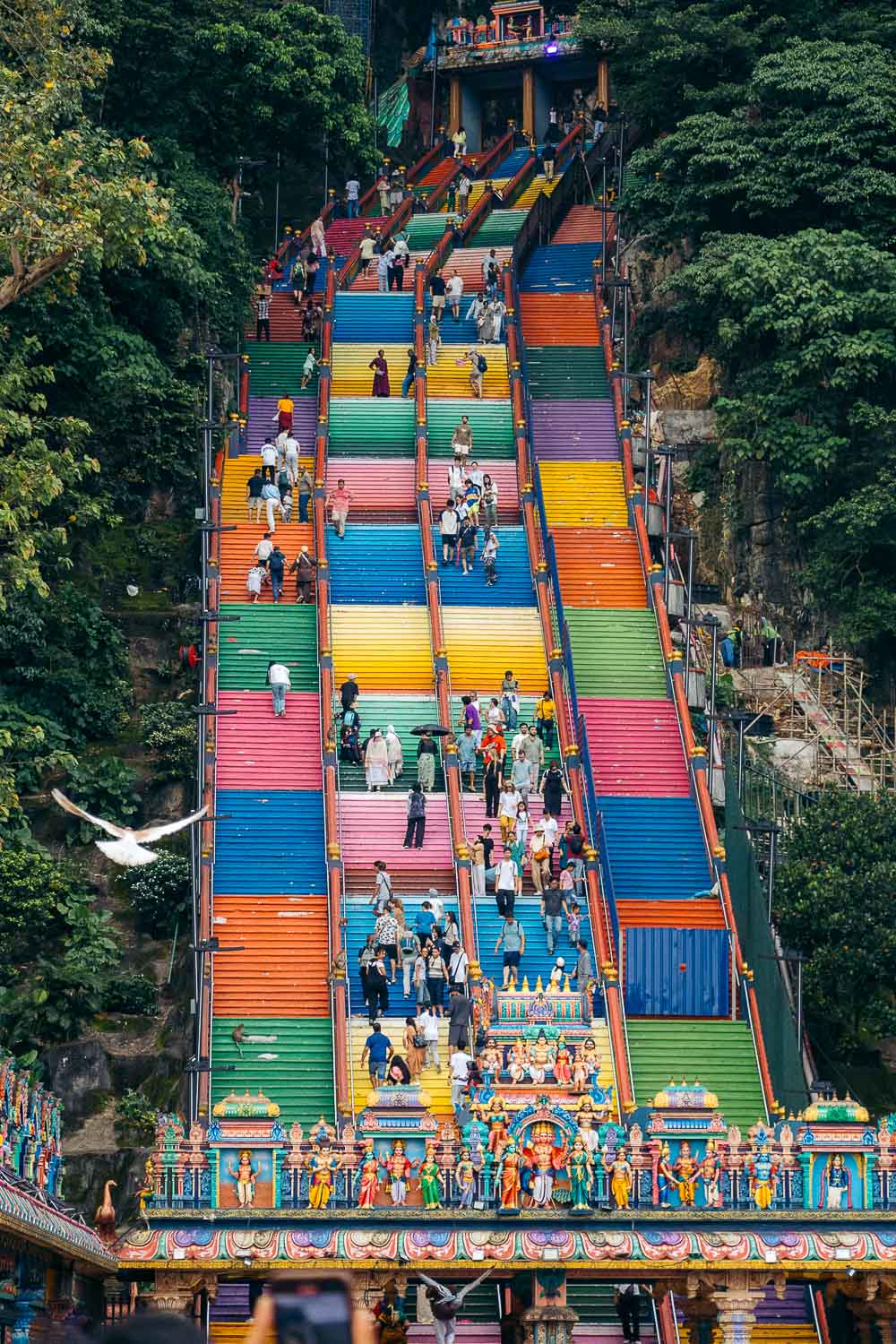
The most visited cave on the site is the Temple Cave or the Cathedral Cave that you get to by climbing 272 rainbow steps.
We decided to skip stepping inside yet another cave and instead head to the Chinese side of Kuala Lumpur.
2. Thean Hou Temple
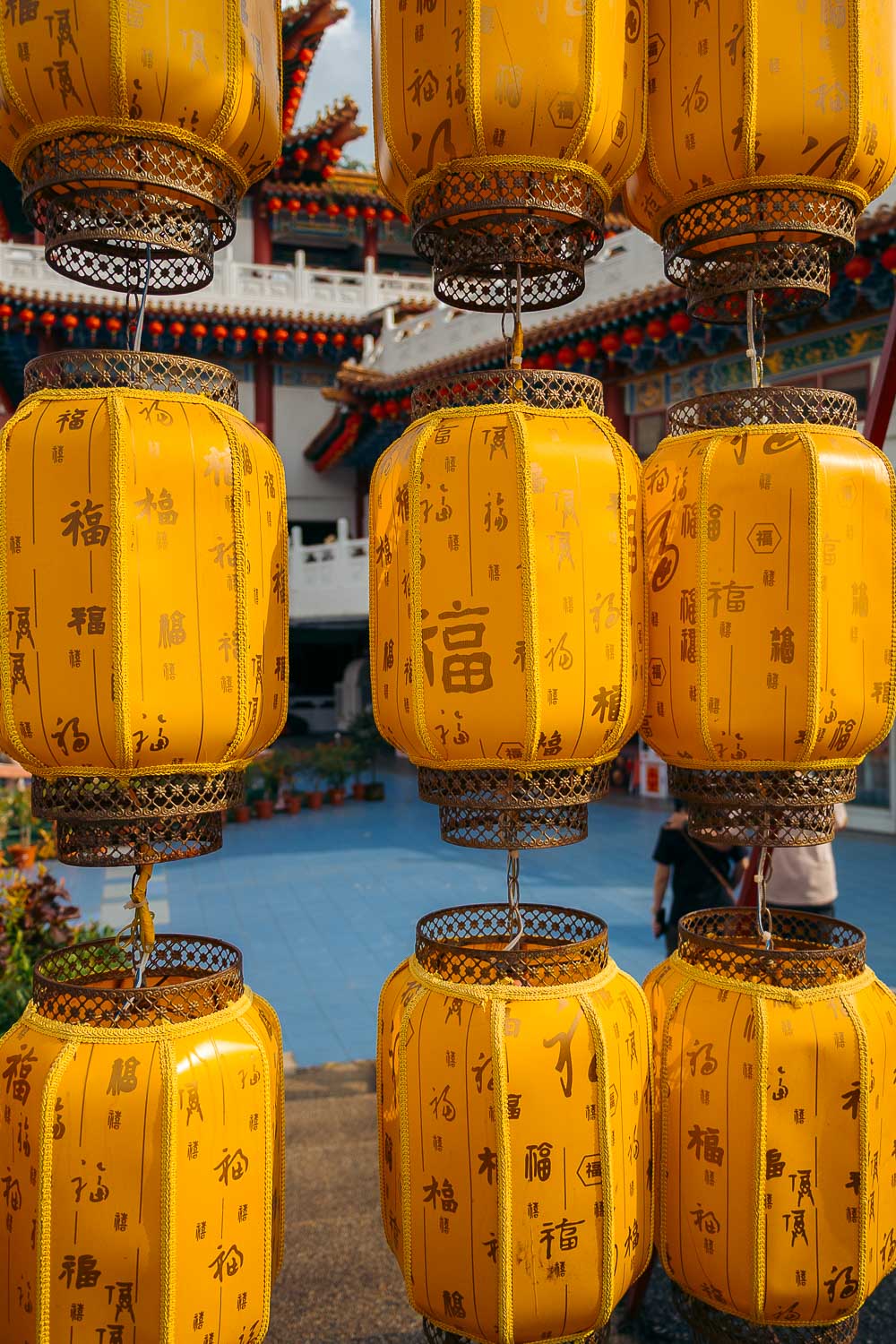
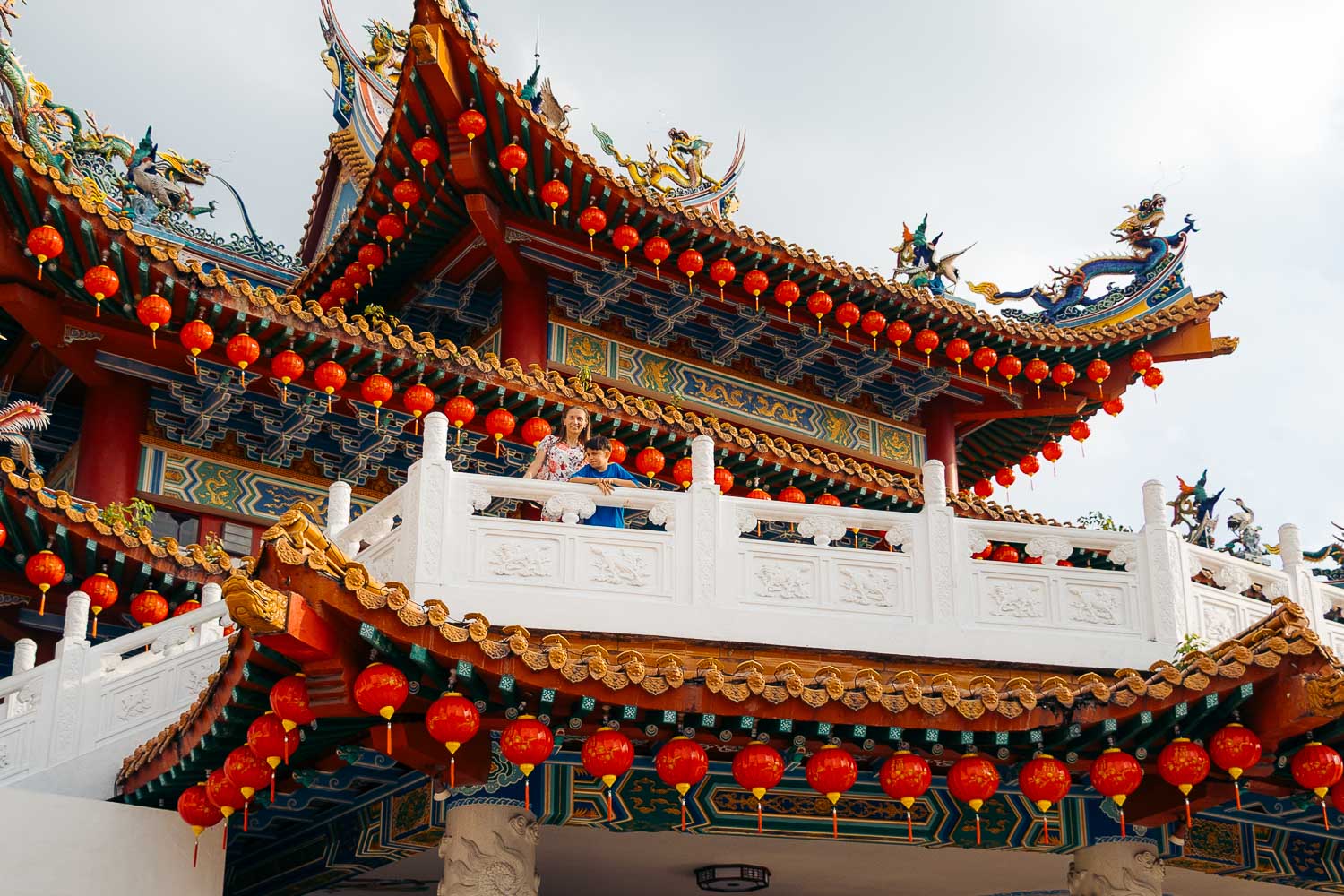
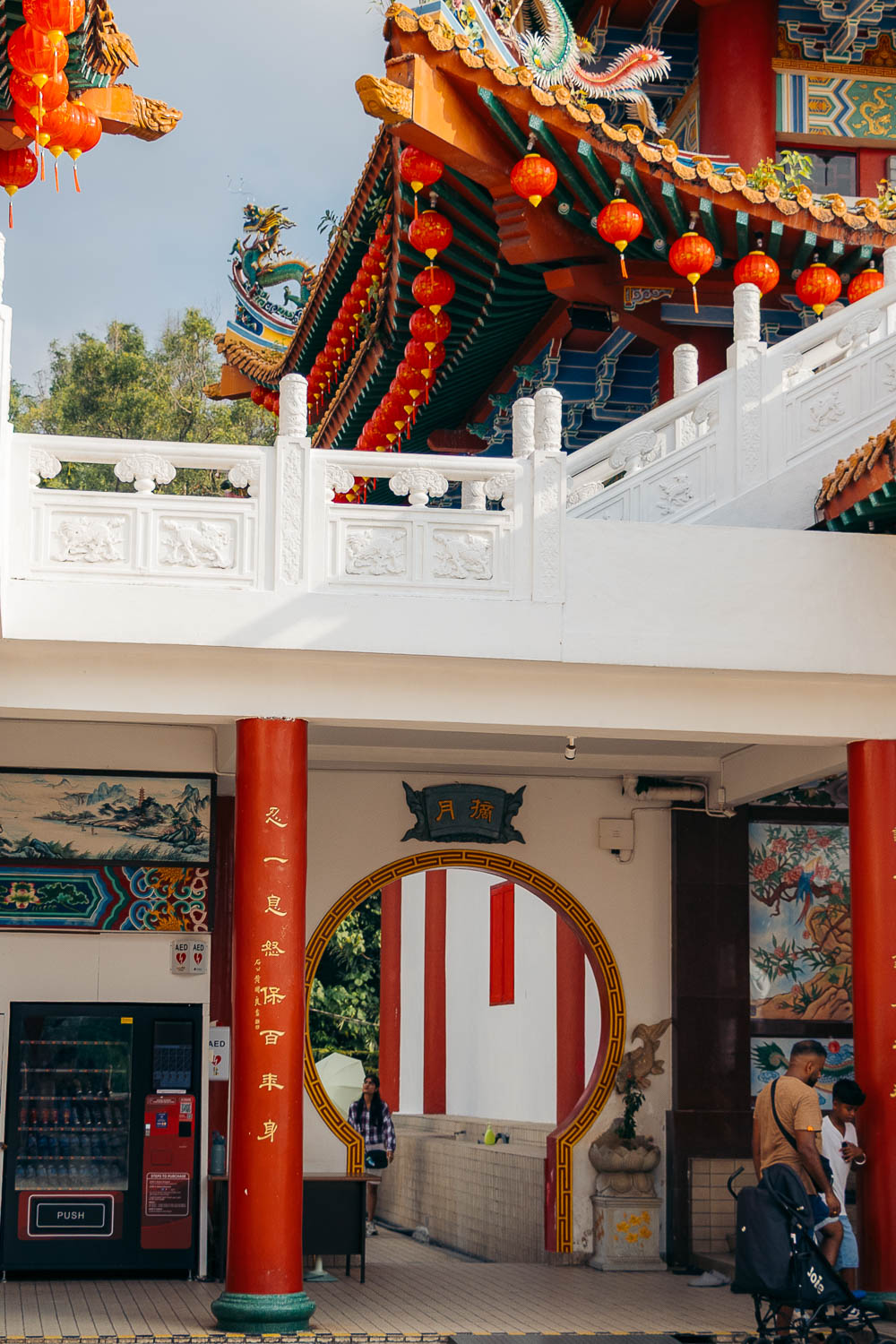
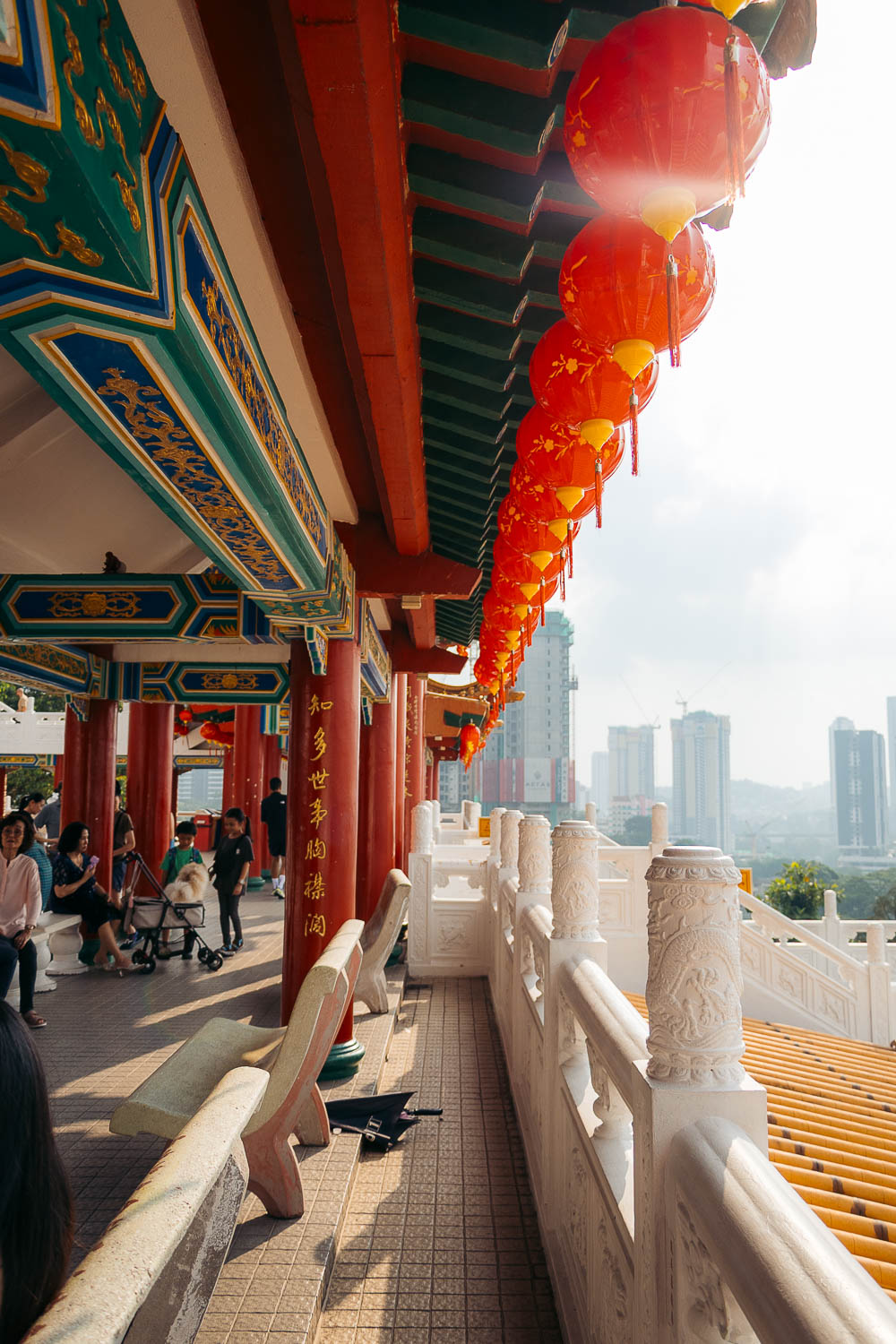
If you’ve ever seen pictures of Kuala Lumpur, then the opulent six-tiered Chinese temple should look familiar. Thean Hou Temple is one of the modern religious sites in the city, but also one of the largest Chinese temples in Southeast Asia.
The place was built between 1981 and 1987 and officially opened only in 1989. The impeccable building incorporates Confucian, Buddhist, and Taoist traditions and is one of the most prominent cultural and religious sites in the city.
You are free to walk around and explore the place on your own. But if you’ve made it all the way to this not-so-central location, make sure to head to the top level where the panoramic views of Kuala Lumpur open up.
3. Eating Mochi (Our Experience)
When you live in LA, you get spoiled by exposure to many different cultures and cuisines. Occasionally we run into situations where food served closer to its geographical origin doesn’t live up to the high standards set by the version we get in LA.
Mochi is a traditional Japanese food. We were in Kuala Lumpur, not Tokyo. Still, considering how relatively close the two countries are, we expected the mochi to taste different. Secretly, we hoped it would blow our taste buds away. Hmm, it was ok. But honestly, the mochi we buy from our local Asian market in LA taste a lot better.
4. Chinatown
Our time in the city flew by quickly and now it was about time to dive into the vibrant chaos of Kuala Lumpur’s Chinatown and get a proper meal before our almost 7-hour flight back to Seoul.
Let me jump ahead for a second and tell you that this is the place where you can meet many friendly locals and see all the beautiful and ugly sides of the city (Hint: watch our YouTube video).
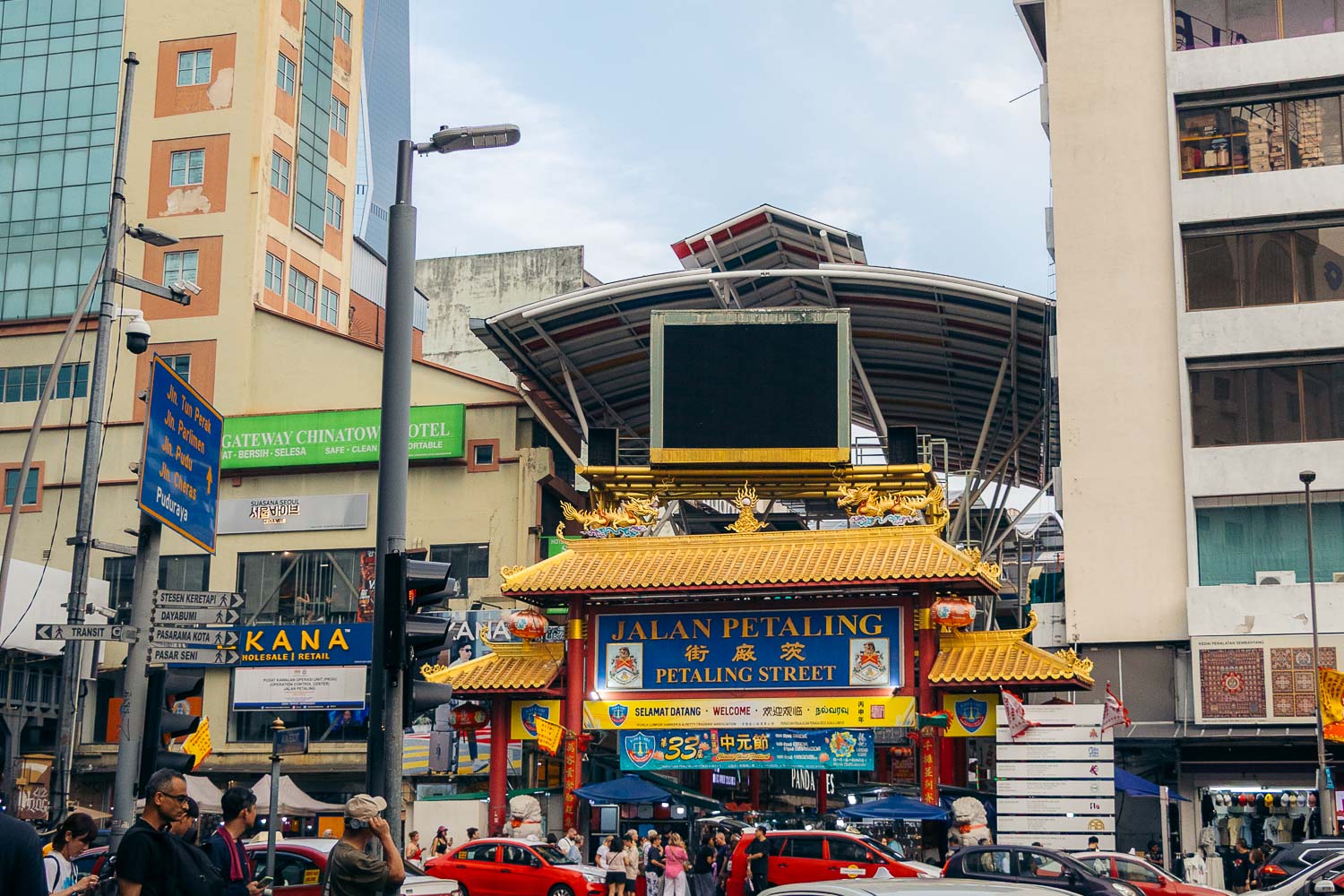
Once in Chinatown, stroll through Petaling Street, famous for every fake designer item you can imagine.

Alternative 12-Hour Kuala Lumpur Itinerary
Our 12-hour layover itinerary wasn’t long enough to begin with, but even before we landed in Kuala Lumpur a possibility of not being able to visit all the places we wanted was well acknowledged. No regrets, though.
As expected, we didn’t get a chance to explore a few other places that show a different side of Kuala Lumpur.
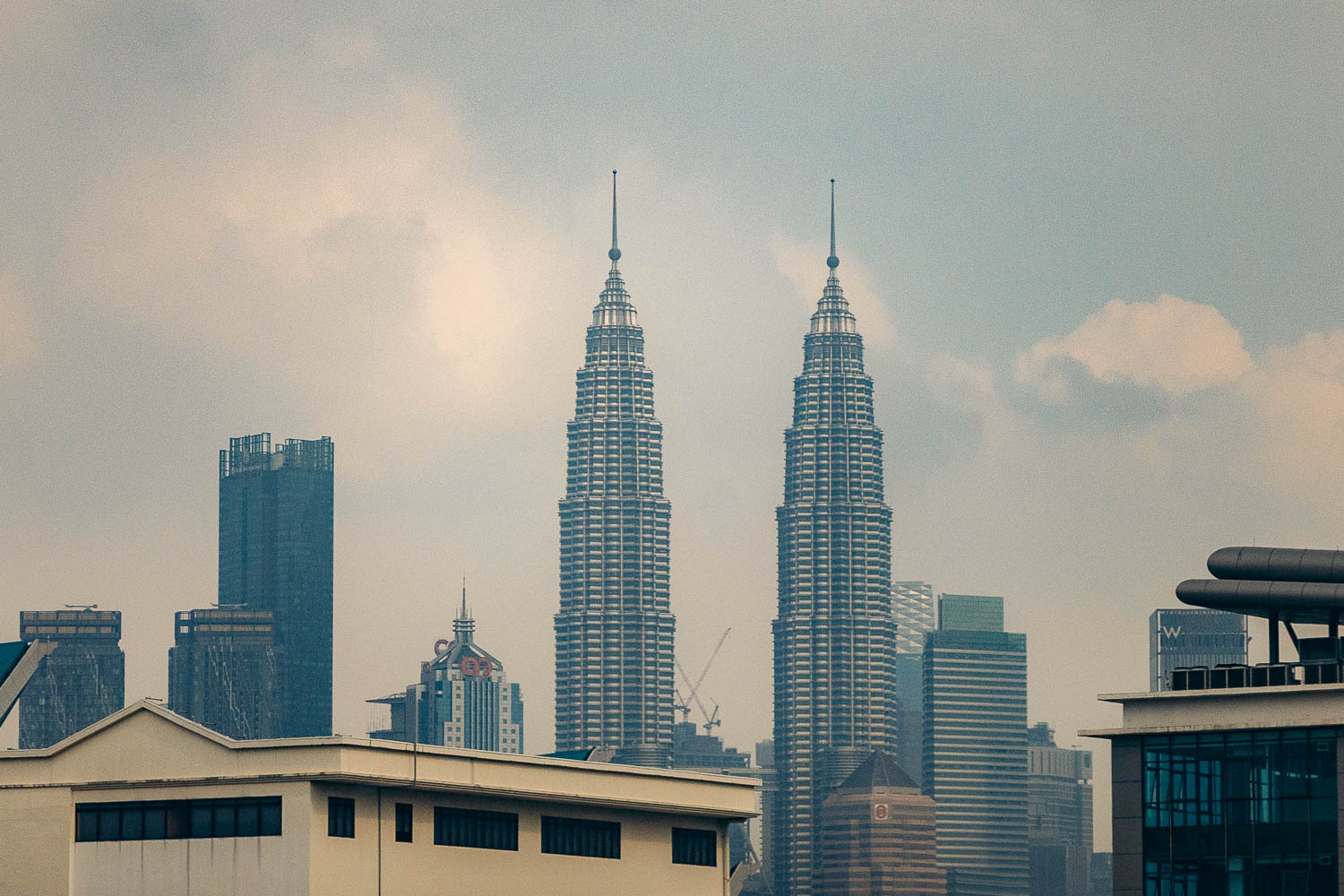
Petronas Twin Towers
The Petronas Twin Towers are a signature landmark of Kuala Lumpur. At 1,230 feet (375 meters), they are the tallest twin towers in the world. The iconic site decorates every second postcard of Kuala Lumpur, showing the modern side of the multifaceted city. Indeed, the 360-degree panoramic views of the city skyline may be the highlight of your entire city excursion.
TIP: If you plan to visit this site during your Kuala Lumpur layover, make sure to book your ticket in advance.
Canopy Walk at KL Eco Park
To experience lush nature inside the bustling city, head to KL Eco Park, famous for its Canopy Walk, a 200-meter-long raised walkway. The canopy walk is in essence a suspension footbridge that hangs 21 meters above the forest floor.
TIP: Make sure to bring cash to pay for your admission ticket.
READ MORE: Why Should You Visit Capilano Suspension Bridge?